

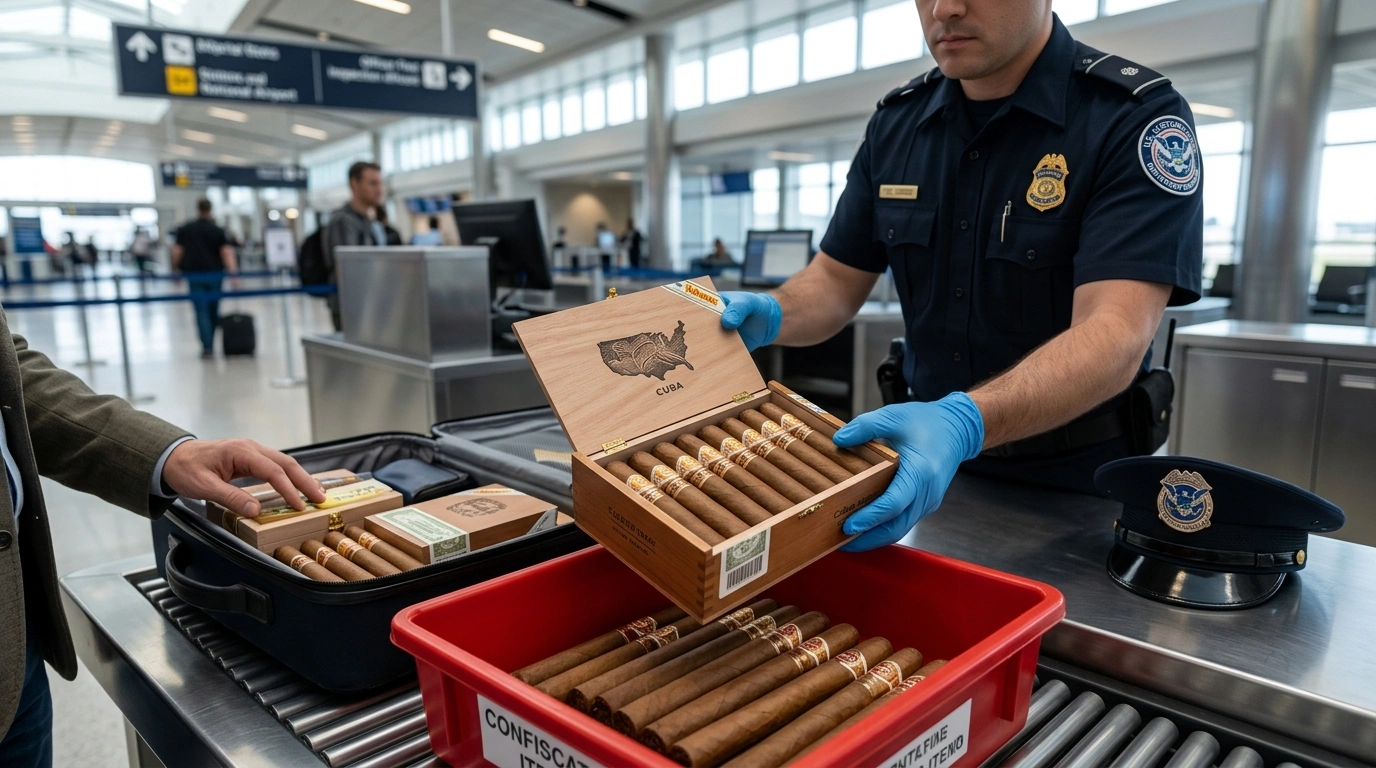
Yes, Cuban cigars are generally illegal to import into the United States under current U.S. sanctions rules, even if they are for personal use, bought in another country, or packed in your luggage as a souvenir. The confusion comes from the fact that the rules changed more than once. For a few years, travelers had more flexibility, but since September 24, 2020, OFAC rules have again restricted the importation of Cuban-origin alcohol and tobacco products into the United States.
This does not mean every question about Cuban cigars in America has the same answer. There is a difference between importing Cuban cigars, buying Cuban cigars online, possessing old Cuban cigars, smoking Cuban cigars abroad, and selling Cuban cigars in the U.S. This guide breaks down the current Cuban cigar laws, explains why the ban exists, and answers the most common traveler questions about Cuba, Canada, Mexico, Europe, duty-free shops, online shipping, customs, and legal alternatives.
Quick Answer: Are Cuban Cigars Legal or Illegal in the United States?
The simplest answer is this: Cuban cigars are not legal to import into the United States under current rules. That includes bringing them back from Cuba, carrying them in from a third country such as Canada, Mexico, the UK, or Europe, or ordering them from an international cigar website and shipping them to a U.S. address.
OFAC says persons subject to U.S. jurisdiction may buy or acquire Cuban-origin merchandise, including alcohol and tobacco products, while in a third country for personal consumption outside the United States. However, OFAC also states that, effective September 24, 2020, authorized travelers may no longer import those products into the United States.
That means a U.S. traveler may be able to legally smoke a Cuban cigar while abroad in a place where Cuban cigars are legal, but bringing that same cigar into the U.S. is a different matter.
Here is the practical distinction:
| Situation | General Rule |
| Buying Cuban cigars in Cuba and smoking them in Cuba | Generally allowed for authorized travelers while in Cuba |
| Buying Cuban cigars in Canada, Mexico, or Europe and smoking them there | Generally allowed for personal consumption outside the U.S. |
| Bringing Cuban cigars into the U.S. | Generally not allowed |
| Shipping Cuban cigars to the U.S. | Generally not allowed |
| Selling Cuban cigars in the U.S. | High legal risk and generally restricted |
So, if your question is “can you bring Cuban cigars into the US?”, the answer is no under current rules.
Why Are Cuban Cigars Illegal in the US?
Cuban cigars are illegal to import into the U.S. because they are part of a much larger legal and political issue: the U.S.-Cuba trade embargo. The restrictions are not really about cigars as a product. They are about Cuban-origin goods, Cuban sanctions, and the long-running relationship between the United States and Cuba.
The roots go back to the early 1960s, after the Cuban Revolution and the rise of Fidel Castro’s government. During the Cold War, the U.S. imposed broad trade restrictions on Cuba. In February 1962, under John F. Kennedy, the embargo became a defining part of U.S.-Cuba policy. Cuban cigars, Cuban rum, and many other Cuban products became restricted because they came from Cuba.
The modern legal framework is connected to the Cuban Assets Control Regulations, often called the CACR, which are administered by the Office of Foreign Assets Control, or OFAC, under the U.S. Treasury. These rules affect what U.S. persons can buy, import, sell, or transact with when it comes to Cuban-origin merchandise.
That is why the phrase “why are Cuban cigars banned in the US” is really a shortcut for a bigger answer: Cuban cigars are restricted because they are Cuban-origin tobacco products covered by U.S. sanctions and embargo rules.
What Changed in 2016 and September 2020?
A major reason people are confused about Cuban cigars legal or illegal searches is that the law changed during the Obama and Trump administrations.
For many years, travelers could not legally bring Cuban cigars into the United States. Then U.S.-Cuba policy began to shift during the Obama administration. On December 17, 2014, the U.S. announced major changes in its approach toward Cuba. Later, in 2016, restrictions were relaxed, and travelers were allowed to bring certain Cuban products, including Cuban cigars and rum, into the U.S. for personal use under specific conditions.
That is why many older articles still say that Americans can bring Cuban cigars home. Some of that content was accurate when it was written, but it is now outdated.
The important current date is September 24, 2020. OFAC amended the Cuban Assets Control Regulations and removed authorizations that had allowed the importation of Cuban-origin alcohol and tobacco products for non-commercial personal use. OFAC specifically says the amendment excluded importation into the United States of Cuban-origin alcohol and tobacco products and eliminated previous authorizations for accompanied baggage under certain circumstances.
In plain English: the 2016 flexibility no longer applies to Cuban cigars.
A simple timeline helps:
| Date | What Happened |
| 1962 | U.S.-Cuba embargo became central to Cuban import restrictions |
| 2014 | Obama-era Cuba policy shift began |
| 2016 | Rules were relaxed for some Cuban cigars and rum brought back for personal use |
| September 24, 2020 | Importation of Cuban-origin alcohol and tobacco products was restricted again |
| 2026 | Current rule still generally bars importing Cuban cigars into the U.S. |
Can You Bring Cuban Cigars Into the US From Cuba?
No. Authorized travelers may no longer bring Cuban cigars into the United States from Cuba as accompanied baggage for personal use. This is one of the clearest points in current official guidance.
CBP states that, effective September 24, 2020, authorized travelers may no longer return to the United States with alcohol and/or tobacco products acquired in Cuba. OFAC gives similar guidance for travelers, explaining that persons authorized to travel to Cuba may purchase alcohol and tobacco products while in Cuba for personal consumption in Cuba, but may no longer return to the U.S. with those products as accompanied baggage.
This applies even if the cigars are:
- For personal use
- A souvenir
- A gift
- Only one or two cigars
- Not intended for resale
- Bought from an official Cuban shop
This is where many travelers make a mistake. They assume that because the cigars are not for commercial use, they are allowed. But the current restriction specifically targets Cuban-origin alcohol and tobacco products, even when they are for personal use.
So, if you are asking “can Americans bring Cuban cigars back from Cuba?”, the current answer is no.
Can You Bring Cuban Cigars From Canada, Mexico, Europe, or Duty-Free?
No, not legally into the United States under current rules. Buying Cuban cigars in another country does not remove the problem, because the issue is not only where you bought them. The issue is that they are Cuban-origin tobacco products being imported into the U.S.
This matters because Cuban cigars are legal in many countries. You may see them in cigar shops in Canada, Mexico, the United Kingdom, Europe, or the Caribbean. You may also see them in some airport duty-free shops. But “legal to buy there” does not mean “legal to bring into the United States.”
OFAC says U.S. persons may purchase Cuban-origin cigars in a third country for personal consumption outside the United States, but they may no longer import them into the United States.
That means these searches all have the same basic answer:
Can you bring Cuban cigars from Canada to the US? No.
Can you bring Cuban cigars from Mexico to the US? No.
Can you bring Cuban cigars from Europe to the US? No.
Can you bring Cuban cigars from the UK to the US? No.
Can you bring Cuban cigars from airport duty-free to the US? No, if they are Cuban-origin tobacco products.
A traveler can smoke a Cuban cigar in London, Toronto, Cancun, Paris, or Havana where local law allows it. But once the cigar is headed into the United States, CBP and OFAC rules matter.
Can You Buy Cuban Cigars Online and Ship Them to the US?
Many people search “can you buy Cuban cigars online and have them shipped to the US?” because international cigar websites may appear to sell authentic Cuban cigars. But shipping Cuban cigars to the United States creates the same core problem: importation.
Even if the seller is outside the U.S., even if the payment goes through, and even if the cigars are marked as a gift, the package is still entering the United States as Cuban-origin tobacco products. Under current rules, that is generally not allowed.
There is also a practical risk beyond the legal issue. Online cigar buyers face a high chance of encountering fake Cuban cigars, especially when a website promises rare boxes, unusually low prices, or guaranteed U.S. delivery. Counterfeit Cuban cigars are common because the brand reputation is strong and U.S. buyers often cannot easily verify the source.
If you are trying to stay compliant, avoid ordering Cuban cigars from online cigar websites that ship to the U.S. Instead, consider legal alternatives to Cuban cigars, including premium cigars from Nicaragua, the Dominican Republic, and Honduras.
Are Cuban Cigars Illegal to Possess, Own, or Smoke in the US?
This is one of the most common pain points: are Cuban cigars illegal to possess in the US?
The main legal issue is importation and transactions involving Cuban-origin goods, not the physical act of smoking a cigar. However, possession questions can become complicated because the cigar’s history matters. Was it imported after the ban? Was it bought from a seller in the U.S.? Was it received as a gift? Was it part of a pre-embargo collection? Was money exchanged?
That is why the safest explanation is this: current U.S. rules clearly restrict importing Cuban cigars into the United States, buying them through prohibited channels, shipping them into the country, or selling them commercially. Simple possession of an old cigar may raise different questions, but readers should not assume that ownership automatically makes the cigar legal.
There is also a difference between federal law and state law. Cuban cigar restrictions are primarily a federal sanctions and import issue, not a state-by-state cigar rule. Your state may regulate tobacco sales, smoking age, or where tobacco can be used, but the Cuban cigar ban comes from federal rules tied to Cuba sanctions.
So, if someone asks “can you own Cuban cigars in the US?”, the honest answer is: the biggest legal risk is how the cigars entered the U.S. and whether they were bought, sold, imported, or transferred in violation of federal rules.
Can You Sell, Gift, or Resell Cuban Cigars in the US?
Selling Cuban cigars in the United States is much riskier than simply asking about possession. Commercial importation, resale, and compensation are treated seriously because they involve transactions in Cuban-origin goods.
Under current guidance, the importation of Cuban-origin alcohol and tobacco products is restricted, and gift rules do not create a loophole for cigars. OFAC guidance explains that gift imports of Cuban-origin merchandise are authorized only under certain conditions and do not include alcohol or tobacco products.
That means you should be very cautious with questions like:
Can you sell Cuban cigars after bringing them into the US? Generally, no.
Can retailers sell Cuban cigars in the United States? Generally, no.
Are Cuban cigars legal if gifted? Not if the gift involves importing Cuban-origin tobacco into the U.S.
Can someone mail Cuban cigars as a gift to the US? Generally, no.
A true gift between individuals may sound harmless, but if it involves shipping Cuban cigars into the United States, it still creates an import issue. If money, barter, resale, or compensation is involved, the risk becomes even greater.
What Happens If Customs Finds Cuban Cigars?
If U.S. Customs and Border Protection finds Cuban cigars in your luggage, package, or declared goods, the cigars may be seized or confiscated. Depending on the facts, you may also face questioning, delays, or possible penalties. The exact outcome can vary based on the situation, including whether the items were declared, how many cigars you had, whether they appeared commercial in quantity, and whether there were other violations.
This is why it is risky to rely on old advice like “just bring a few” or “take the bands off.” Trying to hide the origin of Cuban cigars can create more problems, not fewer. Removing labels, using false declarations, or pretending Cuban cigars are from another country may raise additional concerns.
It is also useful to understand the difference between TSA and CBP. TSA focuses on airport security screening. CBP handles customs and import rules when you enter the United States from abroad. So the key agency for Cuban cigar importation is usually CBP, along with the sanctions framework enforced by OFAC.
If you are unsure before traveling, check current CBP and OFAC guidance rather than relying on forum comments, outdated travel blogs, or cigar shop advice.
Are Pre-Embargo Cuban Cigars Legal?
Pre-embargo Cuban cigars are a special collector topic. These are cigars that may have entered the United States before the embargo or before later restrictions applied. Collectors sometimes discuss old Cuban Davidoffs, vintage cigar boxes, and documentation proving age or origin.
However, this area is not simple. The legality can depend on the cigar’s age, import history, documentation, sale history, and whether any current transaction violates sanctions rules. An old cigar is not automatically safe to buy or sell just because someone calls it “pre-embargo.”
If you are dealing with rare or expensive cigars, documentation matters. Collectors may look for invoices, provenance records, box markings, and other official source documentation. But for ordinary readers, the practical takeaway is simple: do not use “pre-embargo” as a shortcut for assuming a Cuban cigar transaction is legal.
Why Cuban Cigars Are Famous — And Why Many U.S. Cigars Have Cuban Brand Names
Cuban cigars are famous because Cuba has a long reputation for premium tobacco, skilled cigar rolling, and iconic cigar brands. Names like Cohiba, Montecristo, Partagas, and Romeo y Julieta carry strong recognition among cigar lovers and cigar aficionados around the world.
After the Cuban Revolution, many parts of the Cuban tobacco industry were nationalized. This created complicated brand histories. Some cigar families and companies left Cuba and continued producing non-Cuban versions of famous brands elsewhere, while Cuba continued producing its own versions through state-linked channels such as Cubatabaco and Habanos S.A.
That is why American shoppers may see familiar brand names on cigars that are not Cuban. For example, a cigar sold legally in the U.S. may use a famous Cuban-origin brand name but be made in the Dominican Republic, Nicaragua, or Honduras. These are often called parallel brands or non-Cuban versions of Cuban cigar brands.
This is also why the question “are Cuban cigars better than other cigars?” is subjective. Cuban cigars have prestige, but many legal non-Cuban cigars are excellent and often easier to buy, verify, and store properly in the U.S.
Legal Alternatives to Cuban Cigars in the US
If you want the premium cigar experience without legal risk, the best option is to choose legal alternatives to Cuban cigars. The U.S. cigar market has many high-quality handmade cigars from countries with strong tobacco traditions.
Dominican cigars are often known for balance, smoothness, and classic construction. Nicaraguan cigars are popular for bold flavors, strength, spice, and rich tobacco character. Honduran cigars can offer earthy, full-bodied profiles that appeal to smokers who enjoy complex cigars.
For many U.S. buyers, the best legal Cuban cigar alternatives include:
| Alternative | Why It Appeals to Cuban Cigar Fans |
| Dominican cigars | Smooth, refined, traditional premium cigar experience |
| Nicaraguan cigars | Bold flavor, strength, spice, and complexity |
| Honduran cigars | Earthy, rich, and often full-bodied |
| Non-Cuban Cohiba or Montecristo cigars | Familiar brand names legally sold in the U.S. |
| Premium handmade cigars | Widely available through licensed U.S. cigar retailers |
This section is important because many readers searching “can you buy Cuban cigars in the US” are not only asking about law. They are also trying to find a good cigar. The legal answer may be “no,” but the practical answer is that there are many excellent non-Cuban premium cigars available.
How to Avoid Fake Cuban Cigars Online or Abroad
Even outside the United States, buyers should be careful. Fake Cuban cigars are common in tourist areas, online shops, and informal markets. The more famous the brand, the more likely it is to be counterfeited.
A box of “Cohibas” sold cheaply on a beach, in a taxi, or through a suspicious website should raise a red flag. Real Cuban cigars usually come through official distribution channels, and legitimate boxes often include seals, labels, and verification features. Counterfeiters may copy these details, but poor printing, misspellings, damaged boxes, loose bands, and unrealistic pricing are warning signs.
The safest advice is simple: if you are outside the U.S. and plan to smoke Cuban cigars there, buy from reputable local retailers. If you are returning to the United States, do not bring Cuban cigars with you, even if they are authentic.
Legal risk and counterfeit risk often overlap. A buyer may think they are getting rare Cuban cigars, but end up with fake cigars that still create customs problems.
FAQs About Cuban Cigar Laws in the US
Are Cuban cigars illegal in the US in 2026?
Yes, Cuban cigars are generally illegal to import into the U.S. in 2026. The key current rule dates back to September 24, 2020, when OFAC restricted importation of Cuban-origin alcohol and tobacco products.
Can Americans smoke Cuban cigars abroad?
Yes, in many cases, Americans may buy or smoke Cuban cigars abroad where local law allows it. OFAC allows persons subject to U.S. jurisdiction to acquire Cuban-origin alcohol and tobacco products in a third country for personal consumption outside the United States, but not to import them into the U.S.
Can you bring Cuban cigars from Canada to the US?
No. Even if Cuban cigars are legal in Canada, bringing them into the United States is still importation of Cuban-origin tobacco products.
Can you bring Cuban cigars from Mexico to the US?
No. Buying Cuban cigars in Mexico does not make them legal to bring into the United States.
Can Cuban cigars be mailed to the US?
Generally, no. Mailing Cuban cigars to the U.S. still involves importing Cuban-origin tobacco products.
Are Cuban cigars legal if they are a gift?
Not if the gift involves bringing or shipping Cuban-origin tobacco products into the United States. OFAC guidance on gift imports excludes alcohol and tobacco products.
Does Cuban cigar law depend on the state?
Not mainly. The Cuban cigar restriction is primarily a federal law, sanctions, and customs issue. State tobacco laws may apply to sales or smoking rules, but they do not override federal Cuban import restrictions.
Can retailers sell Cuban cigars in the United States?
Generally, no. Legal U.S. cigar retailers may sell many premium non-Cuban cigars, but commercial importation and sale of Cuban cigars remains restricted.
Conclusion: The Bottom Line on Cuban Cigars in the US
Are Cuban cigars illegal in the US? For import purposes, yes. Under current OFAC and CBP guidance, travelers may no longer bring Cuban-origin tobacco products into the United States, even for personal use. The rule applies whether the cigars were bought in Cuba, Canada, Mexico, Europe, the UK, or a duty-free shop.
The safest way to understand the law is this: you may be able to smoke Cuban cigars abroad, but you generally cannot bring them back into the U.S. Do not rely on outdated 2016-era advice, and do not assume that “personal use,” “gift,” or “duty-free” status creates a loophole.
For U.S. cigar lovers, the best practical option is to choose legal premium cigars from Nicaragua, the Dominican Republic, Honduras, or other non-Cuban origins.
This article is for general informational purposes only and does not constitute legal advice. U.S. sanctions laws and import regulations can change — always verify current rules with the U.S. Office of Foreign Assets Control (OFAC) or U.S. Customs and Border Protection (CBP) before traveling. Consult a qualified attorney for legal guidance specific to your situation.