

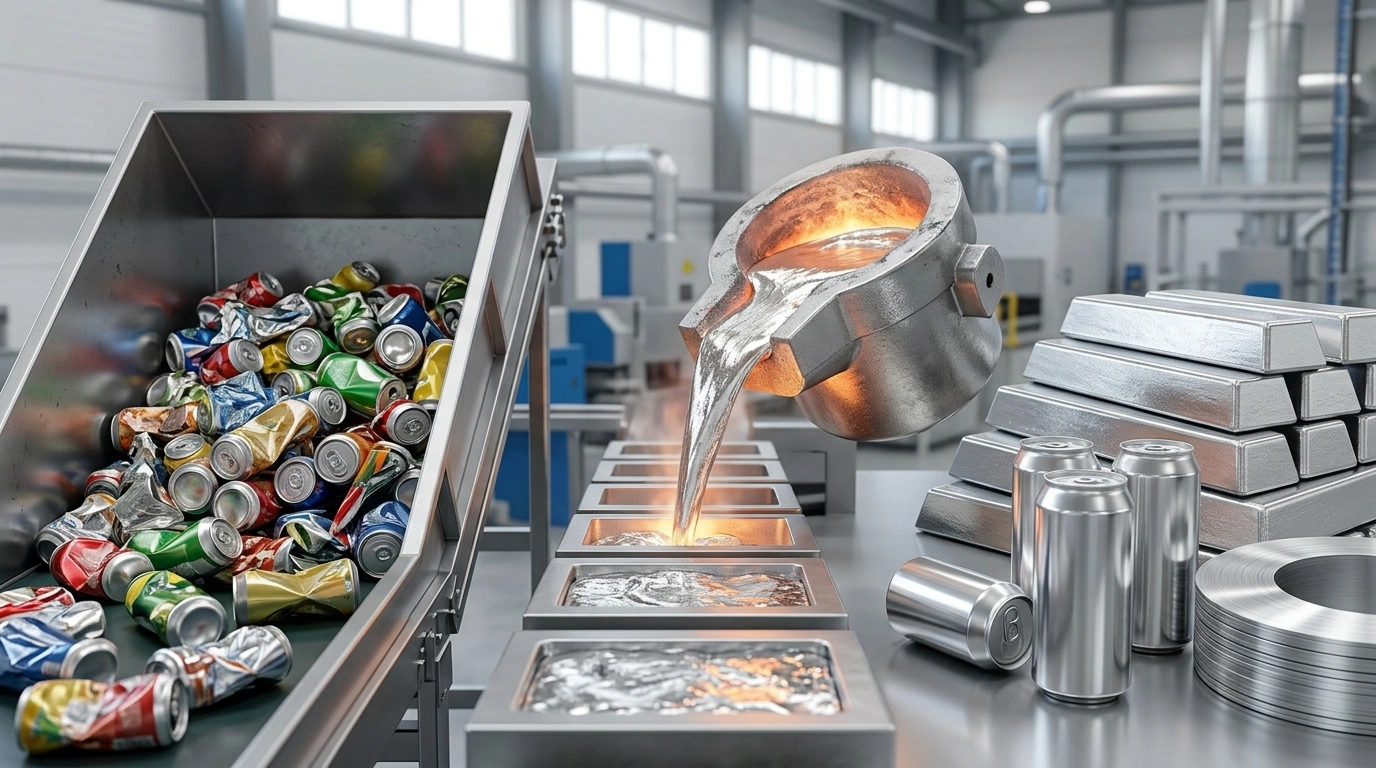
Which of the following can be recycled many times is a common quiz and search question, and the best answer is aluminum (or aluminium, depending on spelling). That is because aluminum can be recycled again and again without losing its core properties, and making new products from recycled aluminum uses only about 5% of the energy needed to make new aluminum from raw materials. The Aluminum Association also says that about 75% of all aluminum ever produced is still in use today, which shows just how durable and reusable this material is.
At first glance, this looks like a simple MCQ-style question. But once people start searching, they usually want more than a one-word answer. They want to know why aluminum is correct, whether glass also qualifies, why plastic is different, and what “recyclable” actually means in real life. That matters because a product can be technically recyclable and still not be accepted by your local recycling program. The U.S. EPA specifically notes that the familiar symbol on plastic containers does not necessarily mean the item can be collected for recycling in your community.
So the short answer is easy. The full answer is much more useful.
The Correct Answer: Why Aluminum Can Be Recycled Again and Again
The reason aluminum is usually the correct answer is simple: it is one of the most recyclable materials in daily life. When aluminum is recycled, it is melted and reformed without the kind of quality loss that affects many other materials. In practical terms, that means an aluminum can can become another aluminum can, and the material still remains highly valuable in manufacturing.
This is where infinite recyclability becomes important. Many materials can be recycled once or a few times, but that is not the same as being recyclable many times or indefinitely. Aluminum stands out because its basic material quality holds up through repeated recycling cycles. That is one reason it plays such a big role in the aluminum industry, in packaging, and in the broader circular economy.
There is also a strong environmental reason behind this answer. The Aluminum Association says recycled aluminum requires only around 5% of the energy needed to produce new aluminum from virgin inputs. That means less demand for raw material extraction, less industrial energy use, and lower emissions compared with producing new metal from scratch. This is why aluminum recycling is not only a correct exam answer but also a real-world sustainability success story.
Another useful fact is that around 75% of all aluminum ever produced is still in use today. That single statistic explains why aluminum is often used as the textbook example of a material that can be recycled many times. It keeps circulating through the economy instead of losing value quickly.
Why the Other Options Are Usually Wrong
When this question appears in a worksheet, quiz, or exam, the options often include plastic, wood, and organic materials. Those choices are there to test whether you understand the difference between materials that can be processed in some way and materials that can be recycled repeatedly without major quality loss.
Plastic
Plastic is the option that confuses people most. Many plastics are technically recyclable, but that does not mean they can be recycled over and over in the same way as aluminum. Globally, plastics have a weak recycling record: the OECD reports that only about 9% of plastic waste is ultimately recycled after losses are taken into account.
One reason is that plastic recycling often leads to quality degradation. In many systems, plastics are downcycled into lower-value products instead of being turned back into the same item again and again. That is why people often say plastic may only be recycled 1–2 times in practical use, depending on the polymer, contamination level, and local processing technology. Even when that exact number varies by plastic type, the big idea stays the same: plastic does not behave like aluminum in repeated recycling loops.
Wood
Wood can absolutely be reused, repurposed, or processed into other products. But in the context of this specific question, wood is not usually the best answer because it is not the classic example of a material that can be recycled many times into the same type of product with stable material quality.
Organic Materials
Organic materials are another tempting option, but they belong in a different category. Food scraps, yard waste, and other biodegradable matter are often better described as compostable rather than endlessly recyclable. Composting is useful and environmentally important, but it is not the same process as repeated closed-loop recycling.
So if you are answering the question exactly as asked, aluminum is still the strongest and most accepted answer.
How Many Times Can Common Materials Be Recycled?
This is where the topic gets more interesting. The phrase “can be recycled many times” is often used loosely, but different materials behave very differently.
| Material | Can it be recycled many times? | What happens over time? |
| Aluminum | Yes | Retains core properties and can be recycled repeatedly |
| Glass | Yes | Can be recycled endlessly without loss in quality or purity |
| Paper | Limited | Fibers shorten over time; often cited as about 5 to 7 times |
| Plastic | Limited | Often downgraded or loses quality during recycling |
| Steel / other metals | Often yes | Many metals also recycle very well, though aluminum is the most common answer in quizzes |
The strongest comparison after aluminum is glass. The Glass Packaging Institute says glass is 100% recyclable and can be endlessly recycled without loss in quality or purity. That is an important detail because it means the quiz answer is not saying aluminum is the only strong recyclable material. It means aluminum is the best expected answer in most MCQ contexts.
Paper is different because paper fibers get shorter each time they are processed. That is why paper is often described as recyclable around 5 to 7 times, not forever. It still belongs in a strong recycling system, but it is not an example of infinite recyclability. This difference helps users understand why “recyclable” and “recyclable many times” are not always the same thing.
Recyclable Does Not Always Mean Infinitely Recyclable
This is one of the biggest misunderstandings around waste management and recycling sustainability. People often assume that if a product is recyclable, it must be recyclable forever. That is not true.
A more accurate way to think about it is this:
- Some materials are recyclable a few times
- Some materials are recyclable many times
- A smaller group, like aluminum and glass, can be recycled repeatedly without the kind of quality loss seen in paper or many plastics
That distinction matters in both environment management and manufacturing. A material that stays strong through repeated processing supports circularity much better than a material that quickly becomes lower-grade waste.
This is also where the terms closed-loop recycling and downcycling help. In a closed-loop system, a material is recycled into the same kind of product again and again. A familiar example is an aluminum can becoming another aluminum can. In downcycling, the recycled output is lower in quality or usefulness than the original material. Many plastics fall into this second category far more often than aluminum or glass.
So when someone asks, “which material can be recycled many times?”, they are really asking about material quality retention, not just whether an item has ever been accepted in a recycling bin.
Does the Recycling Symbol Mean the Item Can Be Recycled Many Times?
Not necessarily. This is a major user pain point and one that thin competitor pages usually miss.
The EPA explains that the symbol and number shown on plastic containers are meant to identify the type of plastic resin. That can help determine whether the item is accepted by a local program. But the EPA also says that the symbol does not necessarily mean it can be collected for recycling in your community.
That means two things are possible at the same time:
First, an item may carry a symbol that looks “recyclable,” yet your city may not take it in curbside collection.
Second, even if it is collected, that does not mean it can be recycled many times without quality loss.
This is why it is so important not to confuse a recycling symbol with infinite recyclability. The symbol is about identification. The deeper question is about whether the material can actually stay useful through repeated recycling cycles and whether your local system can process it.
Why Local Recycling Rules Matter in Real Life
Real-world recycling depends on more than chemistry. It depends on collection systems, sorting technology, contamination, and local recycling providers.
The EPA recommends checking with your local program to see what is accepted. That matters because different communities have different equipment and different end markets for materials. A bottle, tray, foil sheet, or mixed-material package may be accepted in one place and rejected in another.
This is where wish-cycling becomes a problem. Wish-cycling happens when people toss questionable items into the recycling bin hoping they will be recycled. In practice, that can increase contamination and make the entire recycling stream less efficient. An item is not truly part of a good recycling system unless it can be collected, sorted, and processed successfully.
So yes, aluminum remains the answer to the original question. But for daily life, the better habit is to ask two follow-up questions:
- Is this material actually accepted by my local recycling program?
- If it is accepted, can it realistically be recycled into something useful again?
Those are much smarter questions than relying on the symbol alone.
Is Glass Also Recyclable Many Times?
Yes, and this is worth highlighting because it gives your article more depth than a basic answer page.
According to the Glass Packaging Institute, glass can be endlessly recycled with no loss in quality or purity. That makes glass one of the strongest examples of a highly recyclable material. The same source also notes that 80% of recovered glass is made into new glass products, and that recycled glass can substitute for a large share of the raw materials used in new glass manufacturing.
So why is aluminum still the standard answer to the quiz question?
Because in classroom-style MCQs, the expected answer is usually the one most strongly associated with being recycled many times in common environmental education content. Aluminum has become that standard example. Still, adding a brief note about glass makes your article more accurate, more complete, and more useful than thin competitors that stop at one word.
Environmental Benefits of Recycling Aluminum
The environmental case for aluminum recycling is one of the strongest parts of this topic.
The first benefit is energy savings. As noted earlier, making products from recycled aluminum takes around 5% of the energy needed to make new aluminum. That is a huge difference, and it is one reason aluminum recycling is closely tied to carbon emissions reduction and raw material savings.
The second benefit is resource conservation. Aluminum production from virgin material depends on mining and industrial processing. Recycling reduces pressure on that system because the same material keeps moving through the economy instead of being discarded after one use.
The third benefit is economic value. Aluminum scrap remains valuable, which gives businesses and municipalities a stronger reason to recover it. That helps explain why aluminum is one of the most recycled and recyclable materials in use today.
If you want a simple way to explain it to readers, use this contrast:
Plastic often loses value when recycled. Aluminum usually keeps it.
That one idea helps users immediately understand why aluminum sits in a different category from many everyday materials.
A Quick Comparison: Aluminum vs Plastic vs Paper vs Glass
To make the answer even clearer, here is the short version:
- Aluminum is the best answer to the question because it can be recycled repeatedly with strong material retention.
- Glass is also a powerful example because it can be recycled endlessly without loss in quality or purity.
- Paper is useful to recycle, but it is not endless because fibers weaken over time.
- Plastic is widely used but performs poorly in global recycling outcomes and often gets downcycled rather than truly cycled forever.
If you are writing for readers, students, or search users, this comparison is more helpful than a bare exam answer because it explains the logic behind the answer.
A Simple Real-World Example
Imagine four used household items sitting on a kitchen counter: a soda can, a glass jar, a cardboard box, and a plastic food tray.
The soda can is a strong candidate for repeated recycling because aluminum keeps its value and quality. The glass jar is also an excellent candidate because glass can be remade again and again without losing purity. The cardboard box can be recycled, but only for a limited number of cycles because the fibers shorten. The plastic tray may or may not be accepted locally, and even if it is, it may not return as the same product.
That one example captures the whole topic better than most competitors do.
Frequently Asked Questions
Which of the following can be recycled many times?
The most accepted answer is aluminum/aluminium because it can be recycled repeatedly without losing its essential properties.
Can glass also be recycled forever?
Yes. The Glass Packaging Institute says glass can be endlessly recycled without loss in quality or purity.
Why can plastic not be recycled indefinitely in the same way?
Plastic recycling often results in quality loss, lower-value outputs, and limited real-world recovery. The OECD says only about 9% of plastic waste is ultimately recycled globally.
Can paper be recycled forever?
No. Paper fibers shorten during processing, which is why paper is often said to be recyclable around 5 to 7 times, not indefinitely.
Does the recycle symbol mean the product is accepted everywhere?
No. The EPA says the symbol does not necessarily mean the item can be collected for recycling in your community.
Can aluminum foil be recycled?
Often yes, but it depends on your local recycling rules and whether the foil is clean enough to be accepted. Because local standards vary, it is best to check with your municipal or private recycling provider.
Final Answer
If someone asks, “which of the following can be recycled many times?”, the best answer is aluminum. It is widely recognized as a material that can be recycled again and again, it requires only about 5% of the energy needed for new production, and about 75% of all aluminum ever produced is still in use today. Glass also deserves mention because it can be recycled endlessly without loss in quality or purity, but in most quiz and search contexts, aluminum/aluminium is still the expected answer.
When you are talking about real-world recycling, though, remember one last point: recyclable does not always mean recyclable forever, and a recycling symbol does not guarantee local acceptance. That extra context is what turns a simple answer into a genuinely useful article.
This article is for general informational purposes only. Recycling rules, accepted materials, and processing capabilities vary by location and local program. Always check with your local recycling provider or municipal authority for accurate guidelines in your area.