

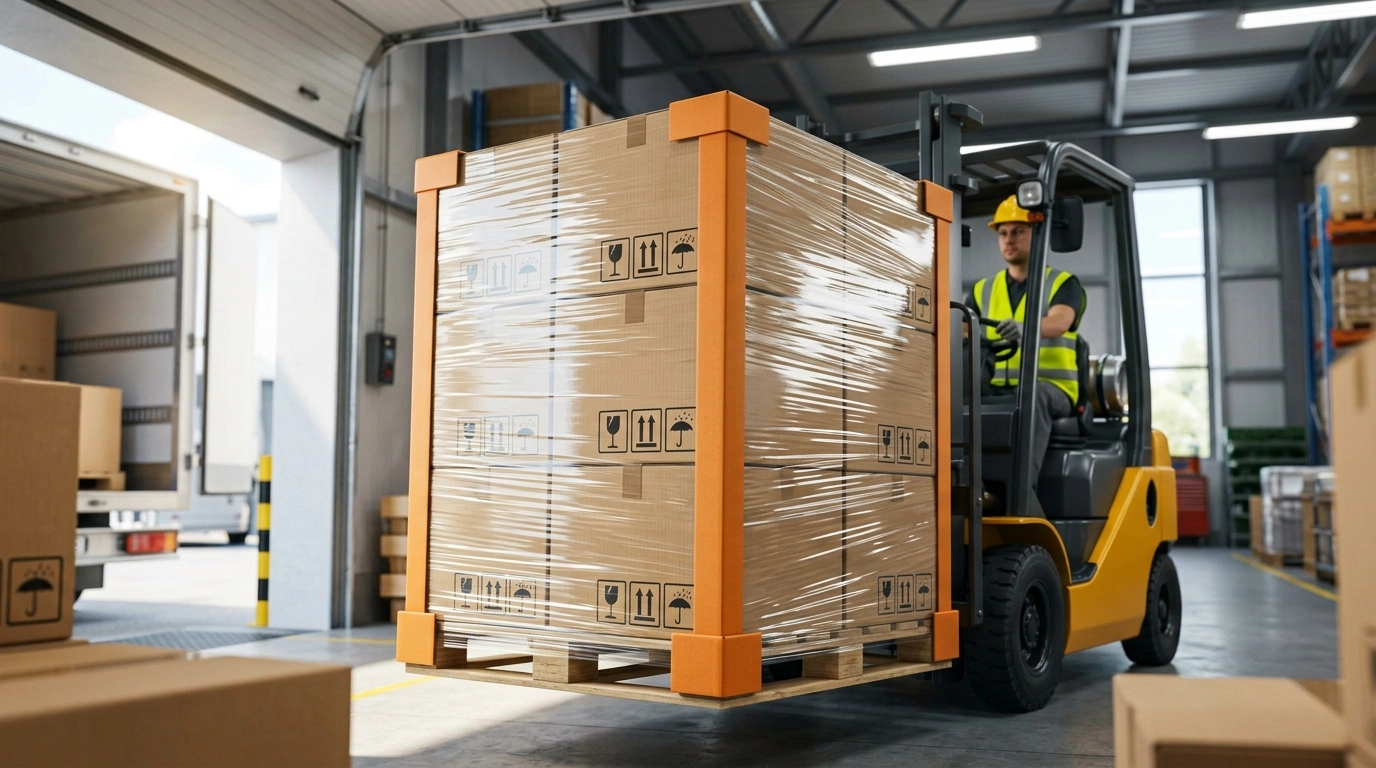
Helps in protecting the goods from damage during transportation starts with one simple answer: packaging. In real-world shipping, though, protecting goods from damage during transportation depends on more than just putting an item in a box. It also requires the right packing materials, proper labelling, stable pallets, careful loading, and protection against moisture, compression, vibration, and even theft. Industry guidance consistently emphasizes that proper packaging protects items from damage, improves safety, and helps shipments stay compliant during transit.
For searchers looking for a direct answer, the short version is easy: packaging helps in protecting the goods from damage during transportation. For businesses, warehouses, and ecommerce sellers, the better answer is broader: protective packaging, correct box sizing, internal cushioning, careful handling, and secure delivery practices all work together to prevent goods damage during transportation. UPS also notes that the right packing materials and delivery management strategies help prevent package damage and protect brand reputation.
Why Packaging Is the First Line of Defense
When people ask what helps in protecting the goods from damage during transportation, they are usually really asking what stops products from breaking, shifting, getting scratched, or arriving crushed. The answer is protective packaging. A good package absorbs shock, reduces movement, spreads out pressure, and shields the item from outside conditions. NMFTA explains that proper packaging protects shipments from damage and helps ensure they comply with shipping requirements, while DHL’s current fragile-shipping advice stresses internal cushioning and separation around the item.
This is why right-sized boxes matter so much. If a carton is too large, the item moves around and suffers impact damage. If it is too small, the product may be squeezed, corners may collapse, and there may be no room for cushioning. UPS specifically recommends the right packing materials for the shipment, and DHL advises keeping fragile items buffered away from the box walls with protective material around them.
In plain terms, packaging is not just a wrapper. It is the system that supports goods protection, shipping protection, and the safe movement of goods from warehouse to customer.
Common Causes of Damage During Transportation
Most product damage during transportation happens because one or more basic controls failed. A shipment may be poorly packed, badly stacked, exposed to rough handling, or loaded in a way that allows the goods to shift. Even a strong box can fail when empty space is left inside or when heavy items are placed on top without support.
A second major cause is environmental stress. Goods can be exposed to humidity, moisture, extreme temperatures, and constant vibration on the road. Multiple touchpoints also increase risk. In LTL shipping, for example, a shipment may be moved more than once during the process, which is why NMFTA stresses stable packing bases and secure packaging.
Loss is not always purely physical, either. UPS frames transit risk as both damage and theft, and its March 10, 2026 page cites a 49% rise in cargo thefts in North America in the first half of 2024. That matters because a poorly labeled or poorly managed shipment can be at risk even when the item itself is packed well.
So when businesses want to prevent transit damage, they need to think about the full journey: packaging, loading, handling, routing, storage, and delivery.
Best Packaging Materials for Safe Transport
The best quality packing materials depend on what you are shipping, how fragile it is, and how far it will travel. Still, a few options come up again and again because they work.
| Item type | Recommended packaging | Main risk reduced |
|---|---|---|
| Glass / ceramics | Double-wall corrugated boxes, foam, dividers, double-boxing | Breakage, impact |
| Electronics | Foam inserts, antistatic shielding material, snug outer carton | Shock, static, movement |
| Heavy goods | Strong corrugated box, reinforced base, pallet support | Compression, crushing |
| Multiple small items | Partitions, inner cartons, void fill | Collision, shifting |
| Long-distance freight | Stretch wrap, pallet stabilization, moisture protection | Movement, humidity |
UPS highlights right-sized boxes, foam inserts, antistatic shielding material, and other tailored materials for specialized shipments, while DHL recommends wrapping fragile items separately and using extra layers where needed. DHL also recommends double-boxing for very fragile or high-value goods, and notes that fragile packages should be clearly labeled.
A useful rule is this: the outer package should resist outside pressure, and the inside should stop the product from moving. Corrugated boxes, cushioning, foam inserts, void fill, and partitions all support that goal. If the item can move, it can break.
How Proper Labelling and Handling Reduce Shipping Damage
Many companies focus only on the box and forget the people touching the shipment. That is a mistake. Proper labelling and clear handling instructions can reduce damage because they tell handlers what the shipment needs. Labels such as Fragile, This Side Up, or Handle With Care are basic, but they matter.
DHL’s shipping guidance specifically recommends labeling fragile packages and, in another recent guide, highlights labels like “Fragile” and “This Side Up” as useful visual cues throughout the shipping journey. UPS adds another useful point for premium shipments: sometimes nondescript shipping labels and controlled delivery options are smart because they reduce the theft signal of high-value goods.
Good handling is also tied to process. A package can be perfectly packed and still be damaged by being dropped, thrown, stacked incorrectly, or turned the wrong way. That is why labelling, handling, and delivery management belong in the same conversation as packing materials.
Pallet Safety, Loading, and Warehouse Preparation
A surprising amount of goods damage during transportation begins before the truck even moves. Bad palletizing, weak load stability, and poor warehouse handling can ruin a shipment early.
NMFTA explains that using a packing base helps keep loads stable and properly oriented, which matters especially in LTL freight where shipments may be moved multiple times. It also notes that products can be wrapped with plastic film to secure them to the pallet, improve stability in transit, reduce tampering, and prevent items from falling off.
This is where pallets, load securing methods, and stacking discipline matter. A stable load should not overhang the pallet edges. Heavy items should sit at the bottom. Loads should be wrapped tightly enough to stay together but not so aggressively that cartons crush. Plastic pallets can help in some operations because they are consistent in size and condition, while wooden pallets are still widely used where cost matters.
Think of this stage as the foundation of damage prevention in logistics. If the pallet is unstable, everything built on top of it is at risk.
Transport Conditions That Damage Goods in Transit
Many articles talk about packaging but not enough about the transport environment itself. Yet the vehicle, route, weather, and number of handoffs all shape whether goods arrive safely.
Road transport exposes shipments to constant vibration, braking, cornering, and uneven surfaces. Sea freight adds long transit times and higher humidity risk. Air freight can be fast, but it still demands secure packaging because items may be transferred multiple times. UPS references route planning and specialized delivery management, while NMFTA and DHL both emphasize packing that can survive handling, movement, and environmental exposure.
For that reason, best packaging for road transport, best packaging for sea freight, and best packaging for air freight should never be treated as identical. A fragile item going across town does not face the same stress as one moving across borders, warehouses, and climates.
A practical business lesson is to match the packaging to the journey, not just the product.
Special Tips for Fragile, High-Value, and Regulated Goods
Some items need more than standard product packaging. Fragile goods, high-value items, consumer electronics, and lithium batteries all require a more thoughtful approach. UPS’s guidance for premium goods specifically discusses specialized items such as electronics, digital devices, telecommunications products, and hazardous goods, along with regulatory considerations for certain shipments.
For fragile goods, movement is the enemy. DHL’s recent guidance says goods should be wrapped separately and centered with protective space around them, because movement inside the box quickly leads to damage.
For premium goods, secrecy and control matter almost as much as cushioning. That is where signature confirmation, secure pickup or drop-off options, and tight delivery management help. For regulated products, businesses also need to check carrier and government requirements so the shipment is compliant before it moves.
A quick case-style example
A seller shipping handmade glassware may think a thick box is enough. In practice, the safer solution is a double-wall corrugated box, individual wrapping, internal dividers, cushioning around every side, clear fragile labeling, and a final check that there is no internal movement. That kind of shipment is far more likely to survive than one using only a big box and loose paper.
Technology, Tracking, and Theft Prevention
Modern shipping protection is not only about materials. It is also about visibility and control. UPS’s premium-goods page points to secure delivery tools such as signature confirmation, photo proof of delivery, and services tied to UPS Access Point and The UPS Store. It also references tools such as ORION and DeliveryDefense in the broader effort to reduce delivery risk.
This matters because some shipments fail at the very last stage. Last-mile delivery damage prevention is often overlooked, but it is where rough handling, porch exposure, and theft can hurt both customer satisfaction and brand reputation. UPS also cites survey findings that 72% of SMBs say shipment theft and damage hurt customer reviews, while 44% think insurance could improve purchase intent and revenue.
So, yes, how technology helps ensure safe delivery of high-value goods is now part of the packaging conversation. A well-packed box with poor delivery controls can still become a bad customer experience.
A Simple Shipping Damage Prevention Checklist
A useful shipping damage prevention checklist can save time, reduce returns, and lower claims:
- Choose the right outer box for the item’s weight and fragility.
- Add cushioning so the product does not move.
- Remove empty space with proper void fill.
- Wrap fragile pieces separately if shipping multiple items together.
- Use clear labels for handling when appropriate.
- Stabilize pallet loads and avoid overhang.
- Protect against moisture if the journey or storage conditions require it.
- Use tracking, proof of delivery, or signature confirmation for high-value goods.
- Review regulatory needs for specialized products.
- Test the package before large-volume shipping.
This list reflects the same core principles found across current packaging and freight guidance: stable packaging, adequate padding, secure handling, and shipment controls.
Packaging Standards and Best Practices Businesses Should Know
A serious business should not rely only on guesswork. Testing matters. NMFTA explains that shippers can design and test performance-based packaging and put it into use after certification, helping solve damage issues and meet unique packaging challenges.
That is why terms like drop test packaging, transit testing for packaging, and ISTA packaging standards matter in SEO and in practice. Even if a small seller never runs formal lab testing, the principle still applies: a package should be checked under realistic shipping conditions before it is trusted with volume.
A strong packaging process is not just about avoiding breakage. It is also about reducing claims, returns, and operational waste.
Sustainable Protective Packaging Without Sacrificing Safety
Many businesses want sustainable protective packaging, but they worry that going greener means giving up protection. That tradeoff is not always real. NMFTA notes that under-packing can lead to damage, replacement, and reshipment, which increases cost and environmental burden.
The better goal is balance: use the lightest protective solution that still prevents damage. That may mean recyclable cushioning, smarter box sizing, fewer unnecessary layers, or packaging redesign that reduces both product loss and waste. Sustainable shipping works best when it is data-driven, not cosmetic.
Does Insurance Replace Good Packaging?
No. Shipment insurance is helpful, but it does not replace proper packaging. Insurance may reduce the financial impact of lost or damaged goods, but it does not save customer trust, missed deadlines, or avoidable complaints.
That is why the best approach is layered. Use protective packaging first. Then add tracking, delivery controls, and insurance when the shipment value or risk justifies it. UPS’s cited survey data reinforces the commercial side of this problem: damaged or stolen deliveries affect reviews and buying behavior, not just replacement cost.
Final Takeaway
So, what helps in protecting the goods from damage during transportation? The direct answer is packaging. The complete answer is the right packaging system: strong outer materials, internal cushioning, proper labelling, stable pallet handling, moisture protection, and secure delivery practices.
If you want fewer damaged shipments, fewer complaints, and better long-term logistics performance, do not treat packaging as an afterthought. Treat it as part of the shipment itself. That is how businesses truly prevent transit damage, improve safe delivery, and protect both products and reputation.
This article is for general informational purposes only and does not replace professional logistics or freight consulting advice. Packaging requirements, carrier regulations, and shipping standards vary by industry, product type, and destination. Always consult your carrier’s guidelines or a qualified logistics professional for shipment-specific recommendations.