

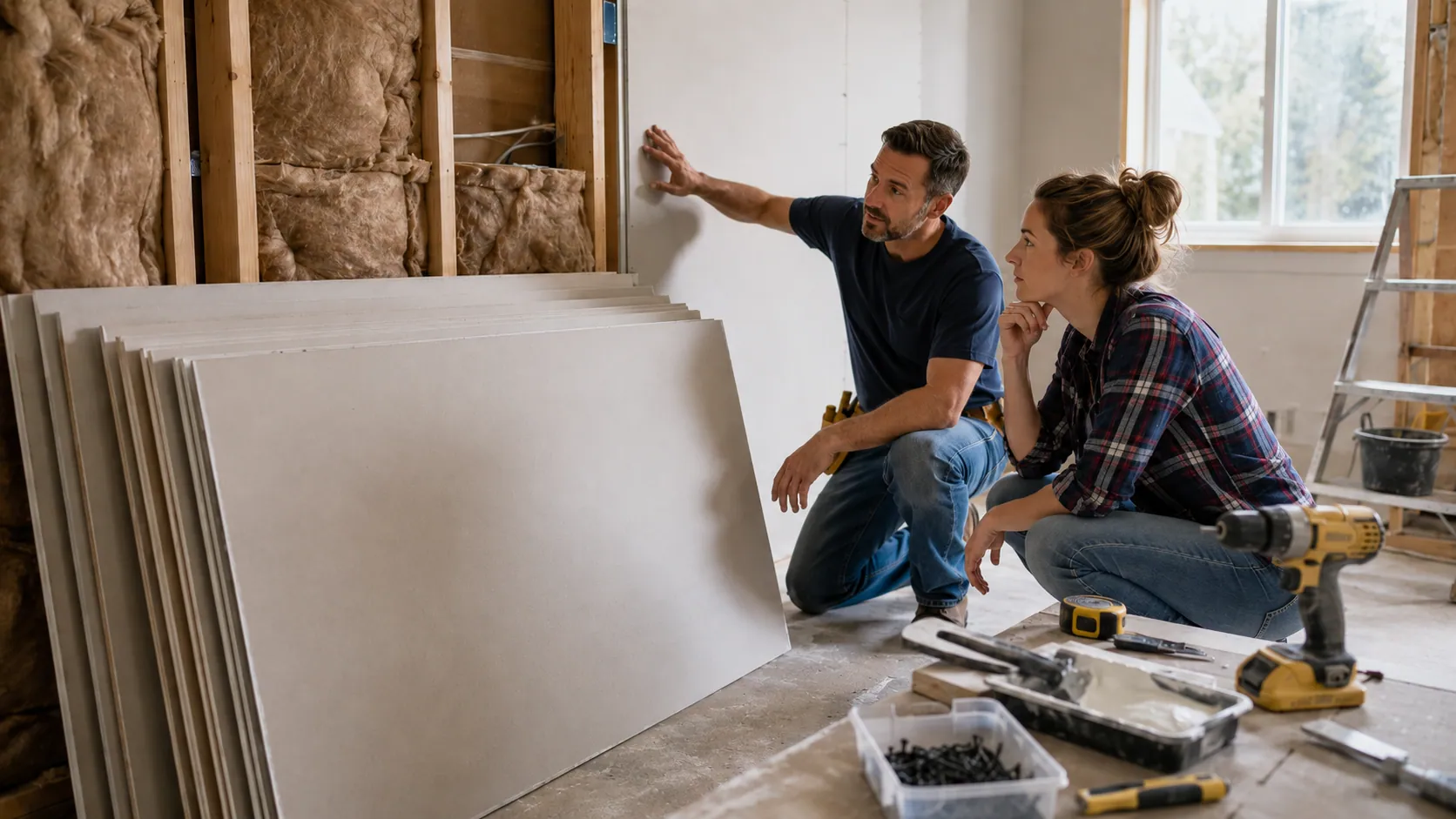
Is drywall and Sheetrock the same is a common question for homeowners, DIYers, and anyone reading a contractor estimate for wall repair or remodeling. The simple answer is: yes, people often use the words the same way in everyday conversation, but technically, Sheetrock is a brand of drywall.
Think of it like saying Kleenex when you mean tissue, Xerox when you mean photocopy, or ChapStick when you mean lip balm. Drywall is the general product category. Sheetrock® is a specific brand of drywall associated with USG, also known as the U.S. Gypsum Company.
That means all Sheetrock is drywall, but not all drywall is Sheetrock. For most home projects, the bigger question is not only the name. It is whether you are choosing the right drywall type, thickness, fire rating, moisture resistance, and finish quality for the room.
Quick Answer: Is Drywall and Sheetrock the Same?
In everyday use, drywall and Sheetrock are usually treated as the same thing. If a contractor says they are going to “hang Sheetrock,” they often mean they are going to install drywall panels on your interior walls or ceilings.
Technically, though, there is a difference. Drywall is the generic name for wall panels made with a gypsum core and a paper or fiberglass facing. Sheetrock is a brand-name product. It is a type of drywall, not a completely different material.
| Term | What It Means |
| Drywall | Generic name for gypsum wall panels |
| Sheetrock® | A brand of drywall made by USG |
| Gypsum board | Another common name for drywall |
| Wallboard | Another general term for drywall panels |
| Plasterboard | A related term often used for gypsum wall panels |
So, if you are asking, “is Sheetrock the same as drywall?” the best answer is: Sheetrock is drywall, but drywall is not always Sheetrock.
What Is Drywall?
Drywall is a common building material used to create smooth interior walls and ceilings. It is made from a gypsum core, usually covered with paper facing. Gypsum is a soft mineral, mostly made of calcium sulfate, that can be formed into flat panels for construction.
Drywall became popular because it is faster and easier to install than traditional plaster. Before drywall became common, many walls were built with layers of wet plaster over wood lath. That method was strong, but it required more labor, more drying time, and more skill. Drywall made modern home construction quicker and more affordable.
Most homes today use drywall in bedrooms, living rooms, hallways, offices, and ceilings. Standard panels often come in 4×8 sheets, although longer lengths like 10-foot, 12-foot, or even larger panels may be used on bigger jobs. Common thicknesses include 1/2-inch drywall for many walls and 5/8-inch drywall where more stiffness or fire resistance may be needed.
Drywall is also called gypsum board, wallboard, plasterboard, gypsum wallboard, or sometimes GWB in construction language.
What Is Sheetrock?
Sheetrock® is a specific brand of drywall. It is not a separate wall material. It is a branded version of the same general product category: gypsum-based drywall panels used for walls and ceilings.
The name Sheetrock is strongly connected with USG, the U.S. Gypsum Company. The brand became so well known that many people started using “Sheetrock” as a general word for drywall. This is why homeowners, builders, and contractors may say Sheetrock even when they are talking about drywall in general.
Sheetrock panels are used for the same basic purpose as other drywall panels. They are cut, hung on studs, fastened with drywall screws, taped, covered with joint compound, sanded, primed, and painted.
The important point is that Sheetrock brand drywall may have specific product lines, quality standards, and performance options, but the basic material category is still drywall. If you buy drywall from a store, it may be Sheetrock brand, or it may be another manufacturer’s product.
Drywall vs Sheetrock: The Main Difference
The main difference between drywall and Sheetrock is simple: drywall is the generic material, while Sheetrock is a brand name.
| Comparison Point | Drywall | Sheetrock |
| Product type | General wall panel category | Brand-name drywall |
| Main material | Gypsum core with facing | Gypsum-based branded panel |
| Common use | Interior walls and ceilings | Interior walls and ceilings |
| Brand-specific? | No | Yes |
| Everyday meaning | Often used generally | Often used to mean drywall |
| Technical meaning | Any gypsum wall panel | Sheetrock® brand product |
There are usually no major functional differences between a standard drywall panel and a standard Sheetrock panel if both are made for the same purpose. For example, a regular 1/2-inch drywall panel and a regular 1/2-inch Sheetrock panel can both be used for many common interior walls.
However, performance can vary by product type. A fire-rated drywall panel, mold-resistant drywall, moisture-resistant drywall, or soundproof drywall will perform differently from standard drywall. That difference matters more than the name printed on the panel.
In other words, when comparing drywall vs Sheetrock, focus first on the type, thickness, rating, and room use.
Why Do People Use Drywall and Sheetrock Interchangeably?
People use drywall and Sheetrock interchangeably because Sheetrock became a very recognizable brand. Over time, the brand name became part of everyday construction language.
This happens with many products. People may say Kleenex when they mean tissue, Xerox when they mean copy, or ChapStick when they mean lip balm. In the same way, many people say Sheetrock when they simply mean drywall.
Contractors may also use jobsite shorthand. Instead of saying “gypsum wallboard panels,” they may say “drywall,” “Sheetrock,” “gyp board,” or just “gyp.” These terms can sound confusing to homeowners, but they usually refer to similar wall panel materials.
This is why a contractor estimate may say Sheetrock installation, even if the contractor is not specifically promising to use Sheetrock® brand panels. If the brand matters to you, ask directly.
Does Sheetrock Work Better Than Regular Drywall?
Sheetrock can be a high-quality drywall product, but it is not automatically better for every project just because of the brand name. The real answer depends on what type of panel you are comparing.
For example, standard Sheetrock and standard drywall are made for similar uses. They both create interior walls and ceilings. But if you compare standard drywall to a special product like mold-resistant drywall, fire-rated Type X drywall, or soundproof drywall, the special product will offer features that standard drywall does not.
So, does drywall brand matter? Sometimes. A trusted brand may offer consistent quality, clear product specifications, and dependable performance. But for most small home repairs, the right product type matters more than the brand.
If you are patching a small hole in a bedroom wall, generic drywall may be completely fine. If you are finishing a garage wall, basement, bathroom, or shared wall between rooms, you should pay closer attention to fire resistance, moisture resistance, mold resistance, and soundproofing.
A simple rule is this: choose by room conditions first, brand second.
Is Sheetrock More Expensive Than Drywall?
Sheetrock may cost more than some generic drywall products, but the price difference is often not the biggest part of a drywall project. Labor, finishing, sanding, priming, texture matching, and painting can add more to the total cost than the panel brand itself.
Drywall cost can vary based on:
- Panel size
- Panel thickness
- Fire rating
- Moisture or mold resistance
- Local material prices
- Labor rates
- Finish level
- Project size
For example, a basic drywall sheet will usually cost less than a specialty product like Type X drywall, soundproof drywall, or mold-resistant drywall. A small patch repair may cost far less than replacing full wall sections. A smooth Level 5 drywall finish will usually cost more than a basic finish because it requires more labor and skill.
If you are comparing Sheetrock cost and drywall cost, do not only ask, “Which brand is cheaper?” Ask, “Which panel is right for this room, and what is included in the installation estimate?”
What Contractors Mean When They Say “Sheetrock”
When a contractor says Sheetrock, they may mean one of two things. They may mean the actual Sheetrock® brand, or they may simply be using the word as a general term for drywall.
This matters when you read a quote. If the estimate says “install Sheetrock,” it may not always mean the contractor is using official Sheetrock brand panels. It may simply mean drywall installation, including hanging panels, taping seams, applying joint compound, sanding, and preparing the wall for paint.
To avoid confusion, ask a few simple questions:
| Question | Why It Matters |
| What brand of drywall will you use? | Clarifies whether it is Sheetrock® or another brand |
| What thickness will the panels be? | Helps match wall, ceiling, or code needs |
| Is it moisture-resistant or fire-rated? | Important for bathrooms, basements, and garages |
| What finish level is included? | Affects paint quality and final appearance |
| Is sanding, cleanup, and priming included? | Prevents surprise costs |
Good contractor language should be clear. If something is vague, ask before the work starts.
Drywall, Sheetrock, Gypsum Board, Wallboard, and Plasterboard
One reason homeowners get confused is that several words are used for similar materials. Drywall, gypsum board, wallboard, and plasterboard often refer to gypsum-based wall panels. Sheetrock is the brand-specific term.
Here is a simple way to understand the terms:
| Term | Meaning |
| Drywall | Common generic term in the U.S. |
| Sheetrock | Brand name for drywall panels |
| Gypsum board | More technical material name |
| Wallboard | General name for wall panels |
| Plasterboard | Similar term, often used in different regions |
| GWB | Short for gypsum wallboard |
| Gyp board | Contractor slang for gypsum board |
Plaster, however, is different. Traditional plaster is usually applied wet over a base and then allowed to harden. Drywall comes as pre-made panels that are attached to studs and finished at the seams.
So, is wallboard the same as drywall? In many cases, yes. Is plaster the same as drywall? No, although drywall replaced plaster in many modern homes.
Common Types of Drywall and Sheetrock Products
Not all drywall is the same. Whether you choose generic drywall or Sheetrock brand drywall, the panel type matters.
| Type of Drywall | Best Use |
| Standard drywall | Bedrooms, living rooms, hallways |
| Lightweight drywall | Easier handling, some ceiling uses |
| Moisture-resistant drywall | Bathrooms, laundry rooms, damp areas |
| Mold-resistant drywall | Basements and humid spaces |
| Type X drywall | Garages and fire-rated areas |
| Soundproof drywall | Offices, bedrooms, shared walls |
| Impact-resistant drywall | High-traffic areas and commercial spaces |
Standard drywall works well in dry, normal living spaces. Moisture-resistant drywall or green board can be useful in bathrooms or laundry rooms, but it is not fully waterproof. Type X drywall is designed for better fire resistance and may be required in garages or other code-sensitive areas. Soundproof drywall can help reduce noise transfer between rooms.
This is why the question “should I buy drywall or Sheetrock?” is less important than “what type of drywall should I use?”
Which Drywall Should You Use by Room?
Choosing drywall by room is one of the smartest ways to avoid mistakes. A bedroom wall, bathroom ceiling, basement wall, and garage wall may not need the same product.
| Room or Area | Better Choice |
| Bedroom or living room | Standard drywall |
| Bathroom | Moisture-resistant or mold-resistant drywall |
| Basement | Mold-resistant drywall, depending on conditions |
| Garage | Type X fire-rated drywall if required |
| Ceiling | Proper thickness or lightweight ceiling drywall |
| Office or shared wall | Soundproof drywall |
| High-traffic area | Impact-resistant drywall |
For bathrooms, remember that moisture-resistant drywall is not waterproof drywall. It can handle humidity better than standard drywall, but it should not be used as the main backing inside a shower where direct water exposure happens. In wet tile areas, cement board or approved backer board is often a better choice.
For garages, check local code. Some attached garages require fire-rated drywall, often 5/8-inch Type X drywall, especially on walls or ceilings connected to living spaces.
Drywall Thickness and Sheet Size Basics
Drywall panels come in different sizes and thicknesses. The most common size for smaller home projects is 4×8 feet, but larger panels are often used by professionals to reduce seams.
Common drywall sizes include:
| Size | Common Use |
| 4×8 sheets | Small projects and general repairs |
| 4×10 sheets | Taller walls or fewer seams |
| 4×12 sheets | Large rooms and professional jobs |
| Longer panels | Commercial or large residential projects |
Common thicknesses include 1/2-inch drywall and 5/8-inch drywall. Many standard interior walls use 1/2-inch panels. Ceilings, garages, or fire-rated areas may need thicker or specially rated panels.
Framing also matters. Studs are often spaced 16 inches on center, but conditions vary. If drywall is too thin for the framing or ceiling span, it may sag or fail to perform well.
Before buying, check the project area, local code, and product label.
When You Should Not Use Regular Drywall
Regular drywall is useful, but it is not right for every situation. You should be careful using standard drywall in spaces with moisture, fire-rating requirements, or direct water exposure.
Avoid regular drywall in:
- Shower surrounds
- Very damp basements
- Areas with repeated leaks
- Garages that require fire-rated assemblies
- High-moisture commercial bathrooms
- Walls behind tile in wet areas
If drywall gets wet once and dries quickly, it may survive. But if it stays wet, becomes soft, grows mold, or crumbles, it may need replacement. Water damaged drywall should be taken seriously because moisture can spread behind the wall surface.
Also, do not assume green board or moisture-resistant drywall is waterproof. It resists moisture better than standard drywall, but it is not the same as cement board or waterproof wall panels.
The safest approach is to match the product to the risk: moisture-resistant for humid areas, Type X for fire-rated areas, cement board for wet tile areas, and standard drywall for normal dry rooms.
Drywall Repair vs Full Replacement
If you are researching drywall vs Sheetrock because you have wall damage, you may wonder whether you need a small repair or full replacement.
Small dents, nail holes, screw pops, and minor cracks can usually be repaired with drywall mud, joint compound, patching kits, tape, sanding, primer, and paint. A skilled repair can make the wall look smooth again.
Full replacement may be needed when the damage is larger or deeper. For example, replacement is often better when drywall has severe water damage, mold growth, broken panels, large holes, or crumbling edges.
The hardest part of drywall repair is not always the patch itself. It is often texture matching and paint matching. A repair may be structurally simple but visually noticeable if the wall texture does not blend with the surrounding area.
For small repairs, generic drywall or Sheetrock may both work. For larger repairs, try to match the existing thickness and panel type.
Common Mistakes Homeowners Make When Buying Drywall
Many drywall mistakes happen because people focus on the name instead of the project need. Choosing Sheetrock vs drywall is less important than choosing the right panel for the space.
A common mistake is buying standard drywall for a damp bathroom, basement, or laundry room. Another mistake is thinking moisture-resistant drywall is fully waterproof. It is not. For direct water exposure, you may need cement board or another approved backing material.
Some homeowners also forget the finishing materials. Drywall panels alone are not enough. You usually need drywall screws, drywall tape, joint compound, sanding tools, primer, and paint.
Another mistake is ignoring thickness. If the existing wall uses 1/2-inch drywall, using a different thickness for a patch can create an uneven surface.
Finally, do not choose only by price. Cheap drywall may be fine for a dry utility area, but the wrong product in a bathroom, garage, or basement can cost more later.
Should You Ask for Drywall or Sheetrock?
For everyday conversation, you can usually say either drywall or Sheetrock, and most contractors or store employees will understand what you mean. But for buying materials or approving a contractor quote, be more specific.
Instead of only asking for Sheetrock, ask for:
- The brand
- The panel type
- The thickness
- The sheet size
- The fire rating
- The moisture or mold resistance
- The finish level
If you are doing a small wall patch, brand may not matter much. If you are remodeling a bathroom, finishing a basement, or working on an attached garage, performance features matter more.
So, should you choose Sheetrock or drywall? The practical answer is: choose the correct drywall product first, then choose the brand if you have a preference.
Questions to Ask a Drywall Contractor Before Hiring
If you are hiring a drywall contractor, ask clear questions before the job begins. This helps you avoid confusion about materials, cost, and finish quality.
Here are helpful questions:
| Question | Why It Helps |
| What type of drywall will you use? | Confirms standard, moisture-resistant, or fire-rated panels |
| Is it Sheetrock® brand or another brand? | Clarifies brand expectations |
| What thickness will be installed? | Important for walls, ceilings, and code |
| Is taping, mudding, sanding, and cleanup included? | Prevents surprise charges |
| What finish level will I receive? | Affects final paint appearance |
| Will you match the existing texture? | Important for repairs |
| Is primer included? | Helps paint look even |
A professional should be able to explain the difference between drywall installation, drywall finishing, and painting. If the project involves water damage, ask whether any damaged material needs removal before new drywall goes up.
Drywall Alternatives: When Sheetrock May Not Be the Best Choice
Drywall and Sheetrock are excellent for many finished interior spaces, but they are not always the best choice.
In wet tile areas, cement board or backer board is often better than regular drywall. In garages, basements, commercial spaces, or utility areas, some people consider PVC wall panels, pre-finished panels, or other waterproof wall panel alternatives.
Drywall alternatives may cost more upfront, but they can reduce painting, sanding, or moisture concerns in certain spaces. However, drywall remains one of the most common and practical choices for bedrooms, living rooms, hallways, offices, and general home interiors.
The best material depends on the room, moisture level, budget, appearance, and code requirements.
Final Verdict: Drywall and Sheetrock Are Mostly the Same in Everyday Use
So, is drywall and Sheetrock the same? In everyday conversation, yes, many people use the two words to mean the same thing. Technically, though, Sheetrock is a brand of drywall made by USG, while drywall is the general name for gypsum wall panels.
The difference matters most when you are buying materials, reviewing a contractor quote, or choosing panels for a specific room. Instead of focusing only on the name, focus on the product details: standard, moisture-resistant, mold-resistant, fire-rated, soundproof, thickness, sheet size, and finish level.
For a normal bedroom or living room, standard drywall may be enough. For a bathroom, basement, garage, or ceiling, the right type of drywall matters much more.
The simplest takeaway is this: all Sheetrock is drywall, but not all drywall is Sheetrock.
FAQs
Is Sheetrock just another word for drywall?
In everyday speech, yes. Many people use Sheetrock as another word for drywall. Technically, Sheetrock is a brand name, while drywall is the general product category.
Is Sheetrock better than drywall?
Sheetrock is a trusted drywall brand, but it is not automatically better for every project. The type of drywall matters more. Fire-rated, moisture-resistant, or soundproof drywall may be better for certain rooms than standard drywall.
Is Sheetrock more expensive than drywall?
It can be slightly more expensive than some generic drywall products, but prices vary. Labor, finish level, room conditions, and panel type often affect the total project cost more than brand alone.
What is drywall made of?
Drywall is usually made with a gypsum core covered by paper facing. It is used to create smooth interior walls and ceilings.
What should I ask for at a hardware store?
Ask for the drywall type you need, such as standard drywall, moisture-resistant drywall, mold-resistant drywall, or Type X drywall. Also mention the size and thickness, such as 4×8 sheets or 1/2-inch drywall.
Can drywall get wet?
Yes, drywall can get wet, but regular drywall does not handle repeated moisture well. If it stays wet, softens, crumbles, or grows mold, it may need replacement.
Is wallboard the same as drywall?
Usually, yes. Wallboard is often used as another general term for drywall or gypsum board.
Is plaster the same as drywall?
No. Traditional plaster is applied wet and hardens in place. Drywall comes in pre-made gypsum panels that are attached to studs and finished at the seams.
Disclaimer: This article is for general informational and home-improvement purposes only and does not constitute professional construction, engineering, building-code, or contractor advice. Drywall products, installation requirements, fire ratings, moisture resistance, and local building regulations may vary by project and location. Always consult qualified professionals and applicable building codes before making construction or renovation decisions.