

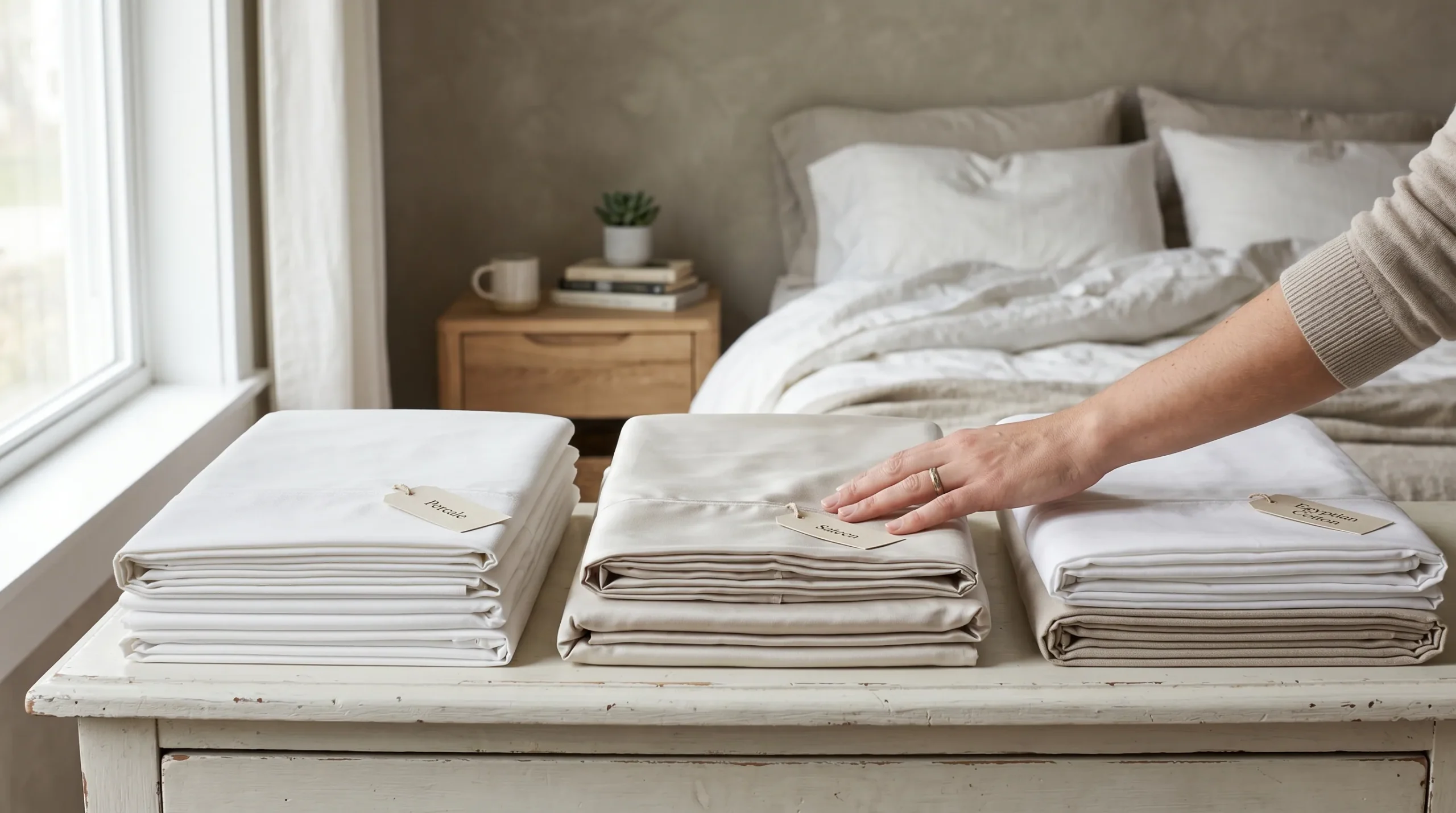
What is the best thread count for sheets? For most people, the best thread count is usually between 200 and 600, depending on the fabric type, weave, yarn quality, and whether you prefer sheets that feel cool and crisp or smooth and warm.
Many shoppers assume that higher thread count sheets are always better, but that is one of the biggest bedding myths. A 400 thread count sheet made from single-ply long-staple cotton can feel softer, cooler, and last longer than a 1,000 thread count sheet made with cheap multi-ply yarns. In other words, the number matters, but it is not the whole story.
The real secret to choosing good quality sheets is understanding how thread count, fabric quality, weave type, and sleep temperature work together. This guide explains the best thread count for cotton sheets, Egyptian cotton sheets, percale sheets, sateen sheets, bamboo sheets, linen sheets, and more.
Quick Answer: The Best Thread Count for Sheets
The best thread count for sheets is usually 200–600 thread count. Within that range, most people can find sheets that feel soft, breathable, and durable without paying extra for inflated numbers.
Here is a simple guide:
| Sheet Type | Best Thread Count / Measurement | Best For |
| Cotton sheets | 200–400 thread count | Everyday comfort and durability |
| Percale sheets | 200–400 thread count | Crisp, cool, breathable feel |
| Sateen sheets | 300–600 thread count | Smooth, silky, warmer feel |
| Egyptian cotton sheets | 300–600 thread count | Premium softness and strength |
| Pima or Supima cotton sheets | 300–600 thread count | Softness, durability, luxury feel |
| Bamboo sheets | 250–400 thread count | Cooling, moisture-wicking comfort |
| Linen sheets | Often 80–150 thread count or GSM-based | Airy, relaxed, breathable texture |
| Microfiber sheets | Usually measured by 90–120 GSM | Budget softness |
| Flannel sheets | Usually measured by 160–190 GSM | Winter warmth |
| Silk sheets | Usually measured by 17–22 momme | Smooth luxury |
For a quick buying rule, choose 200–400 percale if you sleep hot or like a crisp hotel-style feel. Choose 300–600 sateen if you want a smoother, warmer, silkier sheet. Choose 300–500 thread count if you want a safe middle ground for everyday use.
What Does Thread Count Mean?
Thread count means the number of horizontal threads and vertical threads woven into one square inch of fabric. The vertical threads are called warp threads, and the horizontal threads are called weft threads.
For example, if a sheet has 150 warp threads and 150 weft threads in one square inch, it has a 300 total thread count. This is why thread count is often used as a quick way to describe fabric density.
A higher thread count can sometimes mean a smoother or denser sheet, but only up to a point. Once the thread count gets very high, the sheet may become heavier, less breathable, or even misleading if the number is inflated through multi-ply counting.
That is why sheet thread count explained properly must include more than just the number. The true feel of a sheet also depends on the fiber quality, yarn quality, weave density, finishing processes, and whether the sheet is made with single-ply yarn or multi-ply yarn.
A good sheet is not simply the one with the biggest number on the label. A good sheet is the one that matches your body temperature, comfort preference, fabric preference, and budget.
Does Higher Thread Count Mean Better Sheets?
No, higher thread count does not always mean better sheets. This is one of the most important things to understand before buying new bedding.
In general, thread counts between 200 and 600 are enough for most high-quality sheets. Once you see numbers like 800 thread count, 1,000 thread count, 1,200 thread count, 1,500 thread count, or even 2,000 thread count, you should look more carefully at the product label.
Some very high thread count sheets are made by twisting two, three, or four thinner threads together and counting each strand separately. This is called multi-ply yarn or multi-ply counting. For example, a sheet may have only 250 actual threads per square inch, but if each thread is made from 4-ply yarn, the brand may market it as 1,000 thread count.
That does not always mean the sheet is better. In fact, some 1,000 thread count sheets can feel heavy, stiff, and less breathable. They may also trap heat, especially for hot sleepers or people living in warm or humid climates.
A more honest way to shop is to ask: Is the fabric made from long-staple cotton? Is it single-ply? Is the weave percale or sateen? Does the brand clearly explain the material? These questions tell you more about sheet quality than a huge thread count alone.
Thread Count vs Fabric Quality and Weave
When comparing thread count vs fabric quality, fabric quality usually matters more. A 300-thread-count long-staple cotton sheet can outperform a 1,000-thread-count sheet made from short, weak fibers.
The best sheets often use long-staple cotton, extra-long-staple cotton, Pima cotton, Supima cotton, or Egyptian cotton. These fibers are longer and stronger, so they can be spun into smoother yarns. That helps create sheets that feel soft, resist pilling, and stay comfortable after regular washing.
Shorter cotton fibers are more likely to break, pill, or feel rough after washing. That is why a high thread count does not automatically mean better durability. If the yarn is poor quality, the sheet may still wear out quickly.
The weave type also changes the feel. Percale weave uses a simple one-over, one-under weave, which creates a crisp, matte, breathable sheet. Sateen weave usually uses a four-over, one-under weave, which creates a smoother surface, subtle sheen, and warmer feel.
So, the best way to choose sheets is:
Fabric first, weave second, thread count third.
That means a 300 count percale may be better for cooling, while a 600 count sateen may be better for softness and warmth. Neither is automatically better. They simply serve different sleep preferences.
Best Thread Count by Fabric Type
Different fabrics have different ideal thread count ranges. This is why the best thread count for bed sheets depends heavily on the material.
Cotton Sheets: 200–400 Thread Count
For regular cotton sheets, a 200–400 thread count is often the sweet spot. This range gives a good balance of softness, breathability, and durability. It is also a practical choice for everyday bedrooms, guest rooms, and kids’ beds.
A 300 thread count cotton sheet can be excellent if the cotton is good quality. A 400 thread count sheet can feel smoother and slightly heavier while still allowing airflow. If you want an all-season option, this is one of the safest ranges.
Egyptian, Pima, and Supima Cotton: 300–600 Thread Count
For Egyptian cotton sheets, Pima cotton sheets, and Supima cotton sheets, look for around 300–600 thread count. These premium cotton types are often made with longer fibers, which means they can feel luxurious without needing extreme numbers.
A 400-count single-ply Egyptian cotton percale sheet can feel crisp, cool, and durable. A 500 or 600 thread count sateen made from long-staple cotton can feel smooth, soft, and slightly warmer.
Percale Sheets: 200–400 Thread Count
The best thread count for percale sheets is usually 200–400. Percale is known for a crisp matte finish, strong airflow, and a clean hotel-style feel. It is one of the best options for hot sleepers, summer bedding, and people who dislike heavy sheets.
Sateen Sheets: 300–600 Thread Count
The best thread count for sateen sheets is usually 300–600. Sateen sheets feel smoother, silkier, and warmer than percale. They often have a soft sheen and a more luxurious drape.
If you want a cozy sheet for cooler weather, 300–600 sateen is a strong choice. But if you sleep hot, avoid very dense sateen sheets because they may trap heat.
Bamboo Sheets: 250–400 Thread Count
The best thread count for bamboo sheets is often around 250–400. Bamboo fabrics such as bamboo viscose and bamboo lyocell are naturally soft and breathable, so they do not need extremely high thread counts.
A 300-thread-count bamboo lyocell sheet can feel smooth, cool, and moisture-wicking. Bamboo sheets are often a good choice for night sweats, humid climates, and people who want a soft but breathable sleep surface.
Linen, Microfiber, Flannel, and Silk
Linen sheets are different. Linen is usually judged more by GSM, weight, weave, and fiber quality than by traditional cotton-style thread count. A lower thread count does not mean linen is poor quality.
Microfiber sheets and flannel sheets are also often measured by GSM. Microfiber may fall around 90–120 GSM, while flannel may be around 160–190 GSM for warmth. Silk sheets are usually measured by momme, often around 17–22 momme, not thread count.
Percale vs Sateen: Which Thread Count Is Best?
When choosing between percale vs sateen sheets, do not focus only on the number. Focus on how you want the sheets to feel.
| Weave | Best Thread Count | Feel | Best For |
| Percale | 200–400 | Crisp, cool, matte | Hot sleepers, summer, hotel-style beds |
| Sateen | 300–600 | Smooth, silky, warmer | Cold sleepers, luxury softness |
Percale sheets are breathable because of their plain weave. They feel fresh, light, and crisp. If you like sheets that feel cool when you get into bed, percale is usually the better choice.
Sateen sheets have a smoother and denser weave. They feel softer at first touch and often look slightly shinier. If you like a warmer, silkier bed, sateen may feel more luxurious.
This is why 300 count percale vs 600 count sateen is not a simple “better or worse” comparison. A 300 count percale can feel cooler and cleaner, while a 600 count sateen can feel softer and warmer. The right choice depends on your body temperature and texture preference.
Best Thread Count for Hot Sleepers, Cold Sleepers, and Seasons
The best thread count for hot sleepers is usually lower to mid-range, especially 200–400 thread count in cotton percale. Hot sleepers need airflow, breathability, and moisture-wicking comfort more than dense fabric.
If you sleep hot, choose 200–400 percale, lightweight cotton, linen, or bamboo. These fabrics help support air circulation and reduce overheating. In warm or humid climates, a 250–400 thread count range is often more comfortable than heavy, high-thread-count sheets.
For cold sleepers, the best range is often 300–600 thread count, especially in sateen or flannel. These sheets feel smoother, denser, and warmer. In cooler or drier climates, 300–600 sateen can provide a cozy feel without needing a bulky blanket.
For summer and spring, choose breathable sheets such as 200–400 percale, bamboo, or linen. For winter and autumn, choose 300–600 sateen, brushed cotton, or flannel measured by GSM.
A simple seasonal rule is:
| Sleep Need | Best Choice |
| Hot sleeper | 200–400 percale, bamboo, or linen |
| Cold sleeper | 300–600 sateen or flannel |
| Humid climate | Breathable cotton, bamboo, or linen |
| Winter bedding | Sateen, flannel, or heavier cotton |
| All-season use | 300–500 cotton or bamboo |
Are 1,000 Thread Count Sheets Worth It?
Are 1,000 thread count sheets worth it? Sometimes, but not always. A 1,000 thread count sheet may sound luxurious, but it can also be a marketing number.
The problem is that some manufacturers use multi-ply yarns to inflate the count. A sheet made with 250 actual threads using 4-ply yarn may be labeled as 1,000 thread count. Similarly, 200 actual threads using 3-ply yarn could be promoted as 600 thread count.
That is why 400 thread count vs 1,000 thread count is not always a fair fight. A 400 thread count single-ply sheet made from long-staple cotton can be softer, cooler, and longer-lasting than a 1,000 thread count cotton sheet made from lower-quality fibers.
Very high thread counts can also create a dense fabric that feels stiff or traps heat. This may be uncomfortable for hot sleepers or anyone who wants lightweight bedding.
A 1,000 thread count sateen sheet may be worth considering only if the brand clearly explains the material, ply, weave, and fiber source. If the label is vague, the huge number should be treated as a red flag.
Sheet Label Checklist: What to Look For Before Buying
A smart thread count buying guide should go beyond the number on the package. Before buying sheets online or in-store, check the full label.
Look for the fabric type first. Is it cotton, Egyptian cotton, bamboo viscose, bamboo lyocell, linen, microfiber, or a synthetic blend? Then check the weave type. Is it percale, sateen, flannel, or something else?
Next, look for single-ply yarn where possible. Single-ply is usually a better quality signal than inflated multi-ply thread counts. Also look for terms like long-staple cotton, extra-long-staple cotton, Pima cotton, or Supima cotton.
Certifications can also help. OEKO-TEX certified sheets indicate testing for certain harmful substances. GOTS certified cotton sheets are useful if you want organic cotton with stricter production standards.
Here is a simple sheet label checklist:
| Check This | Why It Matters |
| Fabric type | Tells you how the sheet will feel and perform |
| Weave type | Affects cooling, softness, and warmth |
| Thread count range | Helps judge density, but not total quality |
| Single-ply yarn | Often more honest than multi-ply counting |
| Long-staple fibers | Improves smoothness and durability |
| Certifications | Helpful for sensitive skin and safer materials |
| Care instructions | Shows how easy the sheets are to maintain |
Avoid vague claims like “luxury cotton blend” if the brand does not explain the cotton type, weave, or ply. Also be cautious with too-good-to-be-true pricing on extremely high thread counts.
Common Thread Count Myths
There are many myths around thread count for sheets, and they often lead shoppers to spend more than they need to.
The first myth is that higher thread count always means better sheets. In reality, fabric quality, weave, yarn strength, and finishing matter just as much.
The second myth is that 1,000 thread count is automatically luxury. Sometimes it is simply a result of creative counting methods or multi-ply yarns.
The third myth is that all fabrics should be judged by thread count. This is not true. Linen, microfiber, flannel, and silk are often measured differently using GSM or momme.
The fourth myth is that soft sheets are always high quality. Some sheets feel soft because of chemical softeners or finishing treatments, but they may become rough after washing.
The fifth myth is that low thread count always means cheap. A 200-thread-count percale sheet made from strong cotton can be excellent, especially for hot sleepers.
The best approach is to avoid marketing gimmicks and look for honest material details.
Final Words: What Thread Count Should You Choose?
So, what is the best thread count for sheets? For most people, the best range is 200–600 thread count.
Choose 200–400 percale if you want sheets that feel cool, crisp, breathable, and hotel-like. Choose 300–600 sateen if you want sheets that feel smooth, silky, warmer, and more luxurious. Choose 300–500 cotton or bamboo if you want a reliable all-season option.
But remember, the best sheets are not chosen by thread count alone. Look at fabric quality, weave type, single-ply yarn, long-staple fibers, breathability, and care instructions. A moderate thread count with high-quality materials is usually better than an inflated number with vague labeling.
In simple terms: the best thread count is the one that matches your fabric, climate, and sleep style.
FAQs About the Best Thread Count for Sheets
Is 300 thread count good for sheets?
Yes, 300 thread count can be very good, especially for cotton, percale, or bamboo sheets. If the fabric uses quality yarn, 300 thread count can feel soft, breathable, and durable.
Is 400 thread count good for sheets?
Yes, 400 thread count is often one of the best choices for everyday sheets. It offers a strong balance of softness, airflow, and durability, especially in cotton or percale.
Is 600 thread count better than 400?
Not always. 600 thread count may feel smoother and warmer, especially in sateen, but 400 thread count may feel cooler and more breathable. The better choice depends on whether you want warmth or airflow.
Are 1,000 thread count sheets too hot?
They can be. Many 1,000 thread count sheets are dense and less breathable, which may trap heat. Hot sleepers often do better with 200–400 thread count percale, bamboo, or linen.
What thread count do hotels use?
Many hotel-style sheets are around 200–400 thread count, often in crisp cotton percale. The clean, cool hotel feel usually comes from the weave, laundering, and fabric quality, not an extremely high number.
What thread count feels the softest?
For cotton and sateen sheets, 300–600 thread count often feels soft and smooth, especially when made from long-staple cotton. Bamboo sheets can also feel very soft at around 250–400 thread count.
What is a bad thread count for sheets?
There is no single bad number, but suspiciously high counts like 1,000+ thread count with vague material details can be a red flag. Very low-quality sheets can also feel rough, pill quickly, or lose softness after washing.
Is lower thread count better for summer?
Often, yes. A lower to mid-range thread count, especially 200–400 percale, is usually better for summer because it allows more airflow and feels lighter on the skin.
Disclaimer:
This article is for general informational purposes only and is meant to help readers understand sheet thread count and bedding choices. Comfort, fabric feel, sleep temperature, durability, and personal preferences can vary from person to person. Always choose sheets based on your own sleep style, climate, material preference, and care needs.