

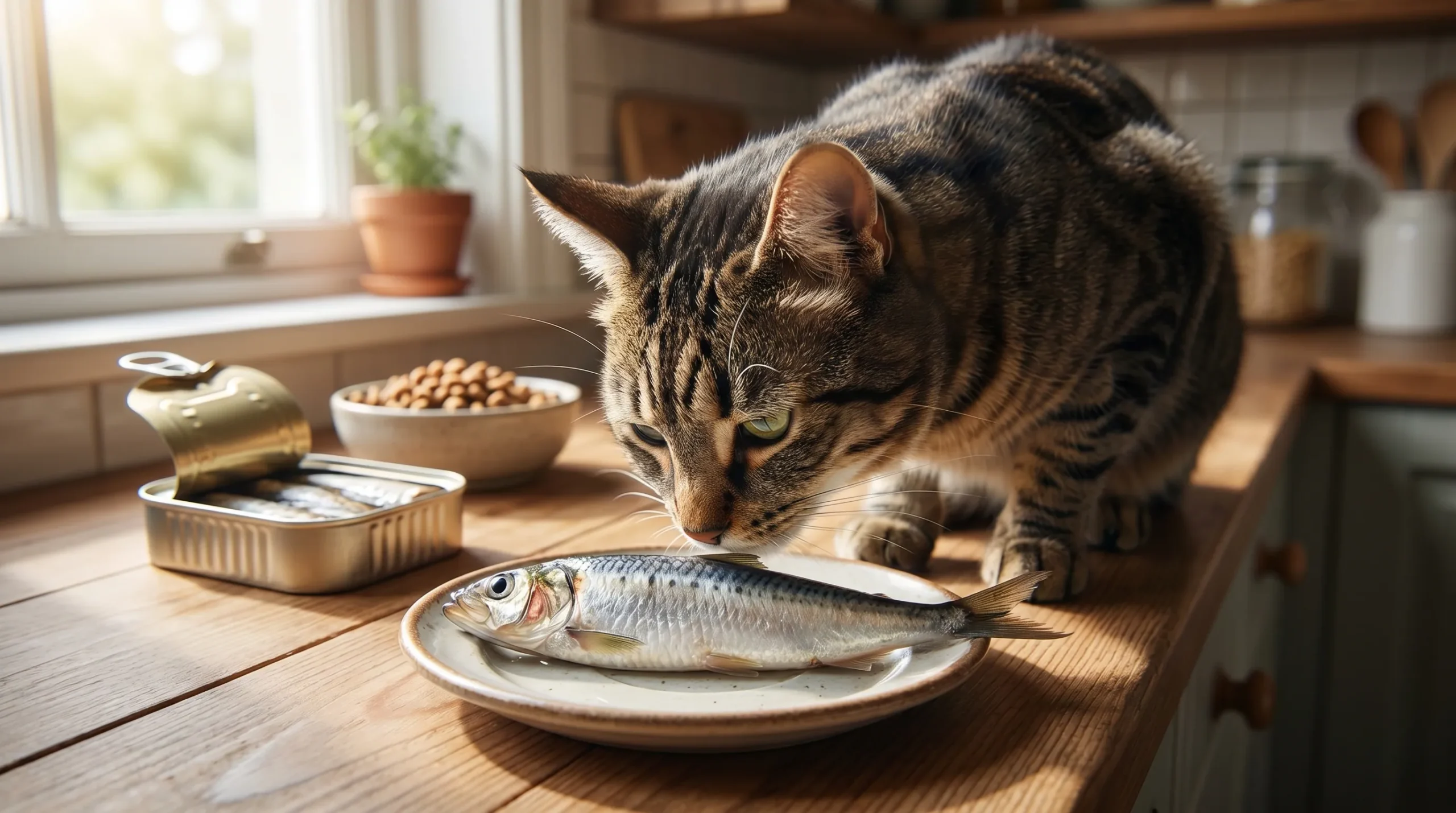
Can a cat eat sardines? Yes, cats can eat sardines in small amounts, and for many cats they can be a tasty, nutritious treat. But there is an important catch: the type of sardines, the portion size, and the way they are prepared matter just as much as the fish itself. A plain sardine packed in water is very different from smoked sardines, sardines in brine, or sardines in tomato sauce loaded with salt, oil, or seasonings like garlic and onion.
That is why so many cat owners search questions like “are sardines safe for cats,” “can cats eat canned sardines in oil,” or “how often can cats eat sardines.” They usually already have a tin in the kitchen and want a quick, trustworthy answer before sharing it with their pet. The short version is that sardines for cats can be a smart occasional treat, but they should never replace a complete and balanced cat food.
In this guide, you will learn the benefits of sardines for cats, the biggest risks, the safest kind to buy, how much to feed, and when not to give sardines at all.
Are Sardines Good for Cats?
In many cases, sardines are good for cats when they are fed in moderation. They are rich in protein, and cats are obligate carnivores, so animal protein fits naturally into their diet. Sardines also contain omega-3 fatty acids, which are often linked to skin health, coat health, joint health, and support for normal cardiovascular function.
They also provide useful nutrients like vitamin B12, vitamin D, calcium, selenium, phosphorus, magnesium, iron, and zinc. These are all nutrients people notice when they look at the nutrition profile of sardines. In simple terms, sardines can offer a compact package of healthy fats, minerals, and vitamins.
A lot of cat owners like sardines because they are flavorful. Cats have an acute sense of smell, and the strong aroma of fish often makes sardines appealing, especially for picky eaters. That is one reason sardines as a cat food topper can work well. A tiny amount mixed into normal food may encourage a cat to eat without turning fish into the main meal.
Here is a simple breakdown of why sardines attract so much attention in feline nutrition:
| Nutrient or feature | Why cat owners care |
|---|---|
| Protein | Helps support normal muscle maintenance |
| Omega-3 fatty acids | May support skin, coat, and joint comfort |
| Vitamin B12 | Important for normal body functions |
| Calcium | Useful for bone strength |
| Selenium | Supports normal cellular health |
| Strong fish flavor | Can help tempt picky cats |
That said, even though sardines contain good nutrients, they are not a complete meal plan. A nutritious treat is still just a treat. This is where many owners get confused. Something can be healthy and still be the wrong thing to feed too often.
When Sardines Are Safe — and When They Are Not
The safest answer to “can cats eat sardines” is: yes, but only the right kind.
The best option is usually plain sardines in water, sardines in spring water, or no-salt-added sardines for cats if you can find them. These avoid extra sodium, heavy seasoning, and unnecessary fats. If you are choosing between multiple tins, simpler is almost always better.
The problem starts when sardines are packed in things cats do not need. Sardines preserved in brine can contain too much salt. Sardines preserved in oil may be too rich or high in calories for some cats. Sardines in sauce can be even riskier because sauces often contain garlic, onion, tomato, mustard, spices, sugar, or preservatives.
So, if you are wondering “are tinned sardines safe for cats”, the honest answer is that some are and some are not. It depends on the label.
Best to choose
- Plain sardines in water
- Sardines in spring water
- Low-sodium sardines for cats
- Deboned sardines for cats if you want extra caution
Use caution with
- Sardines in olive oil
- Sardines in sunflower oil
- Fresh sardines that still contain noticeable bones
Usually avoid
- Sardines in brine
- Smoked sardines
- Flavored sardines
- Sardines in tomato sauce
- Sardines in mustard sauce
- Anything with garlic, onion, or heavy seasoning
This is an important content gap many articles miss. They say “cats can eat sardines,” but they do not clearly separate the safe can from the unsafe one. For real-life feeding, that distinction matters most.
Risks of Feeding Sardines to Cats
Even though sardines for cat health can sound positive, there are real risks if you choose the wrong product or feed too much.
Too much sodium
One of the biggest concerns is sodium. Brine-packed sardines and some canned fish products can be much saltier than what is ideal for cats. A salty fish given once in a tiny bite may not cause a crisis in a healthy cat, but regular use is not a smart habit. This matters even more for cats with kidney problems, heart issues, or those on restricted diets.
Too much oil and calories
Can cats eat canned sardines in oil? Sometimes a tiny amount may be tolerated, but oil-packed sardines are usually not the best choice. They can be richer, messier, and harder on a cat’s stomach. Cats with sensitive stomachs, a history of digestive upset, or pancreatitis may do poorly with oily fish. Extra fat also means extra calories, which can contribute to weight gain over time.
Bones and choking hazards
Many people ask, “can cats eat fish bones?” Soft sardine bones may not always cause a problem, but bones still deserve caution. Larger pieces or sharp fragments can become a choking hazard, irritate the mouth, or create digestive trouble. If you want peace of mind, choose boneless sardines or mash the fish well and inspect it carefully before serving.
Mercury and heavy metals
Because fish naturally raises concerns about mercury, many owners wonder if mercury poisoning in cats is possible. Sardines are often considered a smaller, lower-food-chain fish, which generally makes them a more practical fish treat than some larger species. Still, that does not mean unlimited feeding is wise. Fish should stay a small part of the diet, not the daily foundation.
Raw fish safety
Can cats eat raw sardines? It is better not to make raw sardines a routine treat. Raw fish can carry bacteria such as E. coli or salmonella, and some raw fish concerns also include thiaminase, an enzyme associated with breaking down thiamine. Plain, properly handled fish is safer than raw fish for most homes.
Toxic seasonings
This is where people get into trouble fast. Can cats eat fish with garlic onion and tomato? No, that is not a good idea. Garlic and onion are especially important to avoid. A sardine itself may be fine, but the sauce around it may turn it into the wrong food for a cat.
A useful rule: if the sardines were seasoned for human taste, they are probably not the best choice for your cat.
Best Type of Sardines for Cats
If you want the simplest shopping advice, this is it: choose plain, unseasoned, low-sodium sardines packed in water.
Here is a quick ranking of common options:
| Type of sardine | Good choice for cats? | Why |
|---|---|---|
| Sardines in water | Yes | Usually the cleanest and simplest option |
| Sardines in spring water | Yes | Similar to water-packed and easy to serve |
| No-salt-added sardines | Best | Helps reduce sodium risk |
| Sardines in oil | Sometimes | Richer, more calories, may upset stomach |
| Sardines in brine | Usually no | Often too salty |
| Smoked sardines | No | More processing and often extra salt |
| Sardines in tomato sauce | No | Sauce ingredients may be unsafe |
| Flavored sardines | No | Seasonings can be risky |
Fresh sardines can also work if they are cooked, plain, and carefully prepared. So if you are comparing canned vs fresh sardines, both can be acceptable, but canned in water is often easier and more practical for portion control.
This is also where label reading helps. Look for tins with the shortest ingredient list possible. Ideally, it should be something like sardines, water, and little else.
How to Feed Sardines to Your Cat Safely
Many owners know sardines can be okay, but they are less sure about how to feed sardines to your cat. The safest method is simple.
First, drain the tin. If the sardines are not packed in ideal liquid, some owners ask, “should I rinse sardines before serving to my cat?” In many cases, rinsing before serving can help remove some surface salt, oil, or sauce. This is especially useful if you only have a less-than-perfect option and want to reduce the excess before offering a tiny amount.
Second, inspect the fish. If you see obvious bones or hard pieces, remove them. Some owners prefer deboned sardines for cats for this reason alone.
Third, serve the sardines plain. Do not add seasoning. Do not mix them with spicy leftovers. Do not turn them into a full meal.
Fourth, start small. A cat does not need much. A little flaked sardine mixed into regular food is enough to test tolerance. This is why sardines as an occasional topper works better than feeding multiple whole fish at once.
Finally, watch your cat afterward. If there is vomiting, diarrhea, gagging, excessive thirst, or clear discomfort, stop feeding sardines and reassess what product was used.
A practical example looks like this:
- Open a tin of sardines in water no salt added
- Drain it well
- Mash a small piece
- Mix it into your cat’s regular food
- Refrigerate the rest for later use or discard if needed
That is far safer than tossing your cat an entire sardine from a tin of heavily seasoned fish.
How Much Sardine Can a Cat Eat?
This is one of the most important questions because many problems come from too much, not from the fish itself.
A small serving is enough. For many cats, something like 1 small sardine, 1 tablespoon, or part of 1–2 sardines is already plenty as a treat. The exact amount depends on your cat’s size, daily calorie intake, and health.
As a general pattern, sardines should stay an occasional treat. Not a daily extra. Not a meal replacement. Not a constant topper at every meal.
Reasonable frequency ideas
- Once a week
- Once or twice a week for some healthy adult cats in small amounts
- Twice a month if you prefer to stay conservative
If you are asking “how often can cats eat sardines” or “can cats eat sardines every day,” daily feeding is usually unnecessary and not ideal. A better target is treating sardines like a special bonus, not a habit.
A helpful nutrition principle is this: treats should be no more than 10% of calories. That keeps the cat’s main nutrition coming from a complete and balanced cat food, where it belongs.
Can Cats Eat Sardines Every Day?
Technically, a cat might eat sardines often and seem fine for a while, but that does not mean it is the best plan. Can cats eat sardines as a regular part of their diet? Not really in the sense of depending on them daily.
Sardines do not provide the same controlled balance as a full commercial cat food designed for long-term feeding. They can add extra fat, extra sodium, and too much of one food source if overused. Even healthy foods can become unbalanced when they crowd out the main diet.
The smarter approach is to think of sardines as one of several vet-approved cat treats or occasional food toppers. That way your cat enjoys the taste and the nutritional perks without the downsides of overdoing fish.
So if you are wondering whether sardines should replace your cat’s food, the answer is no. If you are wondering whether they can be a tiny extra once in a while, the answer is yes.
Special Cases: Kittens, Senior Cats, and Cats With Health Conditions
This is where careful feeding matters most.
Can kittens eat sardines?
Can kittens eat sardines? They can sometimes have a very small amount, but kittens should get the vast majority of their nutrition from balanced kitten food. Their diets are too important to experiment with casually. If you do offer sardine, make it tiny, plain, and only once in a while. So yes, sardines are safe for kittens only with extra care and only in small amounts.
Sardines for senior cats
Sardines for senior cats can be appealing because the smell and softness may encourage eating. Some older cats enjoy them as a topper. But seniors may also have hidden health issues, so lower sodium and gentler portions matter even more.
Cats with kidney disease
Sardines for cats with kidney disease deserve caution. Fish can bring concerns around sodium and phosphorus, and many cats with kidney problems need tightly managed diets. This is a situation where talking to a veterinarian first is the right move.
Cats with pancreatitis or sensitive stomachs
Sardines for cats with pancreatitis or cats with sensitive stomachs are not always a good fit, especially if the fish is oily. Even a safe food can be the wrong food for a medically fragile cat. If your cat tends to vomit after rich foods, skip sardines or ask your vet first.
Sardines vs Tuna vs Salmon: Which Fish Is Better for Cats?
Cat owners often compare sardines vs tuna for cats or sardines vs salmon for cats because all three are common human foods. Each can be offered in small amounts when plain and properly prepared, but sardines have a practical advantage: they are small fish and are often chosen as a low-mercury fish for cats compared with some larger species.
Tuna is famous for tempting picky cats, but it is also easy to overfeed. Salmon can be a good occasional treat when cooked and plain, but the same issues with seasoning, oil, and portions still apply.
So are sardines better than tuna for cats? In many real-world cases, sardines are a better occasional choice because they are smaller, easy to portion, and widely available in simple water-packed tins. But “better” still does not mean “daily.”
Symptoms to Watch For After Feeding Sardines
If your cat eats sardines and you are unsure how they handled them, watch for:
- Vomiting
- Diarrhea
- Gagging or coughing
- Trouble swallowing
- Lethargy
- Refusing food afterward
- Signs of stomach upset
- Unusual thirst after a salty product
These are the kinds of signs owners mean when they search “signs your cat ate too many sardines” or “what to do if cat eats sardines in sauce.” A tiny lick of the wrong product may not always cause a major issue, but a larger amount or a strongly seasoned product deserves more attention.
When to call a vet
Call your vet if:
- your cat ate sardines with garlic or onion
- bones may be stuck
- vomiting or diarrhea is repeated
- your cat seems weak, distressed, or in pain
- your cat has kidney disease, pancreatitis, or another medical condition and ate a salty or oily product
This is one area many articles skip, but it matters because the real searcher problem is often not just “can cats eat sardines,” but “my cat already ate them, now what?”
Vet-Backed Safety Checklist
Before feeding sardines, run through this quick checklist:
- Choose plain sardines
- Prefer water-packed, spring water, or no-salt-added sardines
- Avoid brine-packed sardines
- Avoid smoked or heavily seasoned fish
- Avoid tomato sauce, mustard sauce, garlic, and onion
- Drain or lightly rinse the fish
- Remove obvious bones
- Start with a very small portion
- Use sardines as a treat or topper, not a daily staple
- Ask your veterinarian first if your cat has health issues
That is the simplest and safest way to answer the whole topic.
FAQs
Can cats eat canned sardines in water?
Yes. Canned sardines in water are usually one of the best options, especially if they are plain and low sodium.
Can cats eat sardines in olive oil?
A tiny amount may be tolerated, but sardines in olive oil are not usually the best choice. They are richer and may upset sensitive stomachs.
Can cats eat sardines in tomato sauce?
Usually, no. Sardines in tomato sauce may include extra salt, sugar, spices, and possibly garlic or onion.
Can cats eat raw sardines?
It is safer to avoid routine feeding of raw sardines because of food safety concerns.
Can kittens eat sardines?
Only in very small amounts and only occasionally. A kitten’s main food should still be a proper kitten diet.
Are sardines better than tuna for cats?
In many cases, yes as an occasional treat, mainly because sardines are small fish and easy to portion. But both should be fed in moderation.
Should I rinse canned sardines first?
If the sardines are not packed in the ideal liquid, yes, rinsing can help remove some surface salt, oil, or sauce.
Final Words
So, can a cat eat sardines? Yes, a cat can eat sardines when they are plain, properly prepared, and fed in small amounts. The best choice is usually low-sodium sardines packed in water. The worst choices are usually brine-packed, smoked, or sauce-covered sardines with ingredients like garlic, onion, or excess oil.
Think of sardines as a smart little extra, not a daily staple. Used that way, they can be a flavorful treat with real nutritional value. Overused, or chosen in the wrong form, they can create avoidable problems.
Disclaimer:
This article is for general informational purposes only and is not a substitute for professional veterinary advice, diagnosis, or treatment. Cats’ diets, portion needs, sensitivities, and health conditions can vary, especially for kittens, senior cats, or cats with kidney disease or pancreatitis. Always ask a licensed veterinarian before adding sardines regularly or feeding them to a cat with any medical concern.