

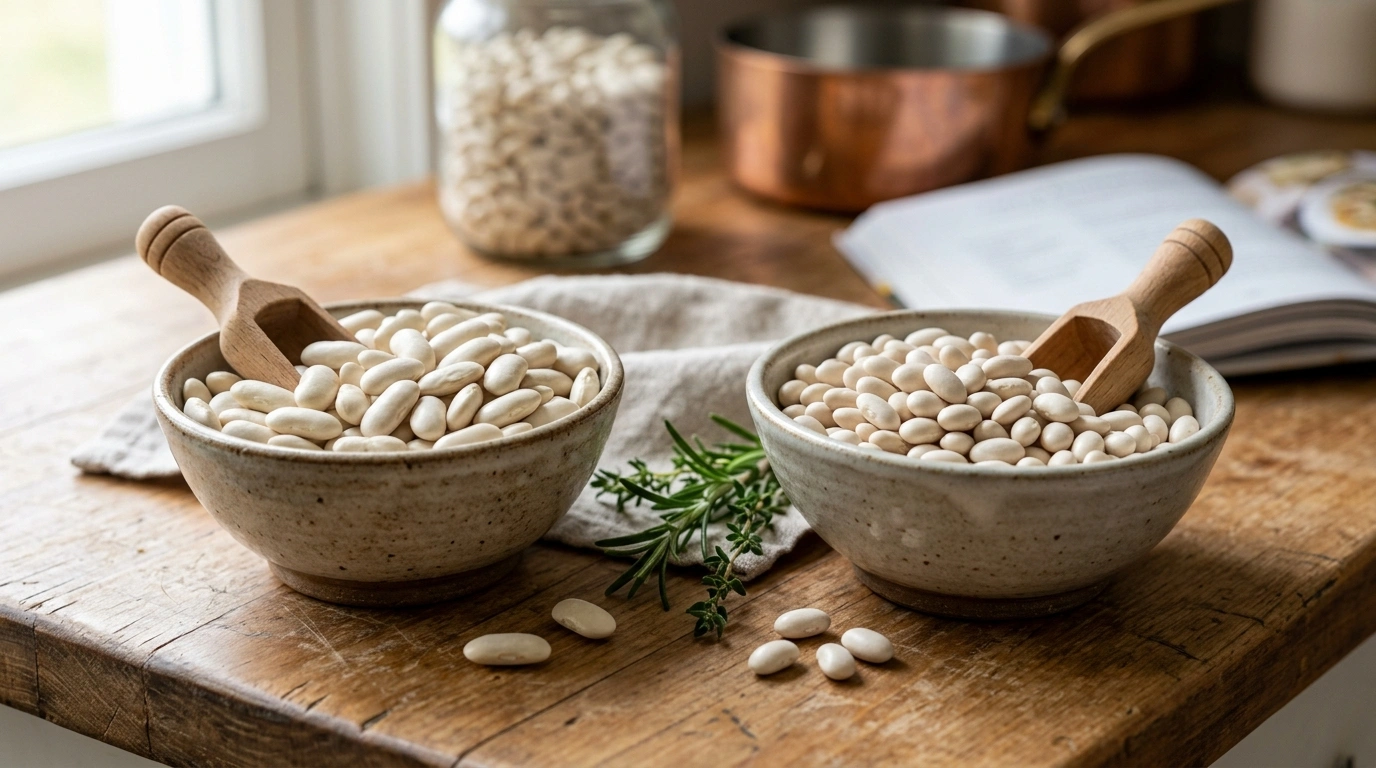
Are Great Northern beans the same as cannellini beans? No, they are not the same bean, but they are very similar white beans and can usually be used as a 1:1 substitution in many recipes. The biggest differences are size, shape, texture, skin thickness, flavor, and how they behave when cooked.
If you are standing in the grocery aisle wondering whether to buy Great Northern beans or cannellini beans, the good news is simple: your recipe will usually still work with either one. However, choosing the right bean can make your soup creamier, your salad firmer, or your stew heartier.
Cannellini beans are larger, firmer, and kidney-shaped. They are often called white kidney beans or Italian kidney beans and are popular in Italian dishes like minestrone, pasta e fagioli, and Tuscan white bean soup. Great Northern beans are medium-sized, oval-shaped, mild, and softer. They are excellent in soups, stews, casseroles, white chicken chili, baked beans, and bean dips.
In this guide, we’ll compare Great Northern beans vs cannellini beans clearly so you know which white bean to use, when to substitute, and how to avoid common cooking mistakes.
Quick Answer: Are Great Northern Beans the Same as Cannellini Beans?
Great Northern beans and cannellini beans are not the same bean, but they belong to the same broad family of white bean varieties. Both are mild, nutritious, pantry-friendly legumes that work well in many of the same dishes.
The easiest way to understand the difference is this:
Cannellini beans are larger, firmer, and have a more noticeable nutty, earthy flavor. They hold their shape well when cooked, which makes them a good choice for bean salads, minestrone, pasta e fagioli, stews, and Mediterranean dishes.
Great Northern beans are smaller than cannellini beans, more delicate, and usually have a milder flavor. They absorb the taste of surrounding ingredients well and become soft and creamy in soups, casseroles, baked beans, chili, and bean dips.
So, can you substitute Great Northern beans for cannellini beans? Yes, in most home recipes you can use them as a 1:1 substitution. The final dish may be slightly softer and creamier if you use Great Northern beans, or firmer and heartier if you use cannellini beans.
Great Northern Beans vs Cannellini Beans: Quick Comparison Table
Before going deeper, here is a simple comparison of cannellini beans vs Great Northern beans.
| Feature | Great Northern Beans | Cannellini Beans | Best Choice |
| Bean category | White beans | White beans | Both |
| Other name | Northern beans | White kidney beans, Italian kidney beans | Cannellini for Italian recipes |
| Size | Medium-sized beans | Larger beans | Cannellini if size matters |
| Shape | Oval shape | Kidney shape | Cannellini for visual appeal |
| Flavor | Mild, delicate flavor | Nutty, earthy, bolder bean taste | Cannellini for stronger flavor |
| Texture | Soft, creamy, delicate | Firm, hearty, smooth inside | Depends on recipe |
| Skin | Thinner skin | Thicker skin | Cannellini holds shape better |
| Best for soup | Creamy soups, chili, casseroles | Minestrone, Tuscan soup, stews | Both |
| Best for salad | Softer, may break more easily | Firmer, holds shape well | Cannellini |
| Substitution | Good substitute for cannellini | Good substitute for Great Northern | Usually 1:1 |
| Nutrition | Protein, fiber, minerals | Protein, fiber, minerals | Both healthy |
The main takeaway is simple: Great Northern beans are better when you want a softer, creamier result, while cannellini beans are better when you want a firmer, heartier bean that keeps its shape.
What Are Cannellini Beans?
Cannellini beans are large white beans with a classic kidney shape. They are also commonly known as white kidney beans or Italian kidney beans. Because of their firm texture and creamy interior, they are one of the most popular beans in Italian and Mediterranean cooking.
Cannellini beans are often used in dishes such as minestrone, pasta e fagioli, Tuscan white bean soup, bean salads, stews, and rustic vegetable dishes. They have a slightly nutty flavor and a mild earthy taste that gives recipes more body without overpowering other ingredients.
One reason cooks like cannellini beans is that they hold their shape well when cooked. Their thicker skin helps them stay intact in soups, salads, and long-simmered dishes. This makes them especially useful when the beans need to look whole and feel firm rather than melt into the broth.
If a recipe calls for white kidney beans, it is usually referring to cannellini beans. If a recipe calls simply for white beans, cannellini may be one option, but not the only one. Other white bean varieties include Great Northern beans, navy beans, and small white beans.
What Are Great Northern Beans?
Great Northern beans are medium-sized white beans known for their mild flavor, thin skin, and delicate texture. They are sometimes simply called Northern beans, especially on grocery store labels.
Compared with cannellini beans, Great Northern beans are usually smaller, softer, and less bold in flavor. They do not have the same large kidney shape. Instead, they are more oval and slightly flatter. Their taste is mild enough to blend into many recipes, which is why they are popular in soups, stews, casseroles, baked beans, white chicken chili, and bean dips.
Great Northern beans are especially useful when you want beans that absorb flavor from the dish. They take on the taste of broth, herbs, tomatoes, chiles, spices, ham hock, chicken, shrimp, and vegetables very well. This makes them a strong choice for cozy home-cooked meals and comfort food.
They can break open more easily than cannellini beans, especially when simmered for a long time. That can be a benefit in creamy soups and dips, but it may not be ideal for bean salads where you want a firmer bite.
Main Differences Between Great Northern Beans and Cannellini Beans
The difference between Great Northern beans and cannellini beans is not dramatic, but it does matter in certain recipes. Both are white beans, both are legumes, and both provide plant-based protein, fiber, iron, potassium, magnesium, and calcium. The real differences show up in appearance, flavor, texture, and cooking behavior.
Size and Shape
Cannellini beans are usually larger and kidney-shaped. Their curved shape is one reason they are called white kidney beans. They look fuller and more substantial in soups, salads, and pasta dishes.
Great Northern beans are medium-sized and more oval. They look smaller and more delicate in a bowl. If you are trying to identify dried beans in your pantry, cannellini beans will usually appear larger and more kidney-like, while Great Northern beans will look more like medium white oval beans.
Flavor
Great Northern beans have a mild, delicate flavor. They are not strongly earthy or nutty, so they easily absorb the flavors around them. This makes them ideal for recipes where broth, herbs, garlic, onion, smoked meat, or spices are the main flavor drivers.
Cannellini beans have a slightly stronger nutty and earthy flavor. They still taste mild compared with many other legumes, but they bring a little more character to the dish. If you want the bean itself to stand out more, cannellini beans are often the better option.
Texture and Skin
Texture is one of the biggest differences in the Great Northern beans vs cannellini beans comparison.
Great Northern beans have a softer, more delicate texture. Their thinner skin allows them to become creamy, especially in soups, dips, and stews. They may break apart more easily during long cooking.
Cannellini beans are firmer and heartier. Their thicker skin helps them stay whole, even in longer-cooked dishes. This is why they work so well in bean salads, minestrone, pasta e fagioli, and stews where you want the beans to remain visible and intact.
Cooking Behavior
If you are asking, which bean holds its shape better? the answer is usually cannellini beans. They are better for recipes where structure matters.
If you are asking, which bean has a creamier texture? the answer is often Great Northern beans, especially when cooked until tender or blended into soups and dips.
That does not mean one is better than the other. It simply means they behave differently in recipes.
Can You Substitute Great Northern Beans for Cannellini Beans?
Yes, you can usually substitute Great Northern beans for cannellini beans. In most soups, stews, casseroles, dips, and chili recipes, the difference will be small enough that the dish still works well.
Use a 1:1 substitution. For example, if a recipe calls for one can of cannellini beans, you can use one can of Great Northern beans. If it calls for two cups of cooked cannellini beans, use two cups of cooked Great Northern beans.
However, the final texture may change slightly. Great Northern beans may make the dish softer and creamier. Cannellini beans may make the dish firmer and heartier.
Here is a simple substitution rule:
| Recipe Type | Can You Substitute? | What Changes? |
| Soup | Yes | Great Northern beans make it creamier |
| Stew | Yes | Cannellini beans hold shape better |
| Bean salad | Yes, but cannellini is better | Great Northern beans may be softer |
| White chicken chili | Yes | Great Northern beans work very well |
| Minestrone | Yes | Cannellini gives a more traditional texture |
| Bean dip | Yes | Great Northern beans blend smoothly |
| Casserole | Yes | Either works well |
| Pasta e fagioli | Yes | Cannellini is more traditional |
If you only have Great Northern beans and the recipe calls for cannellini beans, do not worry. Your recipe will almost always be fine. If you only have cannellini beans and the recipe calls for Great Northern beans, that also works, but the beans may feel firmer.
Which Bean Should You Use by Recipe Type?
The best choice depends on the dish you are making. Both beans are flexible, but some recipes benefit from a specific texture.
| Recipe | Better Bean | Why |
| Tuscan white bean soup | Cannellini beans | Traditional, firm, hearty |
| Minestrone | Cannellini beans | Holds shape in broth |
| Pasta e fagioli | Cannellini beans | Classic Italian choice |
| White chicken chili | Great Northern beans | Creamy and mild |
| Bean dip | Great Northern beans | Blends smoothly |
| Bean salad | Cannellini beans | Stays firm and attractive |
| Baked beans | Great Northern beans | Mild and tender |
| Casseroles | Great Northern beans | Soft texture works well |
| Slow cooker soup | Cannellini beans | Better for long cooking |
| Creamy soup | Great Northern beans | Breaks down into a creamy base |
| Cassoulet-style dishes | Great Northern beans or cannellini | Both can work |
For a recipe where beans are the main visual ingredient, choose cannellini beans. For a recipe where beans are meant to soften, blend, or thicken the dish, choose Great Northern beans.
A helpful way to remember it is: cannellini beans are the firmer choice; Great Northern beans are the creamier choice.
Canned vs Dried Great Northern and Cannellini Beans
Both Great Northern beans and cannellini beans are sold as canned beans and dried beans. The best option depends on your time, recipe, and texture goals.
Canned beans are convenient because they are already cooked. They are best for quick soups, salads, dips, weeknight dinners, and pantry meals. When using canned white beans, drain and rinse them unless the recipe specifically says to use the liquid. Rinsing helps remove excess sodium and gives the beans a cleaner flavor.
Dried beans take more time but often have better texture and flavor. They are useful for slow-cooked soups, stews, and large-batch cooking. Dried beans usually need soaking or longer simmering, depending on the method.
If you are comparing canned cannellini beans vs canned Great Northern beans, the same texture rules apply. Canned cannellini beans tend to be firmer, while canned Great Northern beans tend to be softer.
If you are comparing dried Great Northern beans vs dried cannellini beans, cannellini beans may need a little more cooking time because they are larger. Great Northern beans may become tender slightly faster, though actual cooking time depends on bean age, soaking method, and freshness.
How Much Canned Beans Equal Dried Beans?
Bean conversions are useful when a recipe gives one format and you have another.
As a general kitchen guide:
| Bean Amount | Cooked Equivalent |
| 1 standard 15-ounce can of beans | About 1 1/2 cups cooked beans |
| 1 cup dried beans | About 2 1/2 to 3 cups cooked beans |
| 1 pound dried beans | About 6 cups cooked beans |
These numbers are approximate because beans vary by size and brand, but they work well for most home cooking.
So if a recipe calls for one 15-ounce can of cannellini beans, you can use about 1 1/2 cups cooked Great Northern beans instead. If a soup calls for 3 cups cooked white beans, you can use about two cans of beans, drained and rinsed.
This is especially helpful when making white bean soup, chili, casseroles, and meal prep recipes.
Nutrition Comparison: Great Northern Beans vs Cannellini Beans
When it comes to nutrition, both beans are excellent choices. Great Northern beans and cannellini beans are both naturally rich in plant-based protein, fiber, carbohydrates, vitamins, and minerals. They are also typically low in fat and contain no cholesterol.
A typical 1/2-cup serving of cooked white beans can provide helpful amounts of:
- Protein
- Fiber
- Iron
- Potassium
- Magnesium
- Calcium
- Complex carbohydrates
Exact nutrition facts vary depending on whether the beans are canned or dried, whether salt is added, and the brand. Canned beans may contain more sodium, so rinsing them is a smart habit.
If you are wondering which bean is higher in protein or which bean has more fiber, the difference is usually not large enough to make one clearly superior for everyday cooking. Both support a healthy eating pattern and can fit into vegetarian, vegan, Mediterranean, low-fat, and high-fiber diets.
For most people, the better choice is not based on nutrition alone. It is based on the texture and flavor you want in your recipe.
Other White Beans You Can Use as Substitutes
If you do not have either cannellini or Great Northern beans, several other white bean substitutes may work.
Navy beans are smaller than both cannellini and Great Northern beans. They become very soft and creamy, which makes them good for soups, baked beans, and dips. However, they may be too small for recipes where you want large, firm beans.
Butter beans and lima beans are larger and creamier, with a different shape and flavor. They can work in stews and casseroles but may change the dish more noticeably.
Small white beans can replace Great Northern beans in many recipes, especially soups and casseroles. They are usually not the best substitute for cannellini beans in salads because they are smaller and softer.
If a recipe says only white beans, you can usually use cannellini beans, Great Northern beans, navy beans, or small white beans. If the recipe is Italian, cannellini beans are often the safest choice. If the recipe is creamy, cozy, or casserole-style, Great Northern beans are a great option.
Common Mistakes When Swapping White Beans
The biggest mistake is assuming all white beans behave exactly the same. They may look similar, but their texture can change the final dish.
One common mistake is using very soft beans in a long-simmered recipe. Great Northern beans can break open if cooked for too long, especially after they are already tender. This is not always bad, because it can make soup creamier. But if you want whole beans, add them later in the cooking process.
Another mistake is using canned beans as if they were dried beans. Canned beans are already cooked, so they usually need only enough time to warm through and absorb flavor. If you simmer canned beans for too long, they can become mushy.
A third mistake is forgetting to rinse canned beans. Draining and rinsing improves flavor and helps reduce excess sodium.
Finally, some cooks add acidic ingredients too early when cooking dried beans. Ingredients like tomatoes, vinegar, or lemon juice can sometimes slow softening if added before the beans are tender. For best results, cook dried beans until nearly soft before adding strongly acidic ingredients.
How to Choose the Right White Bean at the Grocery Store
Grocery labels can be confusing. You may see white beans, Great Northern beans, Northern beans, cannellini beans, white kidney beans, or navy beans on different packages.
If you want cannellini beans, look for labels that say cannellini beans, white kidney beans, or sometimes Italian kidney beans. These are best when you want a larger, firmer bean.
If you want Great Northern beans, look for labels that say Great Northern beans or Northern beans. These are best when you want a mild, tender bean for soups, stews, dips, casseroles, or chili.
If the recipe simply says white beans, think about the dish. For Italian soups and salads, choose cannellini. For creamy soups, casseroles, and white chicken chili, choose Great Northern.
If you are still unsure, either one will usually work. The choice mostly affects texture, not whether the recipe succeeds.
FAQs About Great Northern Beans and Cannellini Beans
Are cannellini beans the same as white beans?
Cannellini beans are a type of white bean, but they are not the only type. Other white beans include Great Northern beans, navy beans, small white beans, and white kidney beans. In many recipes, “white beans” is a general term.
Are Great Northern beans the same as white beans?
Great Northern beans are also a type of white bean. They are medium-sized, mild, and oval-shaped. They are different from cannellini beans, but they belong to the same broad white bean category.
Which bean is creamier, Great Northern or cannellini?
Great Northern beans are usually creamier and softer, especially in soups and dips. They break down more easily than cannellini beans, which can help thicken a dish naturally.
Which bean holds its shape better?
Cannellini beans hold their shape better because they are larger and have a firmer texture with thicker skin. They are a better choice for bean salads, minestrone, and dishes where the beans should stay whole.
Can I use Great Northern beans in minestrone?
Yes, you can use Great Northern beans in minestrone, but cannellini beans are more traditional. Great Northern beans will make the soup slightly softer and creamier, while cannellini beans will give it a firmer bite.
Are Great Northern beans and cannellini beans healthy?
Yes. Both are healthy legumes that provide fiber, protein, complex carbohydrates, iron, potassium, magnesium, and calcium. They are also naturally low in fat and cholesterol-free. For canned beans, choose low-sodium options or rinse them before using.
Final Words: Which Bean Should You Use?
When comparing Great Northern beans vs cannellini beans, the answer depends on your recipe. They are not the same bean, but they are close enough that you can usually substitute one for the other.
Choose cannellini beans when you want a larger, firmer, heartier white bean. They are best for minestrone, pasta e fagioli, Tuscan white bean soup, bean salads, and Mediterranean dishes.
Choose Great Northern beans when you want a milder, softer, creamier bean. They are best for white chicken chili, casseroles, baked beans, creamy soups, stews, and bean dips.
For most everyday cooking, you can use them as a 1:1 substitution. Just remember the simple rule: cannellini beans hold their shape better, while Great Northern beans turn creamier more easily.
This article is for general informational purposes only. Nutritional values, cooking times, and product availability may vary by brand and region. Always check packaging labels for specific dietary or allergen information relevant to your needs.