

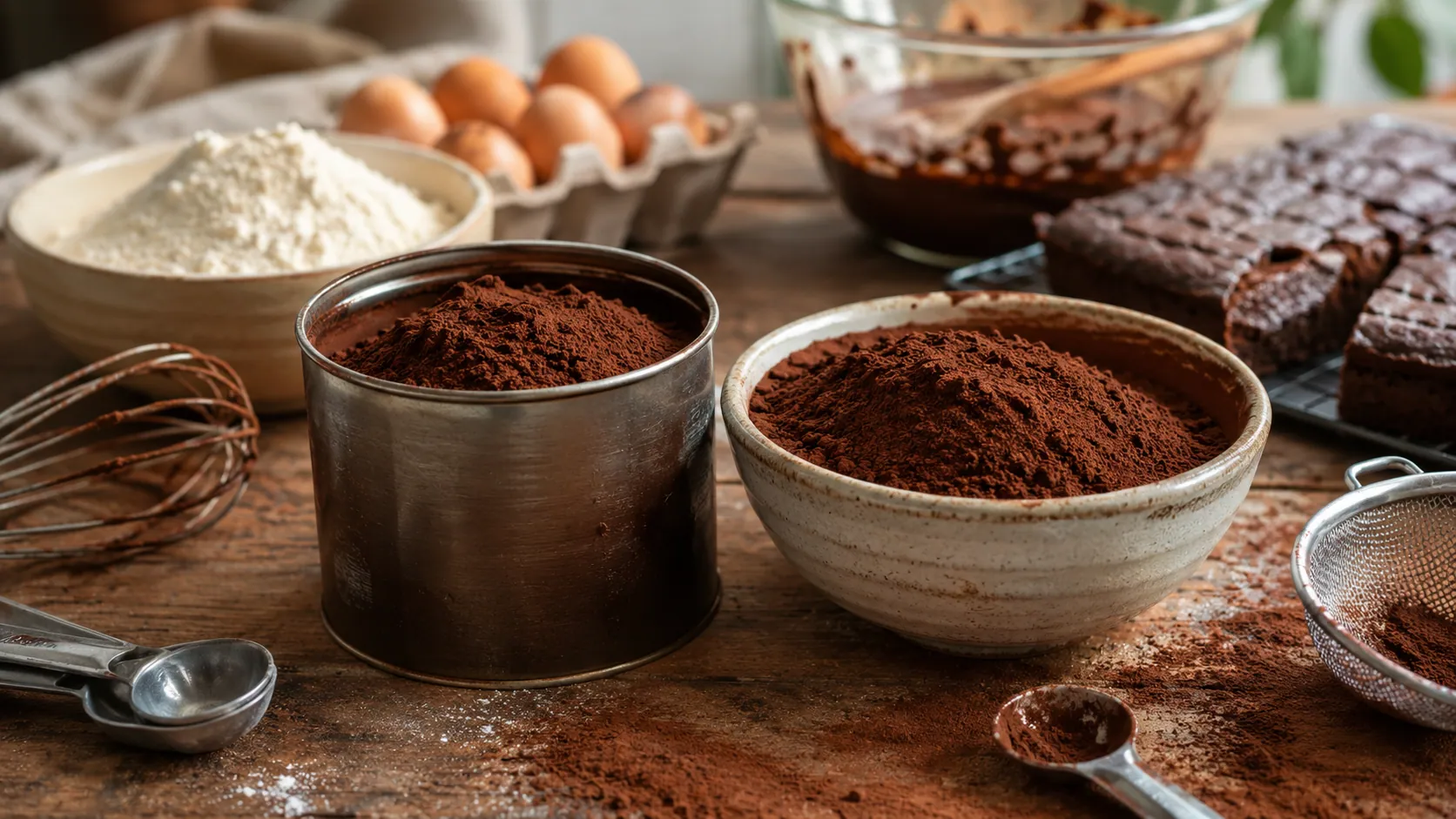
Is baking cocoa the same as cocoa powder is a common question for home bakers, especially when a recipe calls for one ingredient and the container in your pantry says something slightly different. The simple answer is: yes, baking cocoa is usually the same as unsweetened cocoa powder, as long as the label says it is plain cocoa with no added sugar, no milk powder, and no extra drink-mix ingredients.
However, there are a few important differences you should understand before using it in brownies, cakes, cookies, frosting, or hot chocolate. Baking cocoa is not the same as hot cocoa mix, and natural cocoa powder is not always interchangeable with Dutch-process cocoa powder. These differences can affect flavor, color, texture, and even how well your cake rises.
This guide explains baking cocoa vs cocoa powder in simple terms so you can choose the right product and avoid common baking mistakes.
Is Baking Cocoa the Same as Cocoa Powder?
In most cases, baking cocoa is the same as cocoa powder, especially when the product is labeled unsweetened cocoa powder or 100% cocoa. Many brands use the term baking cocoa to make it clear that the product is meant for baking, not drinking.
So, if you are wondering, “is cocoa powder and baking cocoa the same thing?”, the answer is usually yes. But the word “usually” matters. You still need to check the ingredient label because some cocoa products are made for drinks and may include sugar, milk solids, sweeteners, emulsifiers, or other additives.
A good baking cocoa should have a short ingredient list. Ideally, it should say something like:
| Label Term | What It Usually Means |
| 100% cocoa | Plain cocoa powder with no sugar |
| Unsweetened cocoa powder | Good for most baking recipes |
| Natural cocoa powder | Acidic cocoa that often works with baking soda |
| Dutch-process cocoa powder | Alkalized cocoa with a smoother, darker flavor |
| Hot cocoa mix | Usually not the same as baking cocoa |
The safest rule is simple: if your recipe calls for cocoa powder or baking cocoa, use unsweetened cocoa powder unless the recipe clearly says otherwise.
What Is Baking Cocoa?
Baking cocoa is usually plain, unsweetened cocoa powder used in baked goods. It gives desserts a deep chocolate flavor, darker color, and slightly bitter taste that balances sugar in recipes.
You will often see baking cocoa used in:
- Brownies
- Chocolate cake
- Cookies
- Cupcakes
- Chocolate frosting
- Tiramisu
- Fudge
- Hot chocolate made from scratch
Baking cocoa is not sweet on its own. If you taste it straight from the container, it will taste bitter and dry. That is normal. Recipes add sugar, butter, oil, eggs, milk, or cream to balance the bitterness and create a smooth chocolate flavor.
The main thing that separates baking cocoa from a drink mix is purity. Baking cocoa should usually contain cocoa solids and little else. It should not already be mixed with sugar or milk powder because baking recipes are carefully balanced. Adding a sweetened cocoa product can make a cake too sweet, change the texture, or weaken the chocolate flavor.
What Is Cocoa Powder?
Cocoa powder is made from processed cocoa beans or cacao beans. After the beans are fermented, roasted, and processed, much of the cocoa butter is removed. What remains is rich in cocoa solids, which are then ground into a fine powder.
That powder is what gives baked goods their chocolate taste. Cocoa powder is dry, concentrated, and flavorful. It is different from melted chocolate or baking chocolate because it has less fat. Baking chocolate contains more cocoa butter, while cocoa powder provides more concentrated cocoa flavor without adding much moisture or fat.
There are several types of cocoa powder:
| Type of Cocoa Powder | Main Feature | Common Use |
| Natural cocoa powder | Acidic, bold, slightly bitter | Cakes, brownies, recipes with baking soda |
| Dutch-process cocoa powder | Alkalized, darker, smoother | Frosting, cookies, darker cakes |
| Black cocoa powder | Very dark and intense | Oreo-style cookies, dark desserts |
| Raw cacao powder | Less processed, often more bitter | Smoothies, raw desserts, health recipes |
This is why the phrase cocoa powder can be broader than baking cocoa. Baking cocoa usually means unsweetened cocoa powder for baking, while cocoa powder can refer to natural, Dutch-process, black cocoa, or even cacao-style products depending on the label.
Baking Cocoa vs Cocoa Powder: Key Differences
The difference between baking cocoa vs cocoa powder is mostly about labeling, not always the ingredient itself. In many grocery stores, baking cocoa and cocoa powder are the same product. But in recipes, the exact type of cocoa matters.
| Feature | Baking Cocoa | Cocoa Powder |
| Basic meaning | Cocoa powder used for baking | General term for powdered cocoa |
| Sweetness | Usually unsweetened | Usually unsweetened, but check label |
| Best use | Brownies, cakes, cookies, frosting | Baking, drinks, desserts |
| Main label to check | Unsweetened, 100% cocoa | Natural, Dutch-process, alkalized |
| Not the same as | Hot cocoa mix | Chocolate drink powder |
| Flavor | Bitter, chocolatey, strong | Depends on type |
If your container says baking cocoa, unsweetened cocoa, or 100% cocoa powder, it will usually work in a recipe that calls for cocoa powder. But if the container says hot cocoa mix, drinking chocolate, or chocolate drink powder, it is not the same thing.
The easiest way to decide is to look at the ingredients. If it only lists cocoa or cocoa powder, it is likely fine for baking. If it lists sugar, powdered milk, whey, lactose, oils, flavorings, or thickeners, it is probably a drink mix.
Baking Cocoa vs Hot Cocoa Mix: Do Not Confuse These
One of the biggest baking mistakes is using hot cocoa mix instead of cocoa powder. They may look similar, but they are not the same.
Baking cocoa is usually unsweetened and concentrated. Hot cocoa mix is made to become a sweet drink when mixed with milk or water. It often contains added sugar, milk powder, whey, lactose, emulsifiers, and sometimes artificial flavors.
If you use hot cocoa mix in a recipe that needs unsweetened cocoa powder, several things can go wrong. Your brownies may become too sweet, your cake may taste weak, or your batter may behave differently because the dry ingredients are no longer balanced.
Here is a simple comparison:
| Product | Good for Baking? | Why |
| Unsweetened baking cocoa | Yes | Strong cocoa flavor with no added sugar |
| Natural cocoa powder | Yes | Works well in many classic recipes |
| Dutch-process cocoa powder | Yes, if recipe allows | Smooth and dark, but leavening matters |
| Hot cocoa mix | Usually no | Contains sugar and milk ingredients |
| Drinking chocolate | Usually no | Often sweetened and less concentrated |
If you only have hot cocoa mix, you may be able to use it in a very flexible recipe, such as a quick mug drink or dessert sauce, but it is not a reliable cocoa powder substitute for cakes, brownies, or cookies.
Natural Cocoa Powder vs Dutch-Process Cocoa Powder
The most important baking difference is not always baking cocoa vs cocoa powder. It is often natural cocoa powder vs Dutch-process cocoa powder.
Natural cocoa powder is more acidic. It has a bold, slightly sharp, classic chocolate flavor. Because of its acidity, it often works well in recipes that use baking soda. Baking soda needs acid to create a proper chemical reaction, which helps baked goods rise.
Dutch-process cocoa powder, also called Dutch-processed cocoa or alkalized cocoa, is treated with an alkaline solution, often involving potassium carbonate, to reduce acidity. This creates a darker color and a smoother, more mellow flavor. Dutch cocoa often works better in recipes that use baking powder or recipes where leavening is not strongly affected, such as frosting, sauces, or some cookies.
| Cocoa Type | Flavor | Color | Usually Works Best With |
| Natural cocoa powder | Bold, tangy, slightly bitter | Light to medium brown | Baking soda |
| Dutch-process cocoa powder | Smooth, mellow, less acidic | Dark brown or reddish | Baking powder |
| Black cocoa powder | Very dark, intense, less sweet | Almost black | Specialty cookies and dark desserts |
This matters because using the wrong cocoa can affect cake rise, brownie texture, and overall flavor. For example, if a chocolate cake recipe depends on natural cocoa and baking soda, using Dutch-process cocoa may reduce the acid needed for the reaction. The result can be a flatter or denser cake.
That does not mean you can never substitute them. In recipes like frosting, pudding, hot chocolate, or some no-bake desserts, the difference is mostly flavor and color. But in cakes, cupcakes, and other leavened baked goods, it is safer to follow the recipe.
Can You Substitute Baking Cocoa for Cocoa Powder?
Yes, you can usually substitute baking cocoa for cocoa powder if both are unsweetened cocoa powder. In that case, use a 1:1 substitution. For example, if a recipe calls for ¼ cup cocoa powder, you can usually use ¼ cup baking cocoa.
But there are exceptions.
| Substitute | Safe? | Notes |
| Baking cocoa for cocoa powder | Usually yes | Make sure it is unsweetened |
| Cocoa powder for baking cocoa | Usually yes | Check whether natural or Dutch-process is needed |
| Hot cocoa mix for cocoa powder | Usually no | Too much sugar and milk powder |
| Dutch-process for natural cocoa | Sometimes | Depends on baking soda or baking powder |
| Cacao powder for cocoa powder | Sometimes | May taste stronger or more bitter |
| Baking chocolate for cocoa powder | Sometimes | Requires fat adjustment |
If you are replacing baking chocolate with cocoa powder, a common formula is 3 tablespoons cocoa powder + 1 tablespoon butter or oil for 1 ounce baking chocolate. This works in some recipes, but not all, because baking chocolate changes both flavor and fat content.
For most home bakers, the easiest rule is this: use unsweetened cocoa powder when the recipe asks for baking cocoa or cocoa powder, and avoid sweetened drink mixes unless the recipe was designed for them.
Baking Cocoa vs Cocoa Powder vs Cacao Powder vs Baking Chocolate
Many people also confuse cocoa powder, cacao powder, and baking chocolate. They are related, but they are not identical.
Cacao powder is often described as less processed than cocoa powder. It may taste sharper, fruitier, or more bitter. It is common in smoothies, raw desserts, protein snack balls, and health-focused recipes. You can sometimes use cacao powder instead of cocoa powder, but the flavor may be stronger and the texture may be slightly different.
Baking chocolate is different because it contains more cocoa butter. This means it adds fat and moisture, while cocoa powder is dry and concentrated. If you replace one with the other, you may need to adjust butter, oil, or other liquids.
| Ingredient | Main Difference | Best Use |
| Baking cocoa | Usually unsweetened cocoa powder | Everyday baking |
| Cocoa powder | General powdered cocoa category | Baking and drinks |
| Cacao powder | Less processed, often bitter | Smoothies, raw desserts |
| Baking chocolate | Contains cocoa butter and more fat | Brownies, ganache, rich cakes |
| Hot cocoa mix | Sweetened drink mix | Drinks, not serious baking |
For simple recipes, cocoa powder and baking cocoa are usually the same. But for more precise baking, always check whether the recipe needs natural cocoa, Dutch-process cocoa, or baking chocolate.
How to Read a Cocoa Powder Label Before Baking
The fastest way to avoid mistakes is to read the cocoa powder ingredient list before using it. A good baking product should be simple.
Look for labels that say:
- 100% cocoa
- Unsweetened
- Natural cocoa powder
- Dutch-process cocoa powder
- Alkalized cocoa
- No added sugar
- No dairy
- No milk solids
Be careful with labels that say:
- Hot cocoa mix
- Chocolate drink powder
- Drinking chocolate
- Sweetened cocoa
- Milk chocolate flavor
- Instant cocoa beverage
If you are baking for someone with dietary needs, label reading matters even more. Plain cocoa powder is often naturally dairy-free, but some products may be processed with or mixed with dairy ingredients. If you need vegan cocoa powder, dairy-free cocoa powder, or gluten-free cocoa powder, check the packaging for allergen warnings and cross-contamination information.
A helpful rule is: the shorter the ingredient list, the better. For baking, you usually want cocoa powder that contains cocoa and nothing else.
Which Cocoa Powder Should You Use for Brownies, Cakes, Cookies, and Frosting?
Different recipes respond differently to cocoa powder. Choosing the right one can improve flavor, color, and texture.
For brownies, both natural and Dutch-process cocoa can work, depending on the recipe. Dutch-process cocoa often gives a darker color and smoother chocolate flavor, while natural cocoa can create a stronger, slightly sharper chocolate taste. If you want fudgy brownies, pay attention to the full recipe, especially the fat, sugar, and eggs.
For chocolate cake, follow the recipe closely. If the recipe uses baking soda, it may be written for natural cocoa powder. If it uses mostly baking powder, Dutch-process cocoa may be fine. Using the wrong cocoa in cake can affect rise and crumb structure.
For cookies, cocoa type is often more flexible, but it still affects flavor and color. Dutch-process cocoa can make cookies darker and smoother. Natural cocoa can give a more classic cocoa taste.
For frosting, you have more freedom because there is usually no leavening reaction. Dutch-process cocoa is excellent for smooth, dark chocolate frosting, while natural cocoa gives a brighter chocolate flavor.
For tiramisu, use plain unsweetened cocoa powder as a topping. Avoid hot cocoa mix because it can taste too sweet and may not give the same elegant finish.
For homemade hot chocolate, you can use baking cocoa or cocoa powder, but you need to add your own sugar, milk, and flavorings.
Common Mistakes When Using Baking Cocoa or Cocoa Powder
Even a simple ingredient like cocoa powder can cause problems if it is used the wrong way.
The first mistake is using hot cocoa mix instead of unsweetened cocoa powder. This can make baked goods too sweet and less chocolatey.
The second mistake is ignoring the difference between natural cocoa powder and Dutch-process cocoa powder. If a cake depends on baking soda and natural acidity, the wrong cocoa may affect the rise.
The third mistake is not sifting cocoa powder. Cocoa powder can clump easily, especially if it has been stored for a while. Sifting helps it mix smoothly into flour, sugar, or frosting.
Another common mistake is not blooming cocoa powder when the recipe allows it. Blooming cocoa powder means mixing it with hot water, hot milk, or coffee before adding it to the batter. This can deepen the chocolate flavor and reduce dryness.
Some bakers also add too much cocoa powder, thinking more cocoa always means more chocolate flavor. But cocoa powder is dry and absorbent. Too much can make cakes dry, crumbly, or bitter.
A simple baker’s rule is: good chocolate flavor comes from balance, not just more cocoa.
How to Store Baking Cocoa and Cocoa Powder
Proper storage helps cocoa powder keep its flavor longer. Store baking cocoa or cocoa powder in an airtight container in a cool dry place. Keep it away from direct sunlight, heat, humidity, and strong-smelling foods.
Do not leave cocoa powder open in a humid kitchen. Moisture can cause clumping, hard lumps, stale aroma, or weak flavor. If your cocoa powder smells flat, dusty, or unpleasant, it may be past its best quality.
Cocoa powder often lasts a long time, especially when unopened, but it can lose flavor over time. Always check the best-by date or expiration date on the package. Even if it is not dangerous, old cocoa powder may not give your brownies or cake the rich flavor you want.
A clean pantry habit is to keep cocoa powder sealed, dry, and labeled with the date it was opened.
Quick Substitution and Label-Check Chart
| Question | Quick Answer |
| Is baking cocoa the same as cocoa powder? | Usually yes, if it is unsweetened |
| Is baking cocoa the same as hot cocoa mix? | No |
| Can I use cocoa powder instead of baking cocoa? | Yes, if both are unsweetened |
| Can I use Dutch-process instead of natural cocoa? | Sometimes, but check leavening |
| Can I use cacao powder instead of cocoa powder? | Sometimes, but flavor may be stronger |
| What label should I look for? | 100% cocoa, unsweetened, no added sugar |
| What label should I avoid for baking? | Hot cocoa mix, drinking chocolate, sweetened cocoa |
Frequently Asked Questions About Baking Cocoa and Cocoa Powder
Is baking cocoa always unsweetened?
Baking cocoa is usually unsweetened cocoa powder, but you should still check the label. Look for 100% cocoa and no added sugar.
Can I use cocoa powder instead of baking cocoa in brownies?
Yes, if it is plain unsweetened cocoa powder. For brownies, both natural and Dutch-process cocoa may work, but the flavor and color can change.
Is cocoa powder the same as hot chocolate powder?
No. Cocoa powder is usually unsweetened and concentrated. Hot chocolate powder or hot cocoa mix usually contains sugar and milk ingredients.
Can I drink baking cocoa?
Yes, but not by itself. Baking cocoa is bitter, so you need to mix it with sugar, milk, and sometimes vanilla or salt to make homemade hot chocolate.
Is Dutch-process cocoa better than natural cocoa?
Not always. Dutch-process cocoa has a smoother, darker flavor, while natural cocoa powder has a brighter, more acidic taste. The best choice depends on the recipe.
Does cocoa powder have dairy?
Pure cocoa powder usually does not contain dairy, but always check the label for milk solids, whey, lactose, or allergen warnings.
Does cocoa powder have sugar?
Plain unsweetened cocoa powder does not have added sugar. Hot cocoa mix and drinking chocolate usually do.
Does cocoa powder expire?
Cocoa powder can lose flavor over time. Check the best-by date and avoid using it if it smells stale, has moisture clumps, or tastes unpleasant.
Final Verdict: Which One Should You Use?
So, is baking cocoa the same as cocoa powder? In most cases, yes. Baking cocoa is usually just unsweetened cocoa powder used for baking. You can normally use baking cocoa and cocoa powder interchangeably when both are plain, unsweetened, and labeled as 100% cocoa.
The product you should avoid confusing it with is hot cocoa mix, because that usually contains sugar, milk powder, and other ingredients. You should also pay attention to whether your recipe calls for natural cocoa powder or Dutch-process cocoa powder, especially in cakes and cupcakes where baking soda, baking powder, and acidity affect the final result.
Disclaimer: This article is for general informational and baking guidance purposes only and does not constitute professional culinary, nutritional, or dietary advice. Cocoa products can vary by brand, processing method, ingredients, and intended use. Always read product labels carefully and follow recipe instructions to ensure proper flavor, texture, and baking results.