

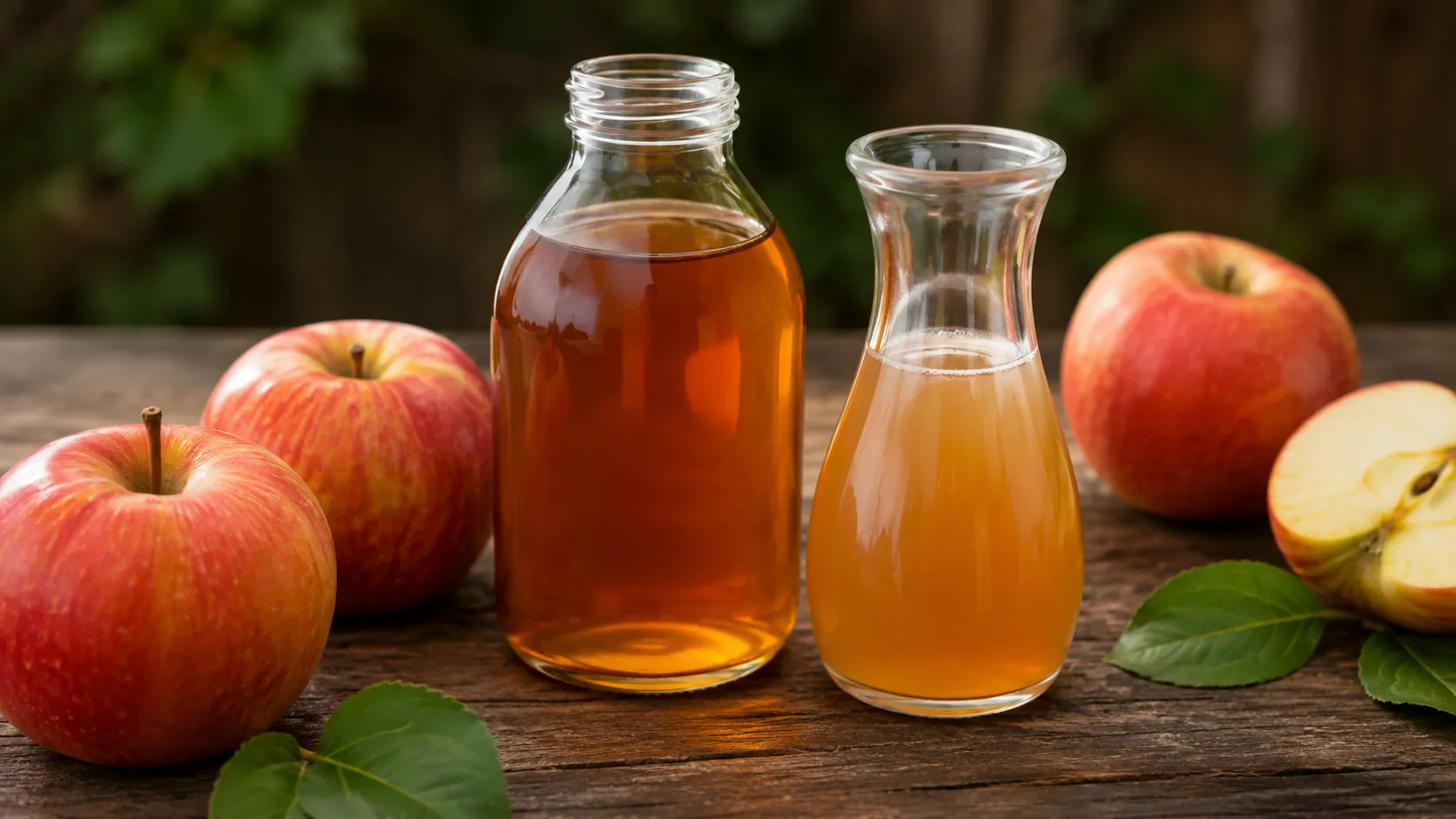
Is apple cider and apple vinegar the same? No, apple cider and apple vinegar are not the same thing. Apple cider is usually a sweet or tart apple-based drink, while apple vinegar is an acidic vinegar made from apples. The confusion happens because people often use terms like apple vinegar, cider vinegar, and apple cider vinegar in similar ways.
The simplest way to understand it is this: apple cider is a drink, apple vinegar is vinegar made from apples, and apple cider vinegar is a common type of apple vinegar made through fermentation. Apple cider vinegar, often called ACV, gets its sharp taste from acetic acid, which forms when apple sugars ferment first into alcohol and then into vinegar.
So, if a recipe asks for apple cider vinegar, you usually should not replace it with apple cider. But in many cases, apple vinegar can replace apple cider vinegar if the label shows similar ingredients and acidity, usually around 5% acetic acid.
Apple Cider vs Apple Vinegar vs Apple Cider Vinegar: Quick Answer
The easiest way to compare these three is by looking at what they are, how they taste, and how they are used.
| Product | What It Is | Taste | Main Use | Can It Replace Apple Cider Vinegar? |
| Apple cider | A drink made from pressed apples or apple juice | Sweet, fruity, sometimes tart | Drinking, fall recipes, hot cider | Usually no |
| Apple vinegar | Vinegar made from apples or apple juice | Sour, acidic, mildly fruity | Cooking, dressings, marinades | Often yes, if acidity is similar |
| Apple cider vinegar | Vinegar made from fermented apple cider or apple juice | Sharp, tangy, acidic | Cooking, pickling, wellness routines | It is the target ingredient |
The main difference between apple cider vs apple cider vinegar is acidity. Apple cider is mostly an apple drink. Apple cider vinegar is fermented until it becomes vinegar. That means it contains acetic acid, which gives it a sour taste and makes it useful in salad dressings, marinades, pickling, and some baking recipes.
When people ask “apple cider vinegar vs apple vinegar,” the answer is more flexible. In many grocery stores, apple vinegar and apple cider vinegar may refer to very similar products. But “apple vinegar” can also be a broader label, so checking the ingredient label, product label, and acidity percentage matters.
What Is Apple Cider?
Apple cider is usually a drink made from pressed apples. It may be fresh, cloudy, unfiltered, sweet, tart, or sometimes spiced. In the United States and Canada, apple cider often means a non-alcoholic seasonal drink, especially popular during fall apple season and holiday cooking.
However, regional language can create confusion. In the UK, Ireland, Australia, and some other markets, “cider” often means an alcoholic apple drink, also called hard cider. In the United States, people may use “hard cider” for alcoholic cider and “apple cider” for the non-alcoholic version.
Apple cider is not vinegar because it has not gone through the full vinegar-making process. It does not have the same vinegar acidity, and it does not work the same way in recipes. If you use apple cider instead of apple cider vinegar in a marinade, dressing, or pickle recipe, the result will be sweeter, less acidic, and potentially unsafe for preservation.
So, is apple cider a vinegar? No. Apple cider is an apple drink. Apple cider vinegar is vinegar.
What Is Apple Vinegar?
Apple vinegar is vinegar made from apples, apple juice, or apple-based fermented liquid. It has a sour, acidic taste and is used in cooking, food preparation, and sometimes wellness routines.
The term apple vinegar can be broad. Some products labeled apple vinegar may be very close to apple cider vinegar, while others may be filtered, pasteurized, or processed differently. This is why the phrase apple vinegar meaning depends partly on the brand, region, and label.
A good apple vinegar label may mention:
- Apples or apple juice
- Fermented apple juice
- Acetic acid
- 5% acidity
- Raw, filtered, or unfiltered
- With the mother
- Food-grade vinegar
If the bottle says only “apple-flavored vinegar,” that may not be the same as true apple vinegar. Apple-flavored vinegar may contain added flavoring rather than being made through proper apple fermentation. For recipes, especially pickling, you need a real vinegar with reliable acidity.
In simple terms, apple vinegar is usually vinegar made from apples, while apple cider vinegar is one of the most common forms of apple vinegar.
What Is Apple Cider Vinegar?
Apple cider vinegar, also called ACV, is vinegar made from fermented apple cider or apple juice. It is known for its sharp, tangy flavor and its use in cooking, salad dressings, marinades, pickles, sauces, and some health routines.
The production process usually involves double fermentation or two-step fermentation. First, the natural sugar in apples is converted into alcohol by yeast. Then, bacteria such as Acetobacter convert the alcohol into acetic acid. That acetic acid is what gives vinegar its sour taste and preserving power.
Most food-grade apple cider vinegar contains about 5% acetic acid, although the exact amount can vary by product. This acidity is important because it affects flavor, recipe balance, and food preservation.
Apple cider vinegar may be:
- Raw apple cider vinegar
- Filtered apple cider vinegar
- Unfiltered apple cider vinegar
- Organic apple cider vinegar
- Pasteurized apple cider vinegar
- Apple cider vinegar with the mother
For everyday cooking, filtered or unfiltered ACV can both work. For wellness use, some people prefer raw unfiltered apple cider vinegar with the mother, but it should still be used carefully and diluted.
Is Apple Vinegar the Same as Apple Cider Vinegar?
In many cases, apple vinegar and apple cider vinegar are used interchangeably, but they are not always exactly the same. Apple vinegar is the broader term. Apple cider vinegar is more specific.
If a bottle of apple vinegar is made from fermented apples or apple juice and has similar acidity to apple cider vinegar, it can often be used the same way in cooking. But the final answer depends on the product.
Check these details before treating them as the same:
| Label Detail | Why It Matters |
| Ingredients | Confirms whether it is made from apples or just apple-flavored |
| Acidity | Important for pickling, marinades, and recipe balance |
| Filtered or unfiltered | Affects appearance and sediment |
| Raw or pasteurized | Affects “mother” content and processing |
| Food-grade use | Confirms it is safe for cooking or consumption |
So, is apple vinegar the same as apple cider vinegar? Often yes in practical use, but technically apple vinegar is a broader category. The safest answer is: apple cider vinegar is a type of apple vinegar, but not every apple vinegar label guarantees the same quality, acidity, or production method.
How Apple Cider Vinegar Is Made
To understand the difference between apple cider, apple vinegar, and apple cider vinegar, it helps to understand the fermentation process.
Apple cider vinegar usually starts with crushed apples, pressed apples, or apple juice. The natural sugars in the apple liquid are exposed to yeast. This begins alcoholic fermentation, where sugar turns into alcohol, also called ethanol.
Next comes acetic acid fermentation. During this stage, acetic acid-forming bacteria convert the alcohol into vinegar. This is what creates the strong sour taste and gives apple cider vinegar its acidity.
The basic process looks like this:
- Apples are crushed or pressed.
- Apple juice or apple cider is collected.
- Yeast converts sugar into alcohol.
- Acetic acid bacteria convert alcohol into vinegar.
- The vinegar is filtered, pasteurized, bottled, or left raw/unfiltered.
This is why apple cider vinegar is not just apple juice and not just apple cider. It has gone through a 2-stage fermentation process that changes its flavor, acidity, and use.
Why the Names Apple Cider, Apple Vinegar, and Cider Vinegar Are Confusing
The names are confusing because different countries, brands, and recipes use the terms differently.
In the United States, apple cider usually means a non-alcoholic apple drink. In the UK and some other regions, cider often means alcoholic apple cider. Then there is cider vinegar, which may be another name for apple cider vinegar. On supplement labels, the abbreviation ACV is also common.
This creates questions like:
- Why is apple vinegar called apple cider vinegar?
- Is cider vinegar the same as apple cider vinegar?
- Why do some labels say apple vinegar instead of apple cider vinegar?
- Is apple vinegar another name for apple cider vinegar?
In most cooking contexts, cider vinegar and apple cider vinegar mean the same thing. But apple cider alone is different because it usually refers to a drink, not vinegar.
The best rule is simple: do not rely only on the front label. Check the ingredient label, acidity percentage, and whether the product is meant for cooking, drinking, or supplement use.
Can You Use Apple Cider Instead of Apple Cider Vinegar?
Usually, no. You should not use apple cider instead of apple cider vinegar unless the recipe only needs apple flavor and not acidity.
Apple cider is sweet and fruity. Apple cider vinegar is sour and acidic. If a recipe needs vinegar, it usually needs acid for a reason. That acid may balance sweetness, tenderize meat, activate baking soda, brighten flavor, or preserve food.
For example, in a salad dressing, replacing apple cider vinegar with apple cider will make the dressing too sweet and flat. In a marinade, it may reduce the tenderizing effect. In pickling, it can be unsafe because pickling depends on proper acidity.
Here is a quick example:
| Recipe Type | Can Apple Cider Replace ACV? | Why |
| Salad dressing | Not ideal | Lacks sharp acidity |
| Marinade | Not usually | Too sweet and mild |
| Baking | Sometimes, but not direct | May not activate leavening properly |
| Pickling | No | Not acidic enough for preservation |
| Drink recipe | Sometimes | Only if vinegar acidity is not needed |
So, can I use apple cider instead of apple cider vinegar? For most recipes, no. Use a proper vinegar substitute instead.
Can You Use Apple Vinegar Instead of Apple Cider Vinegar?
Yes, apple vinegar can often replace apple cider vinegar if it is real apple-based vinegar and has a similar acidity level.
This is especially true in everyday recipes like salad dressings, vinaigrettes, sauces, marinades, and chutneys. If the apple vinegar has a similar sourness and the label shows around 5% acidity, it will usually behave much like apple cider vinegar.
However, be careful with products that are:
- Apple-flavored vinegar
- Very sweet vinegar drinks
- Low-acidity vinegar beverages
- Supplement gummies or capsules
- Non-food-grade products
These should not be used as direct cooking substitutes.
For pickling, acidity matters even more. If a pickling recipe calls for apple cider vinegar, use a vinegar with the required acidity, commonly 5% acetic acid. Do not guess with apple cider, apple juice, or sweet vinegar drinks.
The bottom line: apple vinegar may replace apple cider vinegar, but apple cider usually cannot.
Best Apple Cider Vinegar Substitutes by Recipe Type
If you do not have apple cider vinegar, the best substitute depends on the recipe. You want to replace both the acidity and the flavor as closely as possible.
| Recipe Type | Best Substitute | Notes |
| Salad dressing | White wine vinegar, lemon juice, rice vinegar | Add a small amount of honey if you want fruity sweetness |
| Marinade | White vinegar, rice vinegar, red wine vinegar | Choose based on the flavor of the dish |
| Pickling | White vinegar or another 5% vinegar | Do not use apple cider or low-acid drinks |
| Baking | Lemon juice or white vinegar | Useful when acid is needed with baking soda |
| Sauces | Rice vinegar, white wine vinegar, balsamic vinegar | Match the flavor profile |
| Asian dishes | Rice vinegar | Usually milder and slightly sweet |
| Wellness drinks | Do not blindly substitute | Use only food-grade vinegar and dilute safely |
For a basic vinaigrette, a common ratio is 1 part vinegar to 3 parts oil. For example, you might use 1 tablespoon vinegar with 3 tablespoons olive oil, then add Dijon mustard, honey, garlic, salt, and pepper.
If a recipe calls for ACV and you only have apple cider, remember that apple cider adds sweet apple flavor, not vinegar acidity.
What Does “Apple Cider Vinegar With the Mother” Mean?
Apple cider vinegar with the mother refers to raw, unfiltered vinegar that contains cloudy strands, sediment, or fermentation culture. This “mother” forms during fermentation and may include beneficial bacteria, enzymes, and other fermentation byproducts.
The mother can make ACV look cloudy or murky. That does not automatically mean the vinegar is spoiled. In raw and unfiltered products, cloudiness and sediment are often normal.
However, “with the mother” does not mean it is a miracle cure. It may appeal to people interested in fermented foods and natural products, but it should not be treated as a replacement for medical care.
For cooking, you do not always need raw ACV with the mother. Filtered apple cider vinegar can work well in dressings, sauces, marinades, and baking. For appearance-sensitive recipes, filtered vinegar may even be preferred because it is clearer.
How to Read Apple Vinegar and Apple Cider Vinegar Labels
A label can tell you whether the product is right for your recipe, health routine, or pantry. When choosing between apple vinegar vs apple cider vinegar, look for these terms.
Apple cider vinegar means the product is likely made from fermented apple cider or apple juice. Apple vinegar may mean the same thing, but it is worth checking the ingredients. Raw means it may not be pasteurized. Unfiltered means it may contain sediment or the mother. Filtered means it is clearer and usually has fewer visible particles.
The most important label detail for cooking is often acidity. Many vinegars used for cooking and pickling are around 5% acidity or 5 percent acetic acid. This number matters when acidity affects flavor or preservation.
Avoid assuming that apple cider vinegar drinks, gummies, capsules, or sweetened beverages can replace liquid ACV. An apple cider vinegar beverage may contain water, sweeteners, honey, fructose glucose syrup, or flavorings. It is not the same as concentrated cooking vinegar.
A good buying rule is: for recipes, choose food-grade apple cider vinegar or apple vinegar with clear ingredients and acidity listed on the bottle.
Apple Cider Vinegar Benefits: Facts vs Overhyped Claims
Apple cider vinegar is often promoted for weight management, blood sugar regulation, gut health, digestion, cholesterol, detoxification, and heart health. Some people use it as a natural remedy or wellness drink.
However, it is important to separate helpful use from exaggerated claims. Apple cider vinegar is a food ingredient first. It can add flavor, acidity, and brightness to meals. It may fit into a healthy diet, but it is not a magic solution for weight loss, diabetes, cholesterol, or detox.
Apple cider and apple cider vinegar also do not have the same health role. Apple cider is a drink and may contain natural sugars. Apple cider vinegar is acidic and usually consumed only in small, diluted amounts if used as a drink.
A simple rule is helpful here: use apple cider vinegar as a food, not as a cure. If you have diabetes, digestive issues, kidney problems, acid reflux, or take medication, speak with a healthcare professional before using ACV regularly for health purposes.
Apple Cider Vinegar Safety: How to Use It Without Harm
Apple cider vinegar is acidic, so it should be used carefully. The biggest mistake is drinking it straight. Undiluted vinegar can irritate the throat, upset the stomach, worsen acid reflux, and contribute to tooth enamel erosion over time.
If someone chooses to drink ACV, it is commonly diluted in water. A typical home-use amount is around 1 teaspoon to 1 tablespoon apple cider vinegar in 1 cup water or 1 glass of water. Some people use 1–2 tablespoons ACV, but more is not always better.
To reduce risk:
- Do not drink apple cider vinegar straight.
- Dilute it well with water.
- Avoid sipping it all day.
- Rinse your mouth afterward.
- Stop if it causes burning, nausea, or reflux.
- Be cautious if you take diabetes medication or have low potassium concerns.
Apple cider vinegar can be useful in food, but it should not be overused as a daily health shortcut. For many people, the safest way to enjoy it is in salad dressings, marinades, sauces, and recipes.
Storage, Shelf Life, and Cloudiness
Apple cider vinegar and apple vinegar are usually shelf-stable products because of their acidity. Most bottles can be stored in a cool, dark place, such as a pantry or kitchen cabinet. Refrigeration is usually not required unless the product label says otherwise.
Cloudiness, sediment, or stringy material may appear in raw, unfiltered apple cider vinegar. This is often the mother of vinegar and is usually normal. It does not necessarily mean the vinegar has gone bad.
Still, you should use common sense. If the bottle smells strange in a way that is not normal vinegar sharpness, shows unusual mold, has a damaged seal, or has been contaminated with food particles, it is safer to discard it.
The expiration date on vinegar is often more about quality than immediate spoilage. Over time, flavor, color, and clarity may change, especially in unfiltered vinegar. Keeping the cap tight and storing the bottle away from heat and sunlight helps maintain quality.
Which One Should You Buy?
The best choice depends on how you plan to use it.
For cooking, choose a food-grade apple cider vinegar or apple vinegar with clear ingredients and reliable acidity. For pickling, choose vinegar with the required acidity, often 5% acetic acid. For salad dressings and marinades, you can use filtered or unfiltered ACV depending on your taste preference.
For wellness routines, some people prefer raw unfiltered apple cider vinegar with the mother, but it still needs to be diluted and used carefully. Do not confuse liquid ACV with ACV gummies, ACV capsules, or sweetened apple cider vinegar drinks. Those products are not direct recipe substitutes.
For budget shopping, apple vinegar may be cheaper than apple cider vinegar. That is fine if the ingredient list and acidity are similar. But if the label says apple-flavored vinegar or does not clearly state food use, choose a better option.
In short: buy based on use, acidity, ingredients, and label clarity, not just the name on the front of the bottle.
Final Verdict: Are Apple Cider and Apple Vinegar the Same?
Apple cider and apple vinegar are not the same. Apple cider is usually a sweet or tart apple drink made from pressed apples or apple juice. Apple vinegar is acidic vinegar made from apples. Apple cider vinegar is a specific and very common type of apple vinegar made through fermentation.
If you are comparing apple vinegar vs apple cider vinegar, they may be similar or even interchangeable, depending on the product. But if you are comparing apple cider vs apple cider vinegar, they are very different.
For recipes, apple cider cannot usually replace apple cider vinegar because it lacks vinegar acidity. Apple vinegar can often replace apple cider vinegar if it is real food-grade vinegar with similar acidity. Always check the product label, ingredient list, and acidity percentage before using one in place of another.
FAQs About Apple Cider, Apple Vinegar, and Apple Cider Vinegar
Is apple cider the same as apple cider vinegar?
No. Apple cider is usually a drink made from apples, while apple cider vinegar is vinegar made through fermentation. Apple cider is sweet or tart. Apple cider vinegar is sour and acidic.
Is apple vinegar the same as apple cider vinegar?
Often, yes, but not always. Apple vinegar is a broader term for vinegar made from apples. Apple cider vinegar is a specific type of apple vinegar made from fermented apple cider or apple juice.
Can I use apple cider instead of apple cider vinegar?
Usually no. Apple cider does not have the same acidity as apple cider vinegar. It may work only in recipes where acidity is not important and apple flavor is desired.
Can apple vinegar replace apple cider vinegar in recipes?
Yes, in many recipes, apple vinegar can replace apple cider vinegar if it is real apple-based vinegar and has similar acidity, commonly around 5% acetic acid.
What does “with the mother” mean?
With the mother means the vinegar contains cloudy sediment or fermentation culture from the vinegar-making process. It is common in raw, unfiltered apple cider vinegar.
Does apple cider vinegar contain alcohol?
Apple cider vinegar goes through an alcohol stage during fermentation, but the alcohol is converted into acetic acid. Finished vinegar is not used like an alcoholic drink.
Is apple cider vinegar stronger than white vinegar?
Not always. Many apple cider vinegars and white vinegars are around 5% acidity, but flavor differs. White vinegar is usually sharper and more neutral, while apple cider vinegar has a fruity, tangy taste.
Does apple cider vinegar need refrigeration after opening?
Usually no. Apple cider vinegar is generally shelf-stable and can be stored in a cool, dark pantry. Always follow the storage instructions on the bottle.
Disclaimer: This article is for general informational and educational purposes only and does not constitute medical, nutritional, food safety, or professional health advice. Product ingredients, acidity levels, fermentation methods, and intended uses may vary by brand. Always read product labels carefully and consult a qualified healthcare professional before using apple cider vinegar for health-related purposes.