

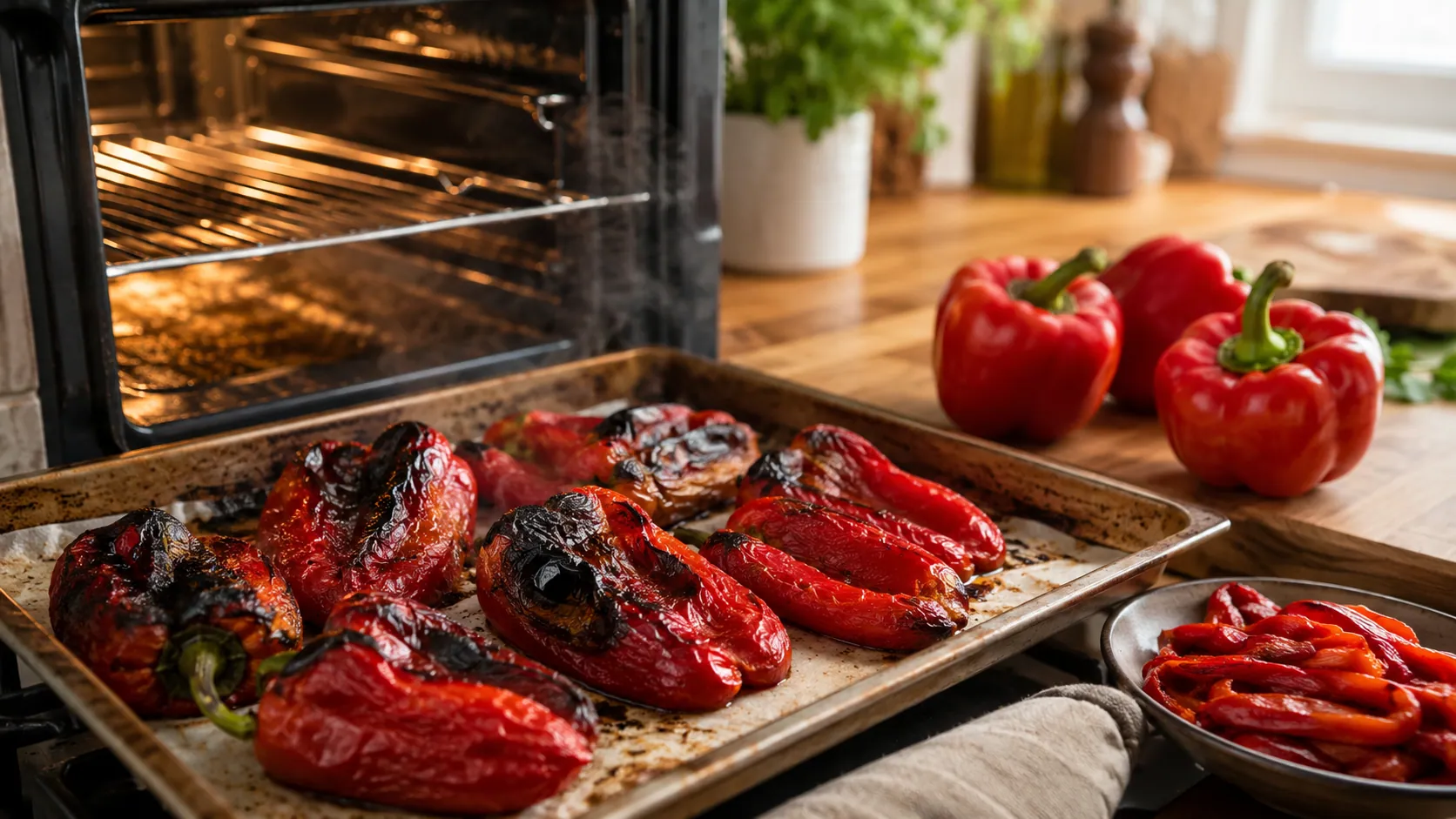
How do I roast red peppers in the oven is a common question because roasted peppers look fancy, but they are actually one of the easiest homemade ingredients you can make. With just red bell peppers, a baking sheet, and a hot oven, you can turn fresh peppers into soft, sweet, smoky, and silky oven roasted red peppers.
Homemade roasted red peppers are useful in so many meals. You can add them to pasta, sandwiches, soups, salads, hummus, pizza, dips, sauces, and meal prep bowls. They taste richer than raw peppers because roasting brings out their natural sweet flavor and adds a light smoky char.
The basic method is simple: roast the peppers until the skins are blistered and blackened, let them steam, peel off the skins, and store them for later. This guide explains exactly how to roast red peppers in the oven, how long they take, how to peel them easily, and how to store them safely.
Quick Answer: How Do I Roast Red Peppers in the Oven?
To make roasted red peppers in the oven, preheat your oven to 450°F, cut the red bell peppers in half, remove the stems, seeds, and core, then place the peppers cut-side down on a parchment-lined rimmed baking sheet. Roast them for about 20–30 minutes, or until the skins are blistered, wrinkled, and blackened in spots.
After roasting, transfer the hot peppers to a bowl with a lid or cover them with foil or cling wrap. Let them steam for about 10–15 minutes. This steaming step loosens the charred skin, making it much easier to peel. Once cool enough to handle, peel away the blackened skins with your fingers, slice the peppers, and use them right away or store them in an airtight container.
This is the easiest oven method for homemade roasted red peppers because it does not require a grill, gas stove, or open flame. You can also roast peppers at 425°F for a gentler method or use the broiler for faster charring, but 450°F is a great middle point for most home ovens.
Ingredients and Tools You Need
You do not need many ingredients to make homemade roasted red peppers. The simplest version uses only red bell peppers. Olive oil and seasoning are optional, depending on how you plan to use the peppers later.
For a basic batch, use 4 to 6 red bell peppers. Choose peppers that feel firm and heavy for their size, with smooth, glossy skin and bright color. Red peppers are usually sweeter than green peppers, which is why they are the most popular choice for roasting.
You may also use:
| Ingredient or Tool | Purpose |
| Red bell peppers | Main ingredient |
| Olive oil | Optional, adds richness |
| Salt and pepper | Optional seasoning |
| Parchment paper | Prevents sticking |
| Rimmed baking sheet | Holds peppers and juices |
| Tongs | Helps move hot peppers |
| Bowl with lid | Used for steaming |
| Airtight container | Used for storage |
You can roast peppers with or without oil. If you want a cleaner, oil-free method, place the peppers directly on parchment paper or a Silpat-style baking mat. If you want richer flavor, lightly coat them with extra virgin olive oil after peeling, not before roasting.
Best Temperature and Time for Oven Roasted Red Peppers
The best oven temperature for oven roasted red peppers depends on how much char you want and how quickly you want the peppers to cook. Most home cooks get the best balance at 450°F because the peppers become tender while the skins blister nicely.
Here is a simple temperature guide:
| Oven Temperature | Approx. Time | Best For | Result |
| 400°F | 35–45 minutes | Gentle roasting | Softer peppers, less char |
| 425°F | 25–35 minutes | Balanced cooking | Sweet, tender peppers |
| 450°F | 20–30 minutes | Best all-around method | Good blistering and flavor |
| 475°F | 15–25 minutes | Stronger char | Smokier roasted flavor |
| Broiler | 10–15 minutes | Fast charring | Heavily blistered skin |
If you are wondering how long to roast red peppers, the simple answer is 20–30 minutes at 450°F. However, the exact time depends on pepper size, oven strength, rack position, and how much char you prefer.
For best results, place the baking sheet on the middle rack. If your oven has hot spots, rotate the baking sheet 180 degrees halfway through cooking. The peppers are done when the skins look blistered, blackened in patches, and wrinkled, and the flesh feels soft.
How to Roast Red Peppers in the Oven Step by Step
Learning how to roast red peppers in the oven is easy once you understand the process. The goal is to soften the pepper flesh while loosening the skin enough to peel it away.
Step 1: Wash and dry the peppers
Start by rinsing your red bell peppers under cool water. Dry them well with a clean towel. This matters because wet peppers can steam too early in the oven instead of roasting properly. Dry peppers char better and develop a deeper roasted flavor.
Step 2: Cut, seed, and core the peppers
Slice each pepper in half from top to bottom. Remove the stem, seeds, and white core. You can also cut the peppers into large flat pieces if they do not sit evenly on the pan. Larger pieces are easier to peel than small strips, so avoid cutting them too thin before roasting.
Step 3: Place peppers cut-side down
Line a rimmed baking sheet with parchment paper or foil. Place the peppers cut-side down so the skin side faces up. This position helps the skin blister directly under the oven heat while the flesh becomes soft and juicy underneath.
Step 4: Roast until the skins blister
Place the baking sheet in a hot oven, ideally around 450°F. Roast for 20–30 minutes, or until the skins are dark, blistered, and collapsed in spots. Do not worry if some areas look black. That blackened outer layer is mostly the skin, and it will be peeled away later.
Step 5: Steam the peppers
Once roasted, immediately move the peppers to a bowl with a lid, pot with lid, or sealed container. You can also place them in a bowl and cover it tightly with foil. Let the peppers steam for 10–15 minutes. This step is important because steam loosens the skins and makes peeling easier.
Step 6: Peel and slice
When the peppers are cool enough to handle, gently peel away the charred skin with your fingers. Do not rinse them under water unless absolutely needed, because rinsing can wash away some of the sweet roasted flavor and pepper juice. Slice the peeled peppers into strips and use them in your favorite recipe.
Whole vs Sliced Red Peppers: Which Is Better?
You can roast peppers whole, halved, or sliced, but for most home cooks, halved red peppers are the easiest option. They cook evenly, sit flat on the baking sheet, and are simple to seed before roasting.
Whole roasted peppers can taste wonderful, but they usually need more attention. You have to turn them with tongs so all sides blister evenly. Whole peppers can also trap steam inside, which may make them softer and wetter. This method works well under a broiler, on a grill, or over a gas flame, but it is slightly less beginner-friendly in the oven.
Sliced roasted peppers are convenient if you want pieces ready for sandwiches, salads, or pasta. However, if you slice them too thin before roasting, they may become mushy or dry around the edges. For the best oven method, cut peppers into halves or large panels first, roast them, peel them, and then slice them after cooking.
So, if you are asking how to roast sliced red peppers in the oven, the best approach is to roast large pepper pieces first and cut them smaller later. This gives you better texture, easier peeling, and a sweeter roasted result.
How to Tell When Roasted Red Peppers Are Done
Roasted red peppers are done when they look slightly messy. That is a good thing. The skins should be blistered, wrinkled, and blackened in spots, while the pepper flesh underneath should feel soft and tender.
Many beginners worry that blackened peppers are burnt. In most cases, they are not. The outer skin is supposed to char because that helps separate it from the flesh. As long as the pepper flesh does not smell bitter or scorched, the charred skin is normal.
Look for these signs:
- Blistered skin with dark patches
- Wrinkly peppers that have softened
- Slightly collapsed shape
- Sweet, smoky smell
- Tender flesh when pressed gently
If the peppers are still firm and shiny, they need more time. If they are leaking a lot of liquid but the skins are not blistered, your oven may be too low or the peppers may be steaming instead of roasting. A higher oven temperature, such as 450°F or 475°F, usually fixes this.
How to Peel Roasted Red Peppers Easily
The easiest way to peel roasted red peppers is to let them steam right after roasting. This is the step many people skip, and it is often the reason the skin sticks.
When hot peppers are placed in a covered bowl or sealed container, the trapped steam softens the skin and separates it from the flesh. After 10–15 minutes, the skin should slide off with gentle pulling. You can use your fingers, a small knife, or the edge of a spoon if needed.
Avoid peeling too aggressively. Roasted peppers are soft, and rough handling can tear the flesh. Also, try not to rinse the peppers under running water. While rinsing removes stubborn bits of skin, it can also wash away the flavorful pepper juice and smoky oils on the surface.
If the skin will not come off easily, the peppers may not have roasted long enough. Put them back in the oven for a few more minutes until the skins blister more deeply. For easier peeling next time, make sure the peppers are placed skin-side up and roasted at high heat.
Can You Roast Red Peppers Without Oil?
Yes, you can absolutely make roasted red peppers without oil. In fact, many cooks prefer oil-free roasting because the skins blister more directly under the heat. Oil can sometimes soften the skin too quickly, which may reduce charring.
To roast peppers without oil, place the pepper halves cut-side down on a parchment-lined baking sheet and roast as usual. The peppers will release their own moisture as they cook. Once peeled, you can leave them plain or add a small amount of olive oil, vinegar, garlic, salt, or herbs depending on how you want to serve them.
Oil-free roasted red peppers are a good option for vegan, plant-based, low-oil, and meal-prep recipes. They work especially well in hummus, pasta sauce, soups, and sandwiches because they add sweetness and color without extra heaviness.
Common Mistakes and Troubleshooting Tips
Even though oven roasted red peppers are simple, a few small mistakes can affect the final result.
One common mistake is not roasting long enough. If the skins are only slightly wrinkled but not blistered, they will be hard to peel. Give them more time until the skins blacken in patches.
Another mistake is skipping the steaming step. Steaming is what makes the peel loosen. Without it, the skin may stick tightly to the pepper flesh.
Some people also use peppers that are too wet. If the peppers are not dried after washing, they may steam on the pan instead of charring. This can lead to watery peppers and weaker flavor.
If your roasted peppers taste bitter, they may have been burned too deeply, or small pieces of blackened skin may still be attached. A little char is good, but the flesh itself should not be scorched.
If your peppers turn mushy, they may have roasted too long or been sliced too thin before cooking. Roast large pieces first, then slice after peeling.
A helpful cooking rule is: “Char the skin, not the flesh.” The skin should darken enough to peel away, while the inside should stay sweet, soft, and juicy.
How to Store and Freeze Roasted Red Peppers
Once you have made homemade roasted red peppers, proper storage keeps them fresh and safe. Let the peppers cool fully before storing them.
For short-term storage, place peeled roasted peppers in an airtight container and refrigerate them. They usually keep well for about 4–5 days. You can store them plain with their natural pepper juices or add a little olive oil for flavor.
If storing roasted peppers in olive oil, keep them in the refrigerator and use them within a safe short period. Homemade vegetables stored in oil should not be left at room temperature because low-acid foods in oil need careful handling. For a safer everyday method, keep the peppers refrigerated in a sealed container and do not treat them like shelf-stable canned peppers.
You can also freeze roasted red peppers. Place peeled strips in a freezer-safe container or freezer bag, remove extra air, and freeze for up to 2–6 months. For easier use, freeze them in small portions. Thaw them in the refrigerator before adding them to sauces, soups, dips, or pasta.
Here is a simple storage chart:
| Storage Method | Best Use | Approx. Time |
| Airtight container in fridge | Everyday use | 4–5 days |
| Covered with olive oil in fridge | Antipasto, sandwiches | Short-term only |
| Freezer-safe bag | Long-term meal prep | 2–6 months |
| Vinegar-based storage | Tangy flavor | Several days in fridge |
Always discard roasted peppers if they smell sour, look moldy, feel slimy, or show signs of spoilage.
Homemade Roasted Red Peppers vs Jarred Roasted Peppers
Jarred roasted peppers are convenient, but homemade roasted red peppers usually have better flavor and texture. When you make them at home, you control the level of char, the amount of salt, the type of oil, and whether to add vinegar, garlic, herbs, or no seasoning at all.
Store-bought roasted peppers are useful when you are in a hurry. They work well in sauces, dips, and soups. However, they can sometimes taste more acidic because they are often packed in brine or vinegar. Homemade peppers tend to taste sweeter, fresher, and more naturally smoky.
If you cook often, roasting a whole batch can also be economical. You can buy fresh red peppers when they are in season or on sale, roast several at once, and store them for quick meals during the week.
For the best balance, use homemade peppers when flavor matters most, such as in sandwiches, antipasto, salads, and simple pasta. Use jarred peppers when convenience is more important than texture.
What to Make With Homemade Roasted Red Peppers
Once you know how to make roasted red peppers at home, you can use them in many simple meals. Their sweet smoky flavor works with Mediterranean recipes, vegan dishes, pasta, sandwiches, dips, and more.
You can blend roasted red peppers into hummus for a creamy dip, add them to Romesco sauce, or mix them into a roasted red pepper pesto. They also make a rich base for creamy roasted red pepper sauce for pasta.
For lunch, layer roasted peppers into sandwiches, wraps, or an avocado sandwich with cheese, greens, or grilled vegetables. For dinner, add them to soups, rice bowls, homemade pizza, Chicken Cacciatore-style dishes, or Shakshuka-inspired meals.
They are also great in cold dishes. Toss sliced roasted peppers into salads, antipasto platters, grain bowls, or pasta salad. If you enjoy meal prep, keep a container in the fridge and add a few strips whenever a meal needs color, sweetness, and a little smoky flavor.
Are Roasted Red Peppers Healthy?
Roasted red peppers can be a healthy addition to many meals. Red bell peppers are naturally colorful, sweet, and commonly valued for nutrients like vitamin C and antioxidants. Roasting changes the texture and deepens the flavor, but the peppers still remain a vegetable-based ingredient that works well in balanced meals.
They are naturally plant-based, vegan, and gluten free. If you roast them without oil, they are also very light. If you add olive oil, they become richer and more satisfying, especially for Mediterranean-style dishes.
The healthiest version depends on how you use them. Roasted peppers in a sandwich with fresh greens, in hummus, or in soup can be a smart way to add more vegetables to your meals. If you store them in oil, watch the portion size and keep food safety in mind.
Can You Roast Other Types of Peppers the Same Way?
Yes, you can use this same oven method for other types of bell peppers. Yellow and orange peppers roast beautifully and have a sweet flavor similar to red peppers. Green peppers can also be roasted, but they usually taste less sweet and slightly sharper because they are less ripe.
You can also roast mini sweet peppers. They cook faster because they are smaller, so check them earlier. Jalapenos and other small peppers can be roasted too, but they may become spicy and smoky very quickly, so handle them carefully.
If you are making a colorful platter, try roasting red, yellow, and orange peppers together. They look beautiful in salads, sandwiches, pasta, and antipasto dishes.
FAQs About Roasting Red Peppers in the Oven
Do I have to peel roasted red peppers?
You do not have to peel them, but peeling gives roasted peppers a softer, silkier texture. The skin can be tough and papery after roasting, especially when it is charred. For dips, sauces, pasta, and sandwiches, peeled peppers usually taste better.
Can I roast red peppers without oil?
Yes. Place the peppers cut-side down on parchment paper and roast them at high heat. You can add olive oil after peeling if you want richer flavor.
Are blackened roasted peppers burnt?
Not always. Blackened skin is normal and helps the peel come off. The pepper flesh underneath should be soft and sweet, not dry or bitter.
Why won’t my roasted peppers peel easily?
The peppers may not have roasted long enough, or they may not have steamed after roasting. Make sure the skins are well blistered, then cover the peppers for 10–15 minutes before peeling.
How long do roasted red peppers last in the fridge?
Homemade roasted red peppers usually last about 4–5 days in an airtight container in the refrigerator.
Can you freeze roasted red peppers?
Yes. Peel and slice them first, then freeze them in a freezer-safe bag or container. They are best used in cooked dishes like soups, sauces, and pasta after thawing.
Can I roast peppers ahead of time?
Yes. Roasted peppers are excellent for meal prep. Make a batch, refrigerate them, and use them throughout the week in sandwiches, salads, dips, and sauces.
Is broiling faster than oven roasting?
Yes. The broiler method can char peppers in about 10–15 minutes, but it needs closer watching. Oven roasting is usually easier and more even for beginners.
Can I use roasted red peppers for pasta sauce?
Absolutely. Blend roasted red peppers with garlic, olive oil, herbs, cream, tomato, or cheese to make a smooth pasta sauce.
Final Thoughts
Making oven roasted red peppers at home is simple, affordable, and useful for everyday cooking. Once you know the basic method—roast until the skins blister, steam, peel, and store—you can prepare homemade roasted red peppers whenever you want a sweet, smoky ingredient for pasta, soups, sandwiches, salads, dips, and meal prep.
The best part is that you do not need special equipment. A hot oven, a baking sheet, and a few fresh red bell peppers are enough to create a flavorful ingredient that tastes fresh, rich, and far better than many store-bought options.
Disclaimer: This article is for general informational and cooking guidance purposes only and does not replace professional food safety, nutritional, or dietary advice. Cooking times, temperatures, and results may vary depending on oven performance, pepper size, and preparation methods. Always follow safe food handling practices and store roasted peppers properly to maintain quality and freshness.