

Introduction
What animals eat tomato plants is one of the first questions many gardeners ask when leaves disappear, fruit has bite marks, or seedlings are cut overnight. Tomato plants may look harmless sitting in a garden bed or container, but to many hungry visitors, they are an easy food source. Their soft leaves, tender stems, juicy fruit, and high moisture content can attract everything from backyard wildlife to small insects hiding under the leaves.
The tricky part is that tomato plant damage does not always look the same. A deer may tear off leaves from the top of the plant, while a rabbit may leave clean cuts near the ground. Birds often peck holes in ripe tomatoes, and squirrels may take one or two bites from several fruits without finishing any of them. In other cases, the problem may not be a large animal at all. Slugs, snails, hornworms, cutworms, and other garden pests can also leave behind serious damage.
So, if you are wondering, “what is eating my tomato plants?”, you do not have to guess blindly. The best clue is usually the damage itself. Ragged leaves, clean stem cuts, missing fruit, burrows, droppings, small holes, tunnels, slime trails, and tomato fruit bite marks can all point you toward the likely culprit. Even the time of day matters. Some pests feed during daylight, while others are more active at night.
Common Animals That Eat Tomato Plants
Several animals that eat tomato plants can visit a garden, but they do not all cause the same kind of damage. Some are mostly interested in ripe tomatoes. Others prefer soft leaves, young stems, flowers, roots, or seedlings. This is why one gardener may find missing fruit, while another may wake up to stripped leaves or a young tomato plant cut close to the soil.
The most common tomato garden pests include both larger backyard animals and smaller crawling pests. Here are the main culprits to know:
Deer can eat tomato leaves, stems, flowers, and fruit. When deer find an unprotected garden, they can strip a plant quickly, especially if other food is limited. Their damage often looks rough or torn because they pull at the plant rather than making clean cuts.
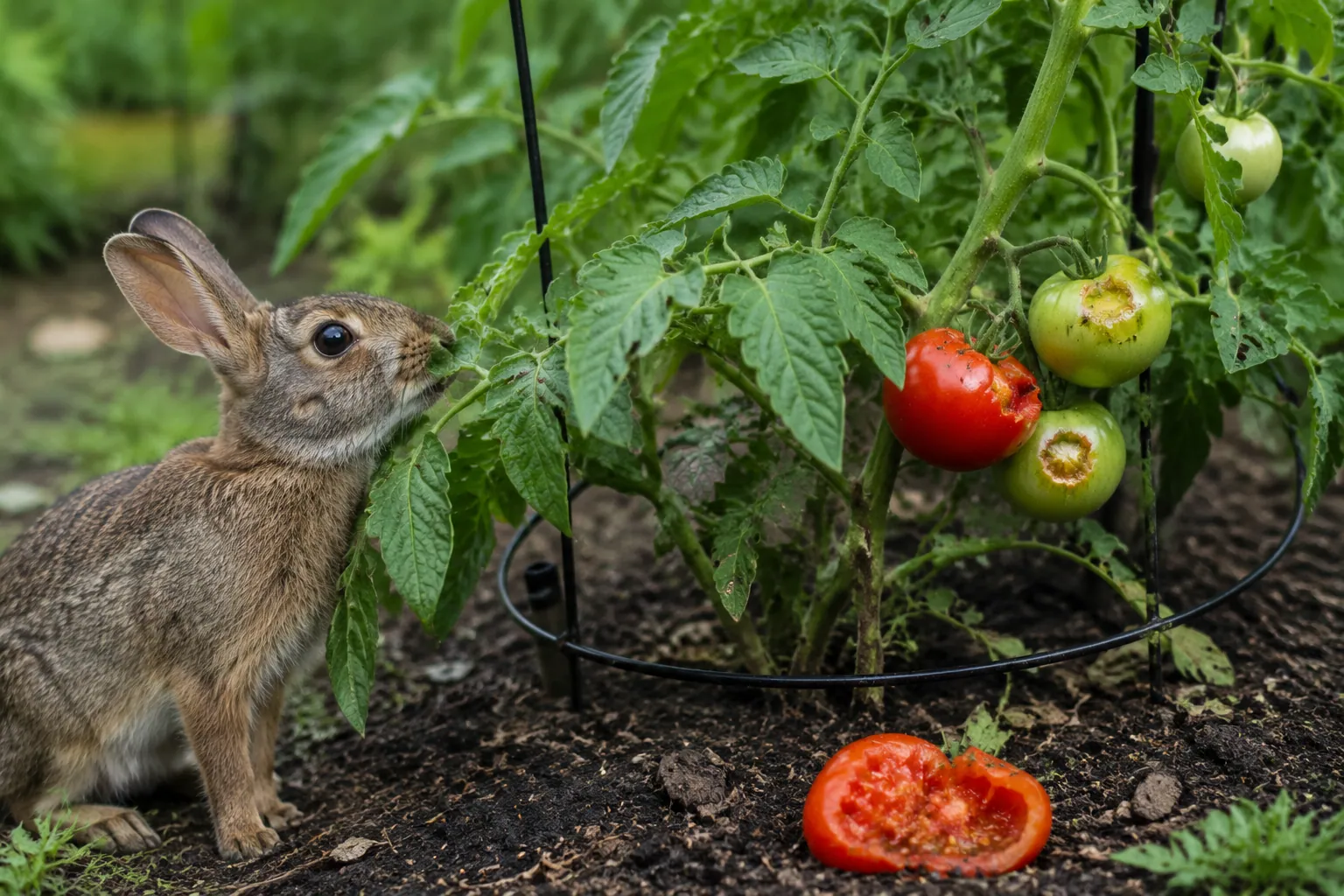
Rabbits usually feed lower on the plant. They often eat young seedlings, tender stems, and low leaves. Rabbit damage may look cleaner than deer damage, and it is often found close to the ground.
Squirrels are more likely to go after ripe tomatoes than the whole plant. A common sign is finding one or two bites taken out of several tomatoes. They may leave the rest of the fruit behind, which can be frustrating for gardeners.
Chipmunks also nibble tomato fruit and may disturb soil around the base of plants. Their bite marks are usually smaller than squirrel damage, and they often stay near stone walls, woodpiles, sheds, or thick garden borders.
Birds often peck holes in ripe tomatoes, especially during hot or dry weather when they are looking for moisture. Bird damage usually appears as small holes or pecked spots on exposed fruit.
Raccoons can leave messy damage. They may knock fruit down, break stems, or leave half-eaten tomatoes behind. Since raccoons are mostly active at night, damage may appear suddenly by morning.
Opossums may also eat ripe tomatoes and usually visit after dark. They are not always the first suspect, but they can be part of the problem if fruit is disappearing or being chewed overnight.
Skunks may disturb soil while searching for insects and grubs, but they can also damage low-growing tomatoes. Their activity is often noticed around the base of plants or near mulch.
Groundhogs, also called woodchucks, can eat leaves, stems, and fruit. They may also trample plants as they move through the garden. Their damage can be heavier than the small bite marks left by squirrels or chipmunks.
Voles usually damage the lower parts of tomato plants. They may chew roots, lower stems, or underground plant parts. If a tomato plant wilts or collapses without clear leaf damage, root damage from voles may be worth checking.
Rats and mice may chew tomatoes, especially in hidden, overgrown, or cluttered gardens. They are more likely to become a problem when fallen fruit, compost, pet food, or dense cover is nearby.
Slugs and snails often feed on low leaves and fruit close to the soil. Their biggest clue is a shiny slime trail. They are most active in damp, shaded areas and often feed at night.
Hornworms and other caterpillars are not “animals” in the same way deer, rabbits, or squirrels are, but they are major tomato plant eaters. Tomato hornworms can remove large amounts of foliage in a short time and may be hard to spot because they blend in with the leaves.
How to Tell What Animal Is Eating Your Tomato Plants
When you are trying to figure out what is eating your tomato plants, the damage clues are usually more reliable than simply seeing an animal nearby. A squirrel sitting on the fence may not be the real culprit. A rabbit in the yard may be eating clover instead of tomatoes. Good tomato damage identification starts by looking closely at the leaves, fruit, stems, soil, and the area around the plant.
The key is to notice where the damage is, what shape it has, and when it appears. If you see tomato leaves eaten overnight, fresh bite marks in the morning, or new holes in ripe fruit, those details can help you narrow down the cause.
Leaf Damage Clues
If the leaves look ragged, torn, or ripped high on the plant, deer may be the problem. Deer do not usually make neat cuts. They pull and tear leaves, stems, and flowers as they feed. Damage higher up on the plant is a strong clue, especially if several branches look stripped.
If you notice clean angled cuts near the ground, rabbits are more likely. Rabbits often feed on low leaves, tender stems, and young tomato plants. Their cuts may look sharp and slanted, almost as if the plant was clipped.
If large sections of leaves are missing, the cause could be hornworms, deer, or groundhogs. Hornworms can remove a surprising amount of foliage in a short time. They often hide along the stems and blend in with the green plant, so check carefully under leaves and near chewed areas.
If the leaves have tiny holes, lace-like patches, or skeletonized sections, the problem is usually smaller garden pests such as insects, beetles, or caterpillars. These marks are different from the larger torn damage caused by deer or groundhogs.
Fruit Damage Clues
If ripe tomatoes have small peck holes, birds may be visiting your garden. Bird damage is common when fruit is red, soft, and full of moisture. This often happens during hot or dry weather when birds are also looking for water.
If you find one or two bites from several tomatoes, squirrels or chipmunks are likely suspects. They may sample multiple fruits without eating a whole tomato. These bite marks on tomatoes can be especially frustrating because the fruit is often left hanging or dropped nearby.
If you see half-eaten tomatoes scattered around the garden, the damage may come from raccoons, opossums, rats, or squirrels. Raccoons and opossums often feed at night, while squirrels are more active during the day. Messy fruit damage is a sign that you may need to watch the garden at different times.
If the fruit is chewed near the soil, check for slugs, snails, rodents, or rabbits. Low-hanging tomatoes that touch mulch or damp soil are easier for these pests to reach. Slugs and snails often leave a shiny slime trail, which is one of the clearest tomato plant pest signs.
If you notice small entry holes near the stem end of the fruit, tomato fruitworms may be the cause. These pests bore into tomatoes and can damage the fruit from the inside, sometimes making the tomato look fine at first glance.
Soil and Root Clues
The soil around your tomato plants can also reveal important signs. If you see tunnels near the plants, the problem may involve voles, moles, or groundhogs. Moles usually search for insects and grubs, but their tunnels can disturb roots. Voles, on the other hand, may chew roots and lower stems.
If a tomato plant suddenly wilts even though the leaves have not been heavily eaten, check for root damage. Voles or underground pests may be feeding below the surface. Gently inspect the base of the plant and nearby soil for tunnels, chewing, or loose roots.
If young seedlings are cut at soil level, cutworms are often responsible. This damage usually appears overnight. One day the seedling looks healthy, and the next morning it may be lying flat on the soil as if someone snipped it.
You can also look for garden animal tracks, droppings, disturbed mulch, broken stems, or nearby burrow openings. These small clues often tell the real story. Once you match the damage pattern to the likely pest, you can choose a control method that actually fits the problem.
What Animals Eat Tomato Plants at Night?
Many tomato plant attacks happen at night or early in the morning before gardeners notice anything is wrong. If your plants look fine in the evening but have missing leaves, chewed fruit, or broken stems by sunrise, you may be dealing with nocturnal garden pests. Some animals feel safer feeding in the dark, especially when gardens are quiet and there is less movement from people, pets, or birds.
Common nighttime feeders include rabbits, deer, raccoons, opossums, skunks, groundhogs, rats, mice, slugs, snails, hornworms, and cutworms. These pests do not all leave the same type of damage. Deer may tear leaves and stems. Rabbits often chew low growth. Raccoons and opossums may leave messy, half-eaten tomatoes. Rats and mice can chew fruit in hidden areas. Slugs and snails usually feed on low fruit and leaves, often leaving shiny slime trails behind.
If you are wondering what eats tomato plants at night, check the garden at the right times. Look early in the morning when damage is fresh. You can also walk through the garden just after dusk, especially around low-hanging fruit, fence gaps, thick mulch, compost areas, sheds, or burrow openings. After rain is another good time to inspect plants because slugs and snails are more active in damp conditions.
Squirrels and birds can also damage tomatoes, but they are usually more active during the day. Squirrels often bite ripe tomatoes and leave them behind, while birds may peck holes in soft fruit. If new damage appears during daylight hours, these two are more likely suspects than raccoons or opossums.
A simple tracking trick can help when you are dealing with animals eating tomatoes overnight. Sprinkle a very light layer of flour or fine garden-safe sand around the base of the plant before nightfall. In the morning, look for small footprints, drag marks, or movement trails. Keep the powder on the soil only, and do not place it directly on edible fruit or leaves. This small step can give you useful clues before you spend money on fencing, repellents, or traps.
The main goal is to match the signs with the likely pest. Nighttime tomato damage near the top of the plant may point to deer. Low cuts can suggest rabbits. Chewed fruit near the soil may mean slugs, snails, rodents, or rabbits. Seedlings cut at the base often point to cutworms. Once you know which visitor is active at night, it becomes much easier to protect your tomato plants in a safe and targeted way.
Do Deer, Rabbits, and Groundhogs Eat Tomato Plants?
Yes, deer, rabbits, and groundhogs do eat tomato plants, and they can cause some of the most noticeable damage in a home garden. These larger animals are different from small insects or birds because they may damage several parts of the plant at once. They can eat leaves, stems, flowers, and fruit, and in some cases, they may break or trample the plant while feeding.
Deer
Deer eating tomato plants can be a serious problem, especially in open gardens near woods, fields, or quiet neighborhoods. Deer may eat the leaves, stems, flowers, and tomatoes. They are strong enough to strip a plant quickly, and one visit can leave a healthy tomato plant looking bare.
A common sign of deer damage is ragged, torn edges on the leaves and stems. Deer do not clip plants neatly. They pull and tear plant tissue as they feed, so the damage often looks rough. Another clue is the height of the damage. If leaves or stems are missing from the upper part of the tomato plant, deer are more likely than rabbits or slugs.
Severe deer damage can leave only bare stems behind. You may also notice hoofprints, droppings, or broken branches around the garden. Deer may feed during the day in quiet areas, but they often visit at dusk, overnight, or early in the morning.
Rabbits
Rabbits eating tomato plants usually cause damage closer to the ground. They are more likely to eat seedlings, tender leaves, young stems, and low branches. A young tomato plant can be especially vulnerable because the growth is soft and easy for rabbits to chew.
Rabbit damage often looks cleaner than deer damage. One common clue is a clean angled cut, sometimes close to a 45-degree angle. If a seedling or low stem looks neatly clipped, rabbits may be responsible. You may also find small round droppings near the bed or see worn paths through grass or weeds.
Rabbits are most active in the early morning, evening, and overnight. They often hide near tall grass, brush piles, fence lines, shrubs, or garden edges, so keeping those areas tidy can reduce their cover.
Groundhogs and Woodchucks
Groundhogs eating tomatoes can cause heavy garden damage. Groundhogs, also called woodchucks, eat leaves and fruit, and they may trample plants as they move through the bed. Their damage is often more intense than the small bite marks left by squirrels or chipmunks.
If you have woodchucks in garden areas, look for large burrow openings near fences, sheds, brush piles, stone walls, decks, or the edge of the yard. Groundhogs usually stay close to cover, so a tomato patch near a hiding place may be an easy target.
They can feed during the day, especially in the morning and late afternoon. If large sections of foliage are missing, fruit is chewed, and plants look pushed down or disturbed, a groundhog may be involved.
Do Squirrels, Chipmunks, Birds, and Raccoons Eat Tomatoes?
Yes, squirrels, chipmunks, birds, and raccoons eat tomatoes, but they usually focus more on the fruit than the whole plant. Unlike deer or rabbits, these visitors may not strip the leaves or chew through stems. Instead, they often leave behind bite marks, peck holes, half-eaten tomatoes, or damaged fruit scattered around the garden.
Squirrels
Squirrels eating tomatoes is a common problem in backyard gardens, especially when fruit begins to ripen. Squirrels often take one or two bites from a tomato and then leave the rest behind. Sometimes they damage several tomatoes in one visit without fully eating any of them.
They may be attracted to tomatoes because of the moisture inside the fruit, especially during hot or dry weather. If there is not enough water available nearby, a ripe tomato can become an easy source of liquid as well as food.
Squirrel damage often looks like small to medium chew marks on the side of the fruit. You may find tomatoes still hanging on the plant, dropped on the ground, or partly eaten near a fence, tree, or garden edge.
Chipmunks
Chipmunks eating tomato plants usually cause smaller, neater fruit damage than squirrels. They may nibble ripe or nearly ripe tomatoes and sometimes disturb soil around the base of the plant. Chipmunks often stay close to hiding places, such as woodpiles, stone borders, sheds, dense shrubs, or thick garden edges.
Their bite marks are usually smaller than squirrel damage. If you notice small chunks missing from low-hanging tomatoes, tiny holes in fruit, or disturbed soil near the plant, chipmunks may be part of the problem.
Birds
Birds pecking tomatoes often leave sharp holes or small cavities in ripe fruit. This damage is usually easy to recognize because the marks look more like punctures than chewing. Birds are especially likely to peck tomatoes during dry weather when they are searching for moisture.
Bird damage often appears on exposed tomatoes near the outer part of the plant. A tomato may have one deep peck hole, several small punctures, or a damaged soft spot that starts to rot later. If you see birds landing near the tomato patch during the day, they may be visiting for both food and water.
Raccoons
Raccoons eating tomatoes can create messy damage. They may leave half-eaten tomatoes, broken stems, disturbed mulch, or knocked-over containers. Raccoons are usually more active at night, so the damage may appear suddenly in the morning.
Unlike birds or chipmunks, raccoons are strong enough to pull fruit from the plant and move things around. If tomatoes are partly eaten and scattered, or if the garden bed looks disturbed, raccoons may be responsible. They are also attracted to compost, trash, pet food, and fallen fruit, so a messy garden area can encourage repeat visits.
To protect tomatoes from these fruit-focused visitors, use barriers before the fruit fully ripens. Bird netting can help, but it must be secured carefully so birds or small animals do not get tangled. Breathable fruit protection bags can cover individual tomato clusters while still allowing air flow. Another useful method is picking tomatoes at the breaker stage, when they first start showing color, and letting them ripen indoors. This reduces the time ripe fruit sits outside attracting wildlife.
Small Pests That Look Like Animal Damage: Hornworms, Slugs, Cutworms, and Fruitworms
When gardeners ask what animals eat tomato plants, the problem is not always deer, rabbits, squirrels, or birds. Many small pests can cause damage that looks like animal feeding at first. In fact, insects, caterpillars, slugs, and snails can sometimes do more harm than larger backyard visitors because they are harder to notice until the damage becomes serious.
These pests may chew leaves, damage seedlings, bore into fruit, or feed at night when the garden is quiet. That is why it is important to inspect the whole plant, including the undersides of leaves, the base of the stem, the soil surface, and low-hanging tomatoes.
Tomato Hornworms
Tomato hornworm damage can look dramatic because these large green caterpillars eat a lot in a short time. Hornworms blend in very well with tomato foliage, so many gardeners do not see them right away. A plant may look healthy one day and have large missing sections of leaves the next.
Hornworms usually eat leaves first, but they may also chew stems and green tomatoes. One useful clue is the dark droppings they leave behind on leaves, branches, or the soil under the plant. If you see fresh droppings and stripped leaves, look closely along the stems. The caterpillar may be hiding in plain sight.
These are some of the most common caterpillars eating tomato plants, and they are large enough to remove by hand if you find them early. Check plants in the morning or evening when the light makes their shape easier to spot.
Slugs and Snails
Slugs eating tomatoes and snails feeding on tomato plants are common in damp gardens. They usually feed at night and prefer cool, moist, shaded areas. If your tomato plants are surrounded by thick mulch, weeds, or low leaves touching the soil, slugs and snails may have an easy place to hide.
Their damage often appears on low leaves or fruit close to the ground. Tomatoes touching wet soil are especially vulnerable. The clearest sign is a shiny slime trail on leaves, fruit, containers, mulch, or the soil surface.
Slugs and snails may leave irregular holes in leaves and soft, chewed patches on fruit. If the damage keeps appearing overnight and the area is damp, these pests should be high on your list of suspects.
Cutworms
Cutworms tomato seedlings damage is usually easy to recognize once you know what to look for. Cutworms attack young plants at or near the soil line. A healthy seedling may look normal in the evening, then appear cut off and lying on the soil the next morning.
Cutworms are nighttime feeders, so you may not see them during the day. They often hide in the top layer of soil or garden debris near the damaged plant. If a young tomato plant has been clipped at the base, gently check the soil around it for a curled caterpillar.
This type of damage is different from deer or rabbit feeding. Rabbits may also clip plants, but cutworm damage is usually right at the soil line and often affects young seedlings more than mature tomato plants.
Tomato Fruitworms
Tomato fruitworm holes are another sign that the problem may not be a larger animal. Tomato fruitworms bore into tomatoes, often near the stem end. At first, the fruit may show only a small hole, but the inside can become damaged as the pest feeds.
Fruitworm damage can lead to internal rot, soft spots, and ruined tomatoes. Sometimes the outside of the tomato does not show the full problem until you cut it open. If you notice holes near the top of the fruit, small amounts of waste around the opening, or tomatoes rotting before they fully ripen, tomato fruitworms may be involved.
These pests are important to identify because fencing, netting, and animal repellents will not stop them. Instead, gardeners need to inspect fruit regularly, remove damaged tomatoes, manage weeds, and use pest-control methods that are safe for edible crops.
Small pests may not be as obvious as raccoons or deer, but they can cause serious tomato plant damage. A careful inspection of leaves, fruit, stems, and soil will help you separate true animal damage from insect or soft-bodied pest activity.
Why Animals Are Attracted to Tomato Plants
To understand why animals eat tomatoes, it helps to look at a tomato plant from the animal’s point of view. A tomato plant offers food, moisture, shelter, and easy access, especially when it is growing in an open garden bed. For hungry backyard wildlife, ripe tomatoes can be one of the easiest foods to reach.
One major reason is the scent of ripe fruit. As tomatoes soften and change color, they become more noticeable to animals such as squirrels, birds, raccoons, chipmunks, and rodents. The bright red color also makes ripe tomatoes stand out, especially when the fruit is exposed on the outside of the plant.
Moisture is another important part of tomato plant attraction. Tomatoes are juicy, so animals may bite them not only for food but also for water. This is one reason damage can become worse during hot, dry weather. Birds, squirrels, and other animals may peck or chew tomatoes when natural water sources are limited.
Tender new growth can also attract pests. Young leaves, soft stems, flowers, and seedlings are easier to chew than older, tougher plant parts. Rabbits, deer, groundhogs, cutworms, and hornworms may go after this soft growth, especially in spring when plants are still small and tender.
Easy access matters too. Tomato plants growing in open beds without fencing, cages, or netting are more vulnerable. Low-hanging fruit, weak supports, and branches touching the ground make it easier for rabbits, slugs, snails, rodents, and chipmunks to reach the plant. Thick mulch, tall weeds, dense borders, and overgrown grass can also provide hiding places for ripe tomato pests.
Nearby garden food sources can bring more visitors into the area. Bird feeders, open compost piles, trash bins, fallen fruit, pet food, and water bowls can attract animals first. Once they are already in the yard, tomato plants may become part of their regular feeding route.
Season also plays a role. In spring, seedlings and tender leaves are most vulnerable because they are soft and close to the ground. In summer, ripe tomatoes attract squirrels, birds, raccoons, insects, slugs, and snails. In the late season, wildlife may become more persistent as natural food sources change, dry out, or become harder to find.
In many home gardens, the first clue is not seeing the animal. It is finding the same kind of damage repeated in the same place for two or three mornings. If the same tomatoes are chewed near the soil, the same top leaves are stripped, or the same fruit clusters are pecked, the pattern often tells you more than a quick glance around the yard.
Safe and Effective Ways to Stop Animals from Eating Tomato Plants
The safest way to protect tomato plants from animals is to start with physical barriers. Repellents may help for a short time, but barriers are usually more reliable because they block animals from reaching the plant in the first place. This is especially important once tomatoes begin to ripen and the fruit becomes more attractive to wildlife.
Good barrier options include tomato cages, hardware cloth, chicken wire, garden fencing, raised bed covers, bird netting, and fruit protection bags. These methods are useful because they protect the plant without adding unsafe sprays or chemicals to edible crops. LSU AgCenter also notes that caging plants is one of the most dependable ways to keep animals away from tomatoes.
The best barrier depends on the animal causing the damage. For deer, use tall fencing or deer netting because deer can easily reach over short barriers. For rabbits, use low fencing with small openings, and make sure the bottom is secured so they cannot slip underneath. For groundhogs, fencing should extend below the soil because they can dig under weak barriers. For birds, use properly secured netting or breathable fruit bags around tomato clusters. For squirrels, cages, covered beds, or enclosed supports may work better than loose netting. For voles, raised beds lined underneath with hardware cloth can help protect roots.
Another important part of garden pest prevention is making the garden less inviting. Remove fallen tomatoes as soon as you see them, because rotting fruit can attract raccoons, rodents, insects, and other pests. Clean up brush piles, trim weeds and tall grass, and reduce dense hiding places near the garden. Keep compost sealed, move bird feeders away from vegetable beds, secure trash cans, and avoid leaving pet food outside. These steps reduce easy food sources and hiding spots that encourage repeat visits.
Repellents can be useful, but they should be used carefully. Commercial animal repellents may help with deer, rabbits, squirrels, or other wildlife, but many need to be reapplied after rain or heavy watering. Strong scents may discourage some animals for a short time, but they are rarely a complete solution by themselves. Avoid spraying unsafe homemade mixtures directly on edible fruit, and always follow the product label when using any repellent in a vegetable garden.
It is also important to use humane animal control and follow local rules. Avoid poisons around edible gardens, pets, children, and beneficial wildlife. If you are thinking about trapping or relocating an animal, check local wildlife laws first because rules vary by area. For persistent damage from raccoons, groundhogs, rats, deer, or other difficult pests, contact a local extension office or a licensed pest professional for safe advice.
The goal is not just to keep animals away from tomatoes for one night. A better plan is to combine tomato plant fencing, clean garden habits, careful monitoring, and safe control methods. When you match the solution to the right pest, your tomato plants have a much better chance of staying healthy and productive.
What Not to Do When Animals Eat Your Tomato Plants
When you find damaged tomatoes or chewed leaves, it is easy to react quickly. But some fast fixes can make the problem worse or create new risks for your garden. Avoiding common tomato plant protection mistakes can save time, protect your plants, and keep your harvest safer to eat.
Do not assume every bite mark is from a deer or rabbit. Many garden wildlife mistakes happen because gardeners treat the wrong problem. A clean bite on a low stem may suggest a rabbit, but holes in fruit could come from birds, squirrels, slugs, fruitworms, or rodents. Before choosing a solution, check the leaves, fruit, soil, tracks, droppings, and the time when the damage appears.
Do not use random homemade sprays on edible crops without checking safety first. Some online mixtures can burn leaves, affect fruit quality, harm beneficial insects, or leave unsafe residues on tomatoes. This is especially important if the spray contains strong household products, essential oils, soap, hot pepper, garlic, vinegar, or chemicals not labeled for edible plants. Unsafe pest control can damage the plant more than the pest does.
Do not leave damaged fruit on the plant. A tomato with bite marks, holes, or soft spots can attract more pests, including flies, ants, slugs, raccoons, rodents, and insects. Remove damaged tomatoes quickly and dispose of them away from the garden if they are badly chewed or rotting.
Do not ignore root damage or tunneling. If tomato plants wilt, lean, or collapse without much visible leaf damage, the problem may be below the soil. Voles and other underground pests can chew roots or lower stems. Groundhogs may also dig near garden beds. Tunnels, loose soil, or burrow openings are important clues and should not be overlooked.
Do not overuse pesticides when the issue is wildlife. If deer, rabbits, squirrels, raccoons, birds, or groundhogs are eating your tomatoes, insecticides will not solve the problem. They may also harm pollinators, beneficial insects, and the natural balance of the garden. Good tomato pest control tips start with correct identification, not guesswork.
Do not use bird netting loosely. Loose netting can trap birds, snakes, chipmunks, or other small animals. If you use netting, secure it tightly over a frame or support so wildlife cannot get tangled. Check it often, especially during fruiting season.
Do not rely only on repellents if your garden has heavy pressure from deer, rabbits, raccoons, or groundhogs. Repellents may work for a short time, but hungry animals often return, especially after rain or when ripe tomatoes are easy to reach. In high-pressure areas, fencing, cages, raised bed covers, and secured barriers are usually more dependable.
Do not forget that domestic animals can damage tomato plants too. Dogs may dig around beds, chickens may peck fruit, goats may strip leaves, and even curious cats can disturb seedlings or soil. If the damage pattern does not match wild animals, consider whether pets or nearby farm animals could be involved.
The best approach is calm and careful: identify the signs, remove damaged fruit, protect the plant with the right barrier, and avoid harsh or unsafe shortcuts. This keeps your tomato plants healthier and makes your pest control plan more effective.
Quick Identification Chart: Tomato Plant Damage by Animal
If you are asking, “what ate my tomatoes?”, use this simple tomato plant damage chart to compare the signs. It can help you identify tomato pests faster before choosing a control method.
| Damage You See | Likely Culprit | What to Check |
| Ragged leaves high on the plant | Deer | Tracks, droppings, stripped stems, torn branches |
| Clean cuts near the ground | Rabbits | Small round pellets, low leaf loss, clipped seedlings |
| One bite from several tomatoes | Squirrels or chipmunks | Daytime activity, small tooth marks, fruit dropped nearby |
| Pecked holes in ripe fruit | Birds | Open fruit, bird activity, sharp puncture marks |
| Half-eaten tomatoes scattered around | Raccoons, opossums, or squirrels | Night damage, messy remains, disturbed mulch |
| Slime trails on fruit or leaves | Slugs or snails | Wet mulch, low fruit, damp shaded areas |
| Seedlings cut at soil line | Cutworms | Night feeding, young plants lying flat, C-shaped larvae in soil |
| Leaves stripped quickly | Hornworms or deer | Dark droppings, large green caterpillar, upper plant damage |
| Plant wilting from below | Voles or root pests | Tunnels, root chewing, loose soil around the plant |
This chart is only a starting point, but it can save you from guessing. For example, tomato bite marks on ripe fruit may point to squirrels, chipmunks, birds, raccoons, or rodents, depending on the size and shape of the damage. Chewed leaves near the top of the plant suggest a different problem than missing seedlings at soil level.
For the best results, check your plants in the morning, look around the soil, and compare the damage pattern for two or three days. Repeated signs usually reveal the real culprit.
When to Ask a Local Expert or Extension Office
Sometimes tomato plant damage is easy to identify. Other times, the signs are confusing. If you have checked the leaves, fruit, stems, and soil but still cannot tell what is causing the problem, it may be time to ask for master gardener tomato help or contact a local extension office.
Local experts can be especially helpful because pest pressure changes by region, season, habitat, and local wildlife population. A garden near woods may have more deer and groundhogs. A city garden may deal more with rats, mice, squirrels, or birds. A damp, shaded garden may have more slugs and snails. This is why garden pest identification is often more accurate when someone understands the local area.
Consider contacting a local extension office, master gardener program, or licensed pest professional if your tomato plants are repeatedly destroyed overnight, you see burrows near the garden, or there is possible rat activity. You should also ask for help if you cannot tell whether the issue is insects, disease, or animals. Some tomato problems look similar at first, and using the wrong solution can waste time or harm the plant.
Expert help is also useful if damage continues after you have tried fencing, cages, netting, or other barriers. If a larger animal keeps getting into the garden, you may need a stronger prevention plan. For serious wildlife damage control, especially with raccoons, groundhogs, rats, or repeated deer damage, a local professional can suggest safer and more legal options.
You should also check local guidance before trapping or relocating wildlife. Rules vary by location, and some animals may be protected or require specific handling. A local extension office or pest professional can explain what is allowed in your area.
Before asking for help with local extension tomato pests, take clear photos so the expert can see the full pattern. Useful photos include damaged leaves, bite marks, droppings, tracks, holes, tunnels, burrows, and the whole tomato plant from the soil to the top. If possible, also note when the damage appears, such as overnight, during the day, after rain, or only when fruit begins to ripen.
Conclusion:
The answer to what animals eat tomato plants can include deer, rabbits, squirrels, chipmunks, birds, raccoons, opossums, skunks, groundhogs, voles, rats, and mice. It can also include smaller tomato pests that many gardeners do not notice right away, such as hornworms, slugs, snails, cutworms, and tomato fruitworms.
The best solution starts with reading the damage pattern. Torn leaves high on the plant, clean cuts near the ground, pecked fruit, slime trails, burrows, tunnels, droppings, and bite marks all tell a different story. Once you know what kind of pest is visiting your garden, you can choose a safer and more effective way to protect your plants.
Disclaimer:
This article is for general informational purposes only. Garden conditions, pest activity, and results may vary depending on location, season, plant health, and individual situations. Always use safe, appropriate methods for your specific garden.