

Introduction: Can a Blow Dryer Kill Lice, or Is It Too Risky?
Many parents ask this question because they want a fast, simple, and chemical-free way to deal with head lice in children. Finding lice on your child’s scalp can feel stressful, especially when you notice scratching, tiny lice eggs, or small crawling insects close to the hair roots. It is normal to feel worried, frustrated, or even embarrassed, but head lice are common among children and are not a sign of poor hygiene.
The clear answer is this: heat can kill lice under controlled conditions, but a regular household blow dryer is not a safe or dependable way to treat head lice. A blow dryer may affect some live lice, but it is unlikely to kill all lice or nits, especially because lice eggs are attached tightly near the scalp. Using too much heat can also cause scalp irritation, dryness, discomfort, or even burns, particularly on young children with sensitive skin.
This guide will explain what parents should know before trying heat at home. We will cover the difference between live lice and nits, why blow dryers are risky, how professional heat devices work, why wet combing matters, which proven treatments are safer, how to clean bedding and hair tools, and when it is best to call a pediatrician. The goal is to help you choose a safe lice treatment for kids without panic, guesswork, or unsafe home remedies.
Can a Blow Dryer Kill Lice?
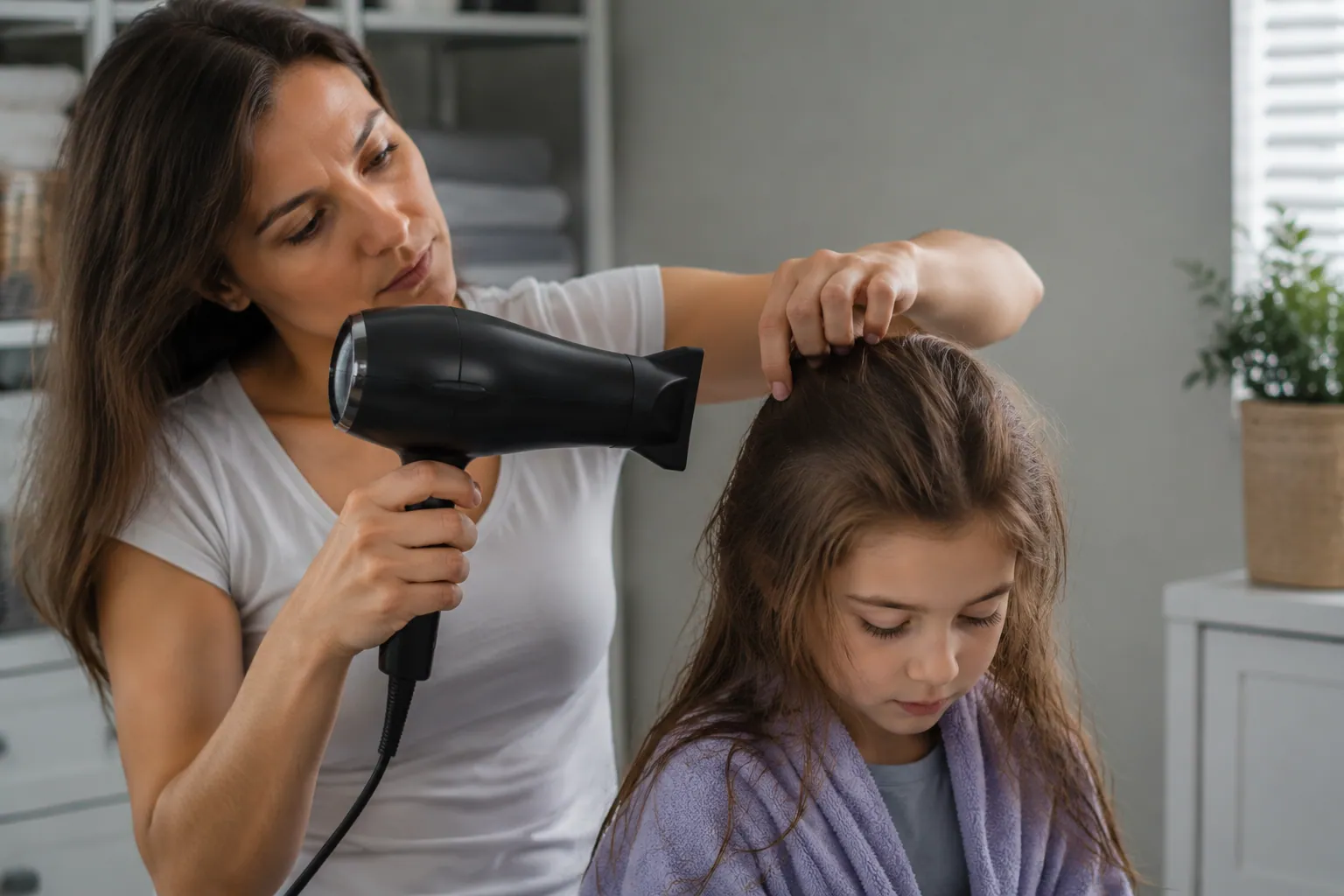
A blow dryer may kill some live lice if the heat is strong enough and applied for long enough, but it usually does not kill every louse or all the nits. This is why a hair dryer should not be used as the main treatment for a lice infestation, especially on a child’s scalp.
The problem is that lice are very good at hiding. They often stay close to the scalp, where the hair is thick, warm, and harder to reach evenly with hot air. When a child moves, the hair shifts, or the dryer is held at different angles, the heat does not reach every area in the same way. So, while some crawling lice may be weakened or killed, others can survive.
Nits are even harder to deal with. Lice eggs are glued to the hair shaft, usually close to the scalp, and they do not come off easily with washing, brushing, or quick heat exposure. So if you are wondering, “can a hair dryer kill lice eggs?”, the safest answer is: not reliably. The eggs may remain attached and hatch later, which can make it seem like the lice have come back.
A professional hot-air lice device is different from a bathroom blow dryer. These devices use controlled airflow, measured heat, and trained application to dry out lice and eggs more safely and effectively. A regular blow dryer does not offer that same control, and using too much heat can irritate or burn the scalp.
The parent-friendly takeaway is simple: do not rely on a blow dryer as your main lice treatment. Heat can kill lice in controlled settings, but at home, a blow dryer is too uneven and risky to be trusted. A safer plan is to use a proven lice treatment, careful wet combing, and follow-up checks to remove both live lice and nits.
Why a Regular Hair Dryer Is Not a Safe Lice Treatment for Children?
A regular hair dryer may seem like an easy home solution, but it is not a safe lice treatment for children. The biggest concern is that a blow dryer can quickly overheat a child’s scalp. Young children often have sensitive skin, and too much heat can lead to scalp burns, dryness, redness, irritation, or discomfort. Even if the dryer does not feel too hot at first, holding it close to the scalp for several minutes can become painful or unsafe.
Another problem is that strong airflow can move lice instead of killing them. Mayo Clinic advises parents not to use a hair dryer to get rid of lice because it can send lice into the air and may spread them to another person. This makes the hair dryer lice risk more serious than many parents expect.
Blow drying is also unreliable because children usually cannot sit still long enough for even, controlled heat exposure. Lice hide near the scalp, behind the ears, and around the nape of the neck. These areas are hard to heat evenly without causing discomfort. If some spots stay cooler, live lice or nits may survive and the infestation can continue.
Parents should also be careful when using heat near lice medicines. Some treatments, including malathion, are flammable and should not be used with a hair dryer, curling iron, or open flame while the hair is wet with the medicine. For this reason, it is always safer to follow the product label and ask a pharmacist or pediatrician if you are unsure.
The safest takeaway is simple: do not use a regular hair dryer as a child lice treatment. It can cause irritation, increase the chance of lice spreading, and create safety risks when used with certain medications. A careful lice comb, approved treatment, and follow-up checks are much safer and more dependable.
The Difference Between Killing Live Lice and Killing Nits
To understand why a blow dryer is not a dependable solution, parents first need to understand the lice life cycle. Head lice do not appear all at once in one form. They move through stages: eggs, young lice, and adult lice. That is why a treatment that only affects crawling lice may still fail if the eggs are left behind.
Live head lice are tiny insects that crawl on the scalp and feed on small amounts of blood. They usually stay close to the scalp because they need warmth and regular feeding to survive. Adult lice can move quickly through the hair, which makes them hard to spot, especially in thick or dark hair. The CDC explains that adult lice need blood meals to live, and head lice go through egg, nymph, and adult stages.
Nits are the eggs of head lice. They are usually attached tightly near the base of the hair shaft, close to the scalp, where the temperature is right for them to develop. Unlike dandruff, which often flakes away easily, nits tend to stay stuck to the hair. This is one reason parents may confuse nits vs dandruff during a scalp check. Mayo Clinic notes that female lice lay eggs that stick to hair shafts, and those eggs are called nits.
This difference matters because nits are often why lice keep coming back after an incomplete treatment. A blow dryer may affect some exposed crawling lice, but it usually cannot reach every egg safely and evenly. Nits are protected by their outer shell and their position near the scalp. If even a few viable eggs remain, they may hatch later and start the cycle again.
That is also why one-time heat, quick shampooing, or casual combing often fails. Shampoo may rinse the hair, but it does not automatically remove eggs glued to the hair shaft. A few passes with a regular brush are not enough either. Lice treatment works best when parents focus on both parts of the problem: killing or removing live lice and removing or managing nits with careful follow-up.
A helpful parent tip is to slow down and treat lice as a process, not a one-day fix. Use a fine-tooth lice comb, work through small sections of damp hair, check near the ears and the nape of the neck, and repeat checks as directed. This careful approach is much safer and more effective than trying to depend on heat from a blow dryer.
What Science Says About Heat, Desiccation, and Professional Lice Devices
Heat can affect lice, but the important word is control. In professional lice treatment, some devices use warm air to dry out lice and eggs. This process is called desiccation, which simply means removing moisture until the lice and eggs cannot survive.
A professional hot-air lice treatment is not the same as using a bathroom blow dryer. Devices such as the LouseBuster, now commonly known as AirAllé, are designed to deliver carefully measured airflow, temperature, and technique to the scalp and hair roots. The goal is to dehydrate lice and nits without using chemical lice medicine.
Research has found that controlled hot-air treatments can reduce or kill many lice and eggs, but parents should understand that no lice treatment is perfect in every situation. Results can depend on hair type, treatment technique, how carefully the scalp is sectioned, and whether follow-up checks are done. Mayo Clinic also explains that professional machines use hot air to dry out lice and eggs, but the people who operate them need special training.
This is where a regular blow dryer falls short. A household dryer does not control airflow in the same precise way. It may blow hair around, miss areas near the scalp, or become too hot on a child’s skin. Experts from the University of Utah lice research project noted that conventional blow dryers do not work well because they can mat the hair and protect lice from moving air, while also creating a burn risk.
| Method | Controlled Heat? | Safe for DIY? | Main Concern |
| Regular blow dryer | No | No | Uneven heat, scalp burns, and possible lice spreading |
| Flat iron | No | No | Misses the scalp area and can burn hair or skin |
| Professional hot-air device | Yes | Only with a trained provider | Cost, availability, and need for proper technique |
| Wet combing + approved treatment | Yes, practical | Yes, with care | Requires patience, small sections, and repeat checks |
For parents looking for a nonchemical lice treatment, professional hot-air treatment may be worth discussing with a licensed provider or lice clinic. Still, the safer at-home approach is usually a combination of approved lice treatment, careful wet combing, and follow-up scalp checks. A blow dryer may sound like a shortcut, but the science supports controlled treatment—not random heat aimed at a child’s scalp.
What Parents Should Do Instead: A Safe Step-by-Step Lice Treatment Plan?
Once you know a blow dryer is not the safest answer, the next question is simple: how do you get rid of lice in a way that actually works? The best approach is calm, careful, and step-by-step. You do not need to panic, over-treat your child, or clean the whole house from top to bottom.
First, confirm lice before treating. Look closely at the scalp under bright light. Live lice are small and move quickly, so check the warm areas they like most: behind the ears, near the neckline, and at the nape of the neck. You may also see nits attached close to the scalp. The CDC recommends examining these areas and checking household members every 2–3 days if lice or nits are found.
Next, choose an age-appropriate, evidence-based lice treatment. Some children can use an OTC lice treatment, such as permethrin or pyrethrin-based products, while others may need a prescription lice treatment if lice are resistant, the child is very young, or the scalp is irritated. Mayo Clinic notes that some OTC products are approved for people age 2 months or older, but directions and retreatment timing depend on the product.
Always follow the label directions exactly. Using more product, leaving it on longer, or repeating it too often does not make the treatment safer or more effective. It can irritate your child’s scalp and may increase side effects. If the instructions say to repeat treatment, follow that timing carefully. The CDC explains that if a product kills live lice but not eggs, retreatment is often needed about 7–9 days later, depending on the medicine.
After treatment, use a fine-tooth lice comb on damp, conditioned hair. Work in small sections, starting close to the scalp and pulling the comb all the way through to the ends. Wipe the comb after each pass so you can see what is coming out. This kind of wet combing takes patience, but it helps remove live lice, dead lice, and attached nits that treatment alone may not clear.
Do not treat every person in the home automatically. Instead, check everyone carefully. Treat people who have live crawling lice or nits close to the scalp, and follow your pediatrician’s advice for close contacts. The American Academy of Pediatrics advises checking all household members and treating those with live lice or nits within about 1 cm of the scalp.
Parents should also ask a pediatrician or pharmacist before treating infants, children with asthma, allergies, eczema, broken skin, or strong scalp irritation. This is especially important if you are unsure which product is safe for your child’s age or if lice remain after proper treatment. A safe lice treatment for children is not just about killing lice quickly; it is about treating the problem without harming the child’s scalp or skin.
How to Use Heat Safely Around the Home Without Using It on the Scalp
Heat can be useful during a lice outbreak, but it should be used on laundry and hair tools, not directly on your child’s scalp. A blow dryer is too uneven and risky for treating head lice, but controlled household heat can help clean items that recently touched the child’s head.
Start with the items your child used in the last 1–2 days, such as pillowcases, sheets, hats, scarves, towels, pajamas, and recently worn clothing. When the fabric allows, wash lice bedding and clothing in hot water, then place them in the dryer on a high-heat setting. The CDC recommends washing and drying clothing, bedding, and other items used by the infested person during the two days before treatment, using hot water and high heat when possible.
Combs, brushes, clips, and hair accessories also need attention. Soak combs and brushes in hot water, then clean them well before using them again. This is a simple step, but it matters because these tools come into direct contact with hair near the scalp.
For items that cannot be washed, such as certain stuffed animals, delicate hats, or decorative pillows, place them in a sealed plastic bag for the recommended time instead of trying to heat them directly. This keeps things manageable without damaging special items.
Parents should also know that cleaning after head lice does not mean deep-cleaning the entire house. Head lice survive best on the human scalp because they need regular blood meals. They do not infest carpets, mattresses, sofas, or pets the way fleas might. Vacuuming the couch, car seat, or bedroom floor can be helpful for peace of mind, but scrubbing every surface is usually unnecessary.
The most helpful approach is to stay focused: treat the child properly, comb the hair carefully, and clean the items that touched the head recently. These practical lice laundry tips are safer and more useful than using heat on the scalp. For most families, a calm plan works better than panic cleaning every corner of the home.
Common Mistakes Parents Make When Trying to Kill Lice With Heat
When parents feel overwhelmed, it is easy to look for a fast fix. Heat sounds simple, but many lice treatment mistakes happen when families try to use blow dryers, flat irons, or risky home remedies without understanding how lice survive.
One common mistake is using a blow dryer after applying lice medicine. This can be unsafe, especially with products that may be flammable or irritating when combined with heat. Some lice treatments need to stay on the hair for a specific time and should be used exactly as directed. Adding hot air does not make the medicine work better, and it may increase the risk of scalp irritation or injury.
Another mistake is trying to “cook” lice with extreme heat. Parents may think hotter air means better results, but a child’s scalp can burn before the heat reaches every louse or nit evenly. Lice often hide close to the scalp, behind the ears, and near the neckline. These areas are hard to heat safely with a regular dryer. If the heat is too low, lice may survive. If it is too high, the child can get hurt.
Some parents also use a flat iron and assume it will kill all the nits. A flat iron may heat the length of the hair, but it cannot safely press against the scalp where many lice eggs are attached. Since nits near the scalp are the ones most likely to hatch, this method can miss the most important area. It can also damage hair or burn the skin if used too close to the roots.
Stopping treatment once itching improves is another reason lice won’t go away. Itching may decrease after the first treatment, but that does not always mean every nit is gone. On the other hand, itching can also continue after lice are gone because the scalp remains irritated from bites, scratching, or treatment products. This is why parents should look for signs of live lice, not rely only on itching.
It is also easy to confuse old empty nit shells with an active infestation. Empty nits may stay attached to the hair even after lice are no longer alive. Active nits are usually closer to the scalp, while older shells may be farther down the hair shaft as the hair grows. If you are unsure, a pediatrician, school nurse, pharmacist, or professional lice remover can help confirm what you are seeing.
Skipping the second comb-through is another big problem. Even when a treatment works well, careful combing helps remove dead lice, live survivors, and remaining nits. A second check or combing session can catch newly hatched lice before they mature and lay more eggs. This step is especially important in cases of recurring head lice.
Parents should also avoid treating a child over and over without confirming live lice. Repeated treatment can irritate the scalp and may not solve the problem if the issue is old nits, dandruff, dry skin, or product buildup. If a lice treatment is not working, it is better to check the diagnosis, review the instructions, and ask a pediatrician or pharmacist before applying more product.
Finally, avoid dangerous home remedies for lice such as kerosene, gasoline, harsh chemicals, excessive oils, or very hot air. These methods can cause burns, breathing problems, skin reactions, or serious injury. Lice are frustrating, but they are treatable. The safest plan is to use proven treatment, careful combing, repeat checks, and expert advice when needed.
When to Call a Pediatrician or Professional Lice Clinic?
Most cases of head lice can be handled at home with careful combing, the right product, and follow-up checks. Still, there are times when it is better to call a pediatrician for lice instead of guessing or repeating treatments.
Parents should get medical advice if the child is under 2 years old. Young children have more sensitive skin, and not every lice product is safe for toddlers or infants. A doctor or pharmacist can help you choose an age-appropriate option and explain how to use it safely.
You should also call a pediatrician if the scalp looks scratched, bleeding, infected, swollen, crusted, or very inflamed. Lice bites and scratching can irritate the skin, and repeated treatments may make the scalp worse. If your child has eczema, sensitive skin, asthma, allergies, or a history of skin reactions, it is especially important to ask before using any lice medicine.
Professional help may also be needed if live lice remain after correctly using treatment. This can happen if the product was not used exactly as directed, if the second treatment was missed, or if the lice are harder to treat in your area. Some parents describe this as resistant lice, but it is best not to assume resistance until a professional reviews the situation.
A pediatrician, school nurse, pharmacist, or lice clinic can also help if you are not sure what you are seeing. Many parents confuse nits, dandruff, hair debris, dry skin flakes, or old empty egg shells. Treating again without confirming live lice can irritate the scalp and cause unnecessary stress.
You may also want professional lice removal if there are repeated school or daycare outbreaks, if several family members are affected, or if you feel too overwhelmed to manage the combing process alone. A trained lice clinic can often help with careful section-by-section combing and practical home guidance.
Some professional lice clinics offer controlled hot-air treatment, which is different from using a regular blow dryer at home. Before booking, ask about the provider’s training, the device they use, age limits, safety steps, cost, and whether follow-up combing is included. Even with professional treatment, parents should still check the scalp afterward and follow the clinic’s aftercare instructions.
The main point is simple: if lice treatment feels confusing, unsafe, or unsuccessful, do not keep experimenting at home. Getting expert help can protect your child’s scalp, reduce repeated treatments, and give your family a clearer plan.
Conclusion: Should You Use a Blow Dryer for Lice?
A blow dryer is not the best way to kill lice and should not be used as a primary treatment. It may sound like a quick, chemical-free option, but the heat is too uneven, the airflow is hard to control, and the scalp can become irritated or burned before every louse or nit is affected.
The good news is that lice are common, treatable, and not a sign of poor hygiene. Children often get head lice through close head-to-head contact at school, daycare, sleepovers, or playdates. It can happen to any family, and it does not mean your home is dirty or your child did anything wrong.
The safest path is to stay calm and follow a practical plan. First, confirm that you are seeing live lice or nits close to the scalp. Then use a safe head lice treatment that is appropriate for your child’s age, follow the directions carefully, and comb the hair section by section with a fine-tooth lice comb. Keep checking the scalp, repeat treatment only as directed, and clean recent bedding, towels, clothing, combs, and brushes.
If lice keep coming back, your child’s scalp looks irritated, or you are unsure what you are seeing, ask a pediatrician, pharmacist, school nurse, or professional lice clinic for help. Good lice removal for kids is not about rushing or using the hottest method. It is about using safe steps that remove live lice and manage nits without hurting the child’s skin.
Parents asking “can a blow dryer kill lice” deserve a safe answer: heat has a role in controlled professional settings and in laundry, but it should not be used as a risky DIY scalp treatment. To get rid of lice safely, rely on proven treatment, careful combing, smart cleaning, and expert guidance when needed.
FAQs
Can a blow dryer kill lice instantly?
No. A blow dryer may affect some live lice, but it is not instant, complete, or reliable. Lice can hide close to the scalp, behind the ears, and near the neckline, where hot air may not reach evenly. Using more heat is not a safe solution because it can irritate or burn a child’s scalp.
Can a blow dryer kill lice eggs?
Usually, no. Lice eggs, also called nits, are attached tightly near the base of the hair shaft. They are harder to destroy than crawling lice because they are protected by their outer shell and their position close to the scalp. This is why can nits survive heat is such an important question for parents. With a regular blow dryer, the answer is that some may survive, which can allow lice to return later.
Can I blow-dry my child’s hair after lice treatment?
Only if the product label says it is safe. Some lice treatments should not be used with heat, especially treatments that may be flammable. If your child has lice medicine in the hair, avoid using a blow dryer unless the directions clearly allow it. When unsure, ask a pharmacist or pediatrician before applying heat.
Is a flat iron better than a blow dryer for lice?
No. A flat iron is not a safe or complete lice treatment. It may heat parts of the hair, but it cannot safely reach the scalp where many nits are attached. Using a flat iron too close to the roots can burn the scalp or damage the hair, especially on children.
Does hot laundry kill lice?
Yes, heat can help on washable items. Clothing, bedding, towels, hats, and pillowcases used recently by the infested person can usually be washed in hot water and dried on high heat when the fabric allows. This is a safer use of heat than applying it directly to the scalp.
Why is my child still itchy after treatment?
Lice itching after treatment does not always mean lice are still alive. The scalp may stay irritated for a while because of bites, scratching, dryness, or the treatment product itself. The best way to know if treatment worked is to check for live lice, not just itching. If you keep finding crawling lice after using treatment correctly, ask a pediatrician or pharmacist for advice.
What is the safest nonchemical lice method?
Careful wet combing with a quality fine-tooth lice comb is one of the safest natural lice removal methods. For best results, dampen the hair, add conditioner, divide the hair into small sections, and comb slowly from the scalp to the ends. Wipe the comb after each pass and repeat the process as needed. These lice combing tips can help remove live lice and nits, but severe or repeated cases may still need medical treatment.
What should parents remember most?
The most important point in this lice FAQ is that heat should be used carefully. A blow dryer is not a dependable lice treatment, and a flat iron can be risky. For safer lice removal, focus on confirming lice, using proven treatment when needed, combing carefully, cleaning recently used items, and asking an expert for help if lice keep coming back.
Disclaimer
This article is for general informational purposes only and should not replace advice from a pediatrician, pharmacist, or qualified healthcare professional. Every child’s situation may be different, and results can vary based on age, scalp sensitivity, product use, and the severity of the lice infestation. Always follow treatment labels carefully and seek professional guidance when unsure.