

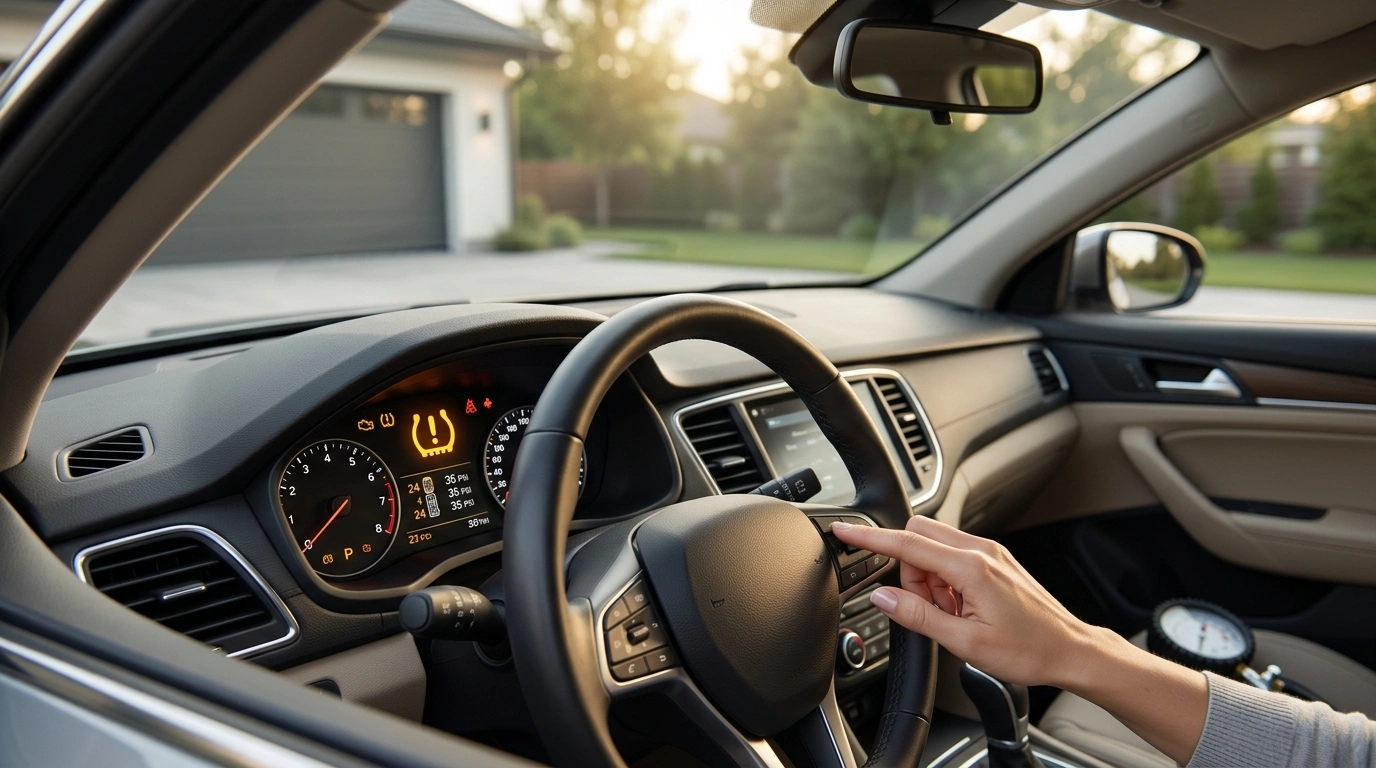
How do you turn off the TPMS light when it suddenly appears on your dashboard? The safe answer is simple: you do not just “turn it off” or ignore it. You first check your tire pressure, inflate your tires to the recommended PSI, and then reset the Tire Pressure Monitoring System if your vehicle requires it.
The TPMS light, also called the tire pressure light or tire pressure warning light, is there to warn you that something may be wrong with one or more tires. In many cases, the fix is easy. Your tires may be a little low because of cold weather, a recent temperature drop, or normal air loss. In other cases, the light may point to a slow leak, a faulty TPMS sensor, a dead sensor battery, or a system fault that needs a diagnostic tool.
This guide explains how to reset tire pressure light warnings safely, why the light comes on, what a blinking TPMS light means, and when you should visit a tire shop or mechanic.
Quick Answer: How Do You Turn Off the TPMS Light?
To turn off the TPMS light, start by checking the actual air pressure in each tire. Use a tire pressure gauge and compare the reading with the recommended PSI listed on the driver’s door sticker, driver-side door jamb, or in the owner’s manual. Do not use the maximum PSI printed on the tire sidewall as your regular inflation target.
Once the tires are properly inflated, many vehicles will turn the TPMS warning light off automatically after a short drive. A common method is to drive for about 10–15 minutes, sometimes at speeds near 50 MPH, so the system can refresh and recognize the corrected pressure.
If the light stays on, your vehicle may have a TPMS reset button or a reset option in the dashboard menu, vehicle control center, or infotainment settings. Some vehicles need you to hold the reset button until the light blinks. Others require a TPMS relearn procedure, especially after new tires, tire rotation, wheel replacement, or sensor replacement.
Here is the basic safe process:
| Step | What to Do | Why It Matters |
| 1 | Check all tires with a gauge | Confirms the real tire pressure |
| 2 | Inflate to recommended PSI | Fixes the most common cause |
| 3 | Check the spare tire | Some vehicles monitor the spare |
| 4 | Drive for 10–15 minutes | Allows sensor refresh |
| 5 | Use reset button or menu | Clears the warning if pressure is correct |
| 6 | Get a diagnostic scan | Needed for sensor or system faults |
The key point is this: fix the cause first, then reset the TPMS light.
What the TPMS Light Means
TPMS stands for Tire Pressure Monitoring System. This system watches your tire pressure and warns you when one or more tires may be underinflated. Depending on your vehicle, the system may use direct TPMS sensors inside each wheel or an indirect TPMS system that uses ABS wheel speed data to estimate tire pressure changes.
A solid TPMS light usually means one or more tires may have low tire pressure. A flashing tire pressure light or blinking light may mean there is a sensor malfunction, dead TPMS sensor, damaged sensor, missing sensor, or another system fault.
Low tire pressure is not just a small inconvenience. It can affect fuel efficiency, vehicle handling, braking distance, and tire lifespan. Underinflated tires can wear unevenly, feel sluggish on the road, and increase the risk of tire damage.
Think of the TPMS warning like this: it is not a light that exists just to bother you. It is part of your vehicle safety system. When it turns on, your car is telling you to check something before it becomes a bigger problem.
Why the TPMS Light Comes On
The tire pressure light can come on for several reasons. Some are simple and easy to fix at home, while others may need professional help.
Low Tire Pressure
The most common reason is low tire pressure. Tires naturally lose air over time. If one or more tires drop below the recommended range, the TPMS light may come on. This often happens when drivers have not checked their tire pressure for several weeks or months.
Cold Weather or Temperature Drops
Cold weather is another major reason. When outside temperatures fall, tire pressure can drop too. That is why many drivers see the TPMS light on cold morning starts, especially in fall and winter. The tire may look normal, but the pressure can still be below the proper PSI.
Slow Leak or Puncture
A slow leak can also trigger the light. A small nail, screw, cracked valve stem, or damaged bead seal may cause one tire to slowly lose air. If your TPMS light comes back on after reset, a leak is one of the first things to check.
Spare Tire Pressure
Some vehicles also monitor the spare tire. If your spare tire has a pressure sensor and the spare is low, the warning light may stay on even when all four visible tires look fine.
Faulty TPMS Sensor or Dead Battery
A TPMS sensor can fail, especially as the sensor battery ages. Many sensors are battery-operated and mounted inside the wheel. If the battery dies or the sensor stops communicating with the vehicle computer system, the light may stay on even when the tire pressure is correct.
Before You Reset It: Check the Correct Tire Pressure
Before you try any TPMS reset, check the pressure correctly. This step matters because resetting the light without fixing the pressure can hide a real safety issue.
Use a tire pressure gauge when the tires are cold, if possible. “Cold” means the car has been parked for several hours or has not been driven far. Tire pressure rises as tires heat up during driving, so a hot reading may not be as accurate.
Find the correct recommended PSI on the driver-side door jamb, the driver’s door sticker, or in the owner’s manual. Many drivers make the mistake of looking at the number printed on the tire sidewall. That number is usually the tire’s maximum pressure rating, not the normal pressure your vehicle needs.
For example, if the tire sidewall says 44 PSI, that does not automatically mean you should inflate the tire to 44 PSI. Your vehicle may recommend 32 PSI, 35 PSI, or another number depending on the model, tire size, and load rating.
Check:
- Front tires
- Rear tires
- Spare tire, if your vehicle monitors it
If one tire is much lower than the others, look for a nail, screw, sidewall damage, or valve stem leak. If the tire keeps losing air, do not keep resetting the warning. The tire likely needs inspection or repair.
How to Reset the TPMS Light Step by Step
Once your tires are inflated to the proper level, you can reset the tire pressure light. The exact reset procedure depends on your vehicle, but most cars follow one of these common methods.
Step 1: Inflate the Tires to the Recommended PSI
Start with the basics. Inflate each tire to the manufacturer-recommended PSI. Use the door jamb sticker or owner’s manual as your guide. If the pressure is too low, add air. If it is too high, release air carefully until it reaches the correct number.
This step is important because the TPMS system may not reset if even one tire is still below the correct pressure.
Step 2: Drive for 10–15 Minutes
Many vehicles reset automatically after driving. After inflating the tires, drive for 10–15 minutes at normal road speeds. Some systems may need you to drive above 50 MPH for a short period so the sensors can refresh.
During this time, the TPMS sensors send updated pressure information to the vehicle’s computer system. If the pressure is correct and there is no fault, the light may turn off by itself.
Step 3: Use the TPMS Reset Button
Some vehicles have a TPMS reset button. It may be located under the steering wheel, near the dashboard, inside the glove box, or in another area depending on the model.
A common reset process looks like this:
- Turn the ignition to the “on” position without starting the engine.
- Press and hold the TPMS reset button.
- Wait until the TPMS light blinks.
- Release the button.
- Start the vehicle and drive for several minutes.
Some systems blink three times to confirm the reset. Always check your owner’s manual because the exact process varies.
Step 4: Reset Through the Dashboard Menu
Many newer vehicles do not have a physical reset button. Instead, the reset option may be in the dashboard menu, vehicle settings menu, driver information screen, or infotainment system.
Look for menu labels such as:
- Tire pressure
- TPMS
- Tire settings
- Vehicle settings
- Relearn tire pressure
- Reset tire pressure monitoring system
Once selected, the vehicle may ask you to confirm the reset. After that, you may need to drive for several minutes.
Step 5: Use an OBD2 Scanner or TPMS Tool
If the light stays on after new tires, tire rotation, wheel replacement, or sensor replacement, your vehicle may need a TPMS relearn procedure. This can require an OBD2 scanner, TPMS relearn tool, or professional scan tool.
A scan tool can help read TPMS-related errors, register new TPMS sensor IDs, and program sensors to the car ECU. This is common when sensors are replaced or when the vehicle cannot automatically detect sensor positions.
What If the TPMS Light Stays On After Filling the Tires?
If your tire pressure light stays on after filling tires, do not panic. This is a common problem.
First, recheck the pressure with a reliable gauge. Sometimes a gas station air pump gauge is inaccurate. Make sure each tire matches the proper PSI on the door sticker. Also check the spare tire if your vehicle has a sensor there.
Next, drive for a short time. Some vehicles need a 10-minute drive or longer before the system updates. If the light still does not turn off, look for these possible causes:
| Problem | Possible Cause | What to Do |
| Light stays on after air | Tire still not at correct PSI | Recheck with gauge |
| Light comes back later | Slow leak or puncture | Inspect tire |
| Light on but tires look fine | Sensor issue or spare tire | Check all tires and sensors |
| Light after new tires | Sensor relearn needed | Use TPMS relearn procedure |
| Light after rotation | Sensor position confusion | Relearn or scan system |
| Light blinks first | System fault | Get diagnostic scan |
A tire can look normal and still be underinflated. Modern tires often do not visibly sag until pressure is very low. That is why using a tire pressure gauge is much better than guessing by appearance.
If your TPMS light on but tires are fine situation continues, the issue may be a TPMS sensor not communicating, a dead battery, damaged sensor, or failed reset.
Solid TPMS Light vs Blinking TPMS Light
The pattern of the warning light can tell you a lot.
| Light Pattern | What It Usually Means | Best Next Step |
| Solid TPMS light | Low tire pressure or pressure imbalance | Check and inflate tires |
| Blinking TPMS light | Sensor or system fault | Get a diagnostic scan |
| Blinks then stays solid | Possible sensor failure | Inspect TPMS sensors |
| Light comes back after reset | Slow leak, wrong PSI, or bad sensor | Recheck tires and scan system |
A solid TPMS light usually points to pressure. Start by checking all tires and inflating them to the recommended PSI.
A blinking TPMS light is different. If the light flashes for 60–90 seconds and then stays solid, it often means the system has detected a fault. This could be a dead TPMS sensor, damaged sensor, missing sensor, dead sensor battery, or communication issue.
In this case, adding air may not solve the problem. You may need a diagnostic tool, scan tool, or help from a tire shop.
Can Cold Weather Turn On the TPMS Light?
Yes, cold weather can turn on the TPMS light. This is one of the most common seasonal causes.
When the temperature drops, the air inside your tires contracts. That can lower tire pressure enough to trigger the warning light. Many drivers notice the light on the first cold morning of the season.
Sometimes the light may turn off after the tires warm up while driving. However, that does not mean you should ignore it. The correct approach is to check the tires when they are cold and inflate them to the recommended PSI.
This is especially important before:
- Long highway drives
- Winter road trips
- Holiday travel
- Driving in mountain areas
- Carrying extra passengers or cargo
Cold weather does not create a “false warning” in the way many people think. It may be a temporary pressure drop, but the pressure can still be low enough to matter. Always check before assuming the system is wrong.
Can You Permanently Disable the TPMS Light?
You should not permanently disable the TPMS light. It is part of your vehicle’s safety system, and it exists to warn you about low tire pressure or a system problem.
Some people search for ways to turn off the light permanently because they are tired of seeing it on the dashboard. But disabling the warning does not fix the tire, sensor, or pressure issue. It only hides the problem.
A better approach is to ask: “Why is the light on?” Then fix the cause. That may mean adding air, repairing a leak, replacing a bad sensor, or completing a TPMS relearn.
Ignoring or disabling the light can create risks, especially if you later develop a real tire problem and the warning no longer works. For safe driving, treat the TPMS warning light as a helpful alert, not just an annoying dashboard symbol.
Is It Safe to Drive With the TPMS Light On?
It depends on the situation. If the TPMS light comes on while you are driving and the car feels normal, you can usually drive carefully to a safe place to check the tires. But you should not ignore the light for days or continue a long trip without checking the pressure.
Pull over as soon as it is safe if:
- The vehicle pulls to one side
- You feel vibration
- The steering feels unstable
- A tire looks visibly low
- You hear flapping or thumping
- The light is blinking
- You recently hit a pothole or curb
Driving with low tire pressure can increase tire heat, reduce fuel efficiency, cause uneven wear, and increase stopping distance. In serious cases, it may lead to tire failure or a blowout.
If the pressure is only slightly low, adding air may solve the problem. If one tire is much lower than the others, inspect it closely. A large pressure difference can mean a puncture, air leak, or damaged valve stem.
TPMS Reset by Vehicle Type: Button, Menu, or Tool
Not every vehicle resets the same way. That is why one reset method may work for one car but not another.
Older or simpler vehicles may have a physical TPMS reset button. Many Toyota, Honda, Hyundai, Kia, and similar models may use button-based or menu-based resets, depending on year and trim.
Newer vehicles often use a dashboard menu or infotainment screen. You may need to go into vehicle settings, tire pressure settings, or a service menu.
Some vehicles reset automatically after the tires are inflated and the car is driven. These systems may not need a button at all.
Other vehicles require a TPMS relearn tool, especially after:
- Installing new tires
- Replacing TPMS sensors
- Rotating tires
- Changing wheels
- Replacing a sensor battery or sensor unit
- Sensor IDs being lost or changed
If you are not sure where your reset option is, check your owner’s manual. Search for “TPMS reset,” “tire pressure monitoring system,” or “tire pressure warning light.”
When You Need a Mechanic or Tire Shop
You may need a mechanic, dealership, or tire shop if the light does not turn off after you have checked the pressure, inflated the tires, and tried the correct reset method.
Professional help is useful when:
- The TPMS light flashing pattern appears
- The light stays on with correct tire pressure
- The light comes back soon after reset
- A tire keeps losing air
- You recently installed new tires
- You replaced a TPMS sensor
- The system needs sensor programming
- A scan tool shows a TPMS fault code
A shop can scan each sensor, check whether the TPMS sensor IDs are registered, test sensor batteries, inspect for leaks, and perform the correct TPMS relearn procedure.
The TPMS sensor replacement cost can vary based on vehicle type, sensor design, labor, and whether one or several sensors need replacement. In many cases, the diagnostic check is the first step before replacing anything.
What Not to Do When the TPMS Light Is On
When the tire pressure warning light appears, avoid quick shortcuts that can make the problem worse.
Do not inflate tires to the maximum number printed on the sidewall unless your vehicle specifically calls for that pressure. Always use the driver’s door sticker or owner’s manual.
Do not reset the system before checking pressure. If the tires are still low, the light may come back, or worse, you may hide a real tire issue temporarily.
Do not assume a tire is fine because it looks normal. Many tires can be dangerously low without looking flat.
Do not ignore a blinking light. A blinking TPMS light often means a sensor or system fault, not just low pressure.
Most importantly, do not permanently disable the warning. The safer solution is to fix the cause and keep the system working.
Quick Troubleshooting Table for TPMS Light Problems
| TPMS Problem | Likely Cause | Best Fix |
| TPMS light is solid | Low tire pressure | Check and inflate tires |
| Tire pressure light still on | Wrong PSI or spare tire issue | Recheck all tires |
| Light comes back after reset | Slow leak or puncture | Inspect and repair tire |
| Light blinks first | Sensor malfunction | Use diagnostic scan |
| Light after new tires | Relearn needed | Register sensor IDs |
| Light in cold weather | Temperature pressure drop | Check cold tire pressure |
| Light on but tires are fine | Bad sensor or system fault | Visit tire shop |
This table is useful because it separates simple pressure problems from sensor problems. If the issue is air pressure, you may solve it at home. If it is a sensor, relearn, or system fault, professional tools may be needed.
Frequently Asked Questions About Turning Off the TPMS Light
How long does it take for the TPMS light to turn off?
In many vehicles, the TPMS light may turn off after a 10–15 minute drive once the tires are inflated to the correct PSI. Some vehicles need a manual reset through the TPMS reset button or dashboard menu.
Why is my TPMS light on but my tires look fine?
A tire can look normal and still be low. You may also have a low spare tire, a faulty sensor, a dead sensor battery, or a system fault. Always check pressure with a gauge instead of relying on appearance.
Where is the TPMS reset button?
The TPMS reset button may be under the steering wheel, near the dashboard, in the glove box, or not present at all. Newer vehicles may use a dashboard menu instead. Check your owner’s manual for the exact location.
Can a spare tire make the TPMS light come on?
Yes. Some vehicles monitor the spare tire. If the spare has a TPMS sensor and the pressure is low, the warning light may stay on even when the four main tires are properly inflated.
Why did my TPMS light come on after new tires?
After new tires, the system may need a TPMS relearn procedure. If sensors were moved, replaced, damaged, or not programmed correctly, the vehicle may not recognize them.
Can I reset TPMS without a tool?
Sometimes, yes. Many vehicles reset after driving, using a reset button, or selecting an option in the dashboard menu. However, some vehicles need an OBD2 scanner or TPMS relearn tool.
How much does it cost to fix a TPMS light?
The cost depends on the cause. Adding air is usually free or inexpensive. A tire repair, sensor diagnosis, TPMS relearn, or sensor replacement can cost more. A tire shop can test the system before replacing parts.
Can I drive with a blinking TPMS light?
A blinking light usually means a sensor malfunction or system fault. You can usually drive carefully to a service location if the tires are properly inflated, but you should get the system checked soon.
Final Thoughts: Fix the Cause Before You Reset the TPMS Light
The safest way to answer how do you turn off the TPMS light is to fix the reason it came on first. Start with a tire pressure gauge, check every tire, inflate to the recommended PSI, and then reset the system using the correct method for your vehicle.
If the TPMS light turns off after driving, the issue was likely low pressure. If it stays on, blinks, or keeps coming back, there may be a slow leak, faulty TPMS sensor, dead sensor battery, or system fault.
This article is for general informational purposes only and does not replace advice from a qualified mechanic or your vehicle’s owner’s manual. TPMS systems, reset procedures, and sensor requirements vary by vehicle make, model, and year. Always consult a certified technician if your warning light persists or if you are unsure about your tire safety.