

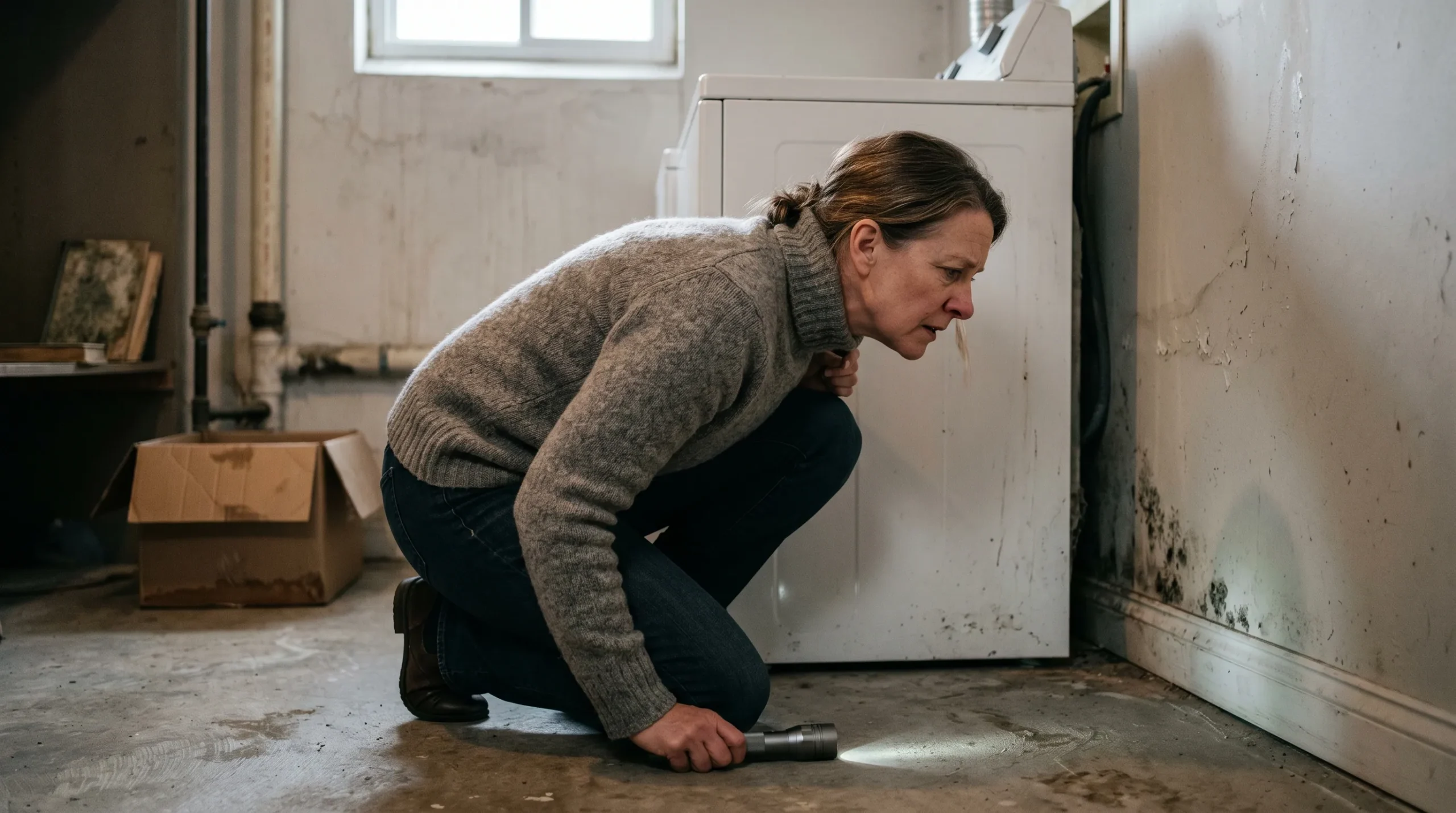
In most homes, mold smells musty, earthy, stale, or damp—something like wet socks, old books, a wet basement, or rotting wood. That odor can be mild or strong, but when it keeps coming back, it often points to a moisture problem and possibly hidden mold. The smell itself is commonly linked to microbial volatile organic compounds (mVOCs), which are gases released as mold grows and breaks down materials. Health and public-health guidance also notes that if you see or smell mold, that is enough reason to investigate and fix the moisture source.
Many people search this topic because the odor appears before they ever see anything on a wall or ceiling. A room may smell musty after rain, after a shower, or when the HVAC system turns on. That does not always mean there is a dangerous infestation, but it does mean the smell should not be ignored. In this guide, you will learn what mold smell is like, where it usually hides, how to tell it apart from other odors, and what to do next if your house smells moldy.
What does mold smell like?
The most common description of mold smell is musty. People also call it earthy, stale, damp, or slightly sweet and tangy depending on the type of mold and the material it is growing on. In plain terms, it often smells like a wet basement, wet cardboard, old books, wet socks, or rotting wood. That is why people often notice the odor in basements, bathrooms, closets, and other places where air feels heavy and moisture lingers.
What makes this tricky is that variability of mold smells is real. One patch of mold on drywall may smell faint and dusty, while mold growing on wallpaper, fabrics, or wood may smell sharper or more sour. Some pages in the current SERP compare the odor to fermenting alcohol, decaying leaves, or even blue cheese, but the central pattern remains the same: musty, earthy, and damp are the odor cues most people notice first.
Here is a quick reference table:
| Common mold odor | What people compare it to | What it may suggest |
|---|---|---|
| Musty smell | Old books, wet basement | General mold growth or long-term dampness |
| Earthy smell | Soil, leaves, damp cellar | Mold on porous materials |
| Stale or damp odor | Closed room, wet carpet | Hidden moisture, poor airflow |
| Sweet / tangy smell | Fermenting odor | Some mold species on organic surfaces |
| Rotting wood smell | Wet lumber, decay | Water-damaged wood or structural areas |
The goal is not to memorize a perfect scent profile. The real SEO and user-intent answer is simpler: if your home has a persistent musty smell that returns again and again, mold is one of the first things to rule out.
Why mold has a smell in the first place?
That odor is not random. Mold gives off microbial volatile organic compounds, usually shortened to mVOCs. These are gases released during growth and metabolism, especially when mold is feeding on organic materials like wood, paper, drywall backing, dust, or fabrics. When people ask why does mold smell, this is the scientific answer behind that everyday musty odor.
This matters for both readers and search engines because it adds context. A house can smell moldy even when the mold itself is hidden behind walls, under carpet padding, or inside ductwork. The smell travels, while the source stays out of sight. That is one reason agencies like the EPA say a moldy odor should be investigated, even when you cannot see visible spots right away.
Does mold always smell musty, or can it smell different?
No, mold does not always smell exactly the same. The smell changes with the species present, the amount of moisture, airflow, temperature, and the surface where it is growing. Competitor content frequently references common indoor molds such as Aspergillus, Penicillium, and Cladosporium, and while most homeowners will never identify a species by smell, those names help explain why the odor can vary from room to room.
For example, mold on wallpaper or fabric may smell softer but stale. Mold on wood may smell more like rotting wood or damp lumber. A mold patch around a long-term leak can smell heavier after humidity rises or when the room warms up. That is why people often search long-tail phrases like can mold smell come and go, does mold smell worse after rain, or how mold type changes the smell. The honest answer is yes—changes in moisture and ventilation can make the odor stronger or weaker from one day to the next.
Hidden mold signs: can you smell mold behind walls?
Yes, you can smell mold behind walls. In fact, this is one of the biggest reasons people search what does mold smell like in walls or why does my house smell musty but I can’t see mold. A persistent odor with no obvious source is a classic clue that the growth may be hidden inside a wall cavity, behind drywall, under wallpaper, beneath carpet, or near leaking pipes. The EPA specifically notes that mold can hide behind wallpaper, paneling, ceiling tiles, carpet, and inside wall spaces.
A few common warning signs tend to appear together. Maybe the room smells strongest near one corner. Maybe there was a leak months ago and the smell never fully went away. Maybe the odor gets worse after heavy rain, after showers, or when the air conditioner kicks on. Sometimes there are other clues like water stains, peeling paint, bubbling drywall, or chronic condensation. When those signs line up with a recurring musty smell, the odds of hidden mold go up.
This is where many articles stop too early. Smelling mold behind walls does not automatically mean a huge remediation bill, but it does mean the source of moisture needs attention. If the wet conditions remain, the smell usually returns no matter how many candles, sprays, or air fresheners you use.
Where mold smells usually show up first?
Most mold prone areas have two things in common: moisture and limited airflow. That is why bathrooms, basements, kitchens, laundry rooms, closets, and rooms with past water damage are the most common trouble spots. HVAC systems, air vents, and air ducts can also trap moisture and spread a moldy odor through the home when the system runs.
If you are trying to figure out what rooms usually smell moldy first, start with places where water collects quietly: under sinks, around tubs, near windows with heavy condensation, behind furniture against outside walls, under old carpet, and around roof or plumbing leaks. These are not dramatic places, but they are exactly where hidden growth often begins.
A practical rule helps here: the smaller and more enclosed the damp space, the sooner you may notice the smell. That is why a bathroom cabinet can smell moldy long before a large open room does.
Mold smell vs. mildew, sewer gas, rotten eggs, and other look-alikes
Not every bad smell in a house is mold. Mildew smell vs mold smell can be hard to separate because both can seem musty. In everyday use, people often describe mildew as a lighter surface-level mustiness, while mold odors may smell deeper, earthier, or more damp and stale. Still, by smell alone, most homeowners cannot distinguish them with certainty.
Other odors matter even more because they may signal something else entirely. A rotten egg smell is more often linked to gas leaks or hydrogen sulfide / sewer gas, not mold. A sharp ammonia-like odor can make people think of cat urine. A strong foul smell in one specific spot may point to a dead animal rather than hidden mold. That is why comparison helps so much for search intent: users are usually not trying to identify mold in a vacuum—they are trying to eliminate other causes.
A simple way to think about it is this:
- Mold smell: musty, earthy, damp, stale
- Sewer gas: sulfur-like, sewage, rotten egg
- Gas leak: rotten egg or chemical odor
- Dead animal: strong, decaying, localized foul odor
- Cat urine / ammonia: sharp, biting, acrid
If the odor is musty and gets worse with humidity, after rain, or in damp rooms, mold becomes more likely. If it smells like sulfur or sewage, treat that as a different kind of problem immediately.
Is black mold smell different?
People often ask what does black mold smell like or whether black mold smell is stronger than normal mold. The practical answer is that many people describe it as more intense, but smell alone cannot confirm Stachybotrys chartarum or any other specific species. A strong musty odor may come from many molds, especially in wet, poorly ventilated areas.
So yes, a pungent damp smell can be associated with so-called black mold, but no, you should not diagnose the species from odor alone. For SEO and reader trust, the better framing is this: focus less on the color label and more on the presence of ongoing moisture, hidden growth, and whether the smell is persistent.
Could that moldy smell be affecting your health?
A moldy smell can matter even before you see visible growth because damp indoor spaces and mold exposure are linked to allergic reactions and respiratory symptoms. Common complaints include stuffy nose, coughing, wheezing, sore throat, irritated or itchy eyes, and worsening asthma. People with allergies, asthma, or weakened immune systems may be more sensitive, and some guidance also notes greater concern for children in damp indoor environments.
That does not mean every musty room will make every person sick. But it does mean the smell should not be brushed off as just “old house odor.” Health authorities consistently frame moisture control and mold removal as practical steps to protect indoor air quality. If symptoms seem worse in one part of the home or improve when you leave, that is another clue worth paying attention to.
What to do first if your home smells moldy?
If your house smells moldy, start with the source—not the fragrance aisle. Look for water damage, active leaks, damp materials, condensation, and areas with poor airflow. Check the bathroom, basement, around windows, under sinks, near HVAC vents, and anywhere with a history of roof or plumbing issues. The goal is to connect the odor to moisture, because moisture is what allows mold to keep growing.
Then act fast on anything wet. The EPA says wet materials should be dried within 24 to 48 hours to help prevent mold growth, and public-health guidance also recommends keeping indoor humidity around 30% to 50% and generally below 60%. A dehumidifier, better ventilation, and bathroom exhaust fans are not glamorous solutions, but they are some of the most effective.
This is also the point where many readers ask, can you smell mold before you see it? Yes, absolutely. That is why recurring mustiness deserves a closer look even when the walls appear clean.
How to confirm whether the smell is really mold?
You usually do not need to identify the species to make a good decision. If a room has a repeated musty smell, there is visible moisture damage, and the odor is strongest near damp materials, that is often enough to treat it as a mold-related problem. Guidance from the Washington State Department of Health says testing is often unnecessary because mold can often be seen or smelled, and the bigger priority is fixing moisture and removing contaminated material when needed.
That said, there are times when more help makes sense. If the odor is strong but the source is impossible to find, if it keeps returning after cleanup, or if it may be inside HVAC systems, wall cavities, or structural materials, a professional mold inspection can help locate the moisture source and hidden growth. The key is not chasing a lab report for its own sake. It is understanding where the moisture is and what has to be dried, cleaned, or removed.
How to get rid of mold smell safely?
To get rid of mold smell, you have to remove the cause. Cleaning the odor without correcting the moisture only gives temporary relief. That means fixing leaks, drying wet materials, removing badly contaminated porous items when necessary, and improving airflow so the area can stay dry. If the source remains, the musty smell usually comes back.
For small areas, safety guidance matters. Health.com, citing public-health recommendations, notes that small moldy areas can sometimes be cleaned using protective gear such as gloves, protective eyewear, and an N95 respirator. It also cites a cleaning threshold of under 3 feet by 3 feet and a bleach mixture of 1 cup of household bleach in 1 gallon of water, left in contact for about 30 minutes before rinsing where appropriate. Never mix bleach with ammonia or other cleaners.
Once the source is handled, lingering odor can often be reduced with:
- dehumidifiers
- steady airflow from a fan
- laundering washable fabrics
- cleaning nearby surfaces
- replacing materials like soaked carpet padding if they remain contaminated
Air cleaners may help with general air quality, but they are not a substitute for fixing leaks or removing moldy material. That distinction matters because some competitor pages drift into product-led advice too early, while the real first step is always source control.
When you need a professional mold inspection or remediation company?
There is a clear point where DIY stops making sense. If the moldy smell is strong and constant, if the affected area is large, if the source appears to be inside walls or ductwork, or if the problem keeps returning after cleaning, a professional mold remediation or inspection service is worth considering. This is also true when occupants have significant asthma, allergies, or other health concerns.
A good professional process should focus on finding moisture, not just fogging the room with deodorizer. That is the real measure of whether the work will solve the problem.
How to prevent mold odors from coming back
The best prevention strategy is simple: moisture control is the key to mold control. Keep indoor humidity around 30% to 50%, and try to keep it below 60%. Use exhaust fans in bathrooms and kitchens, run a dehumidifier in damp spaces, fix leaks quickly, and dry wet materials within 24 to 48 hours. Those are some of the most consistent recommendations across official guidance.
Also watch for the quiet warning signs. Condensation on windows, recurring dampness in a closet, a stale smell near carpet edges, or mustiness that appears after rainy weather are all clues that moisture is hanging around longer than it should. Prevention is rarely one dramatic repair. More often, it is a series of small fixes done consistently.
Conclusion
So, how does mold smell? Usually like something musty, earthy, stale, or damp—the kind of smell people compare to wet socks, old books, or a wet basement. The exact odor can vary, but the bigger pattern is consistent: when that smell keeps returning, especially in damp areas or after water damage, it deserves attention.
The most useful takeaway is this: do not obsess over identifying the perfect smell. Instead, look for the combination of persistent odor, moisture, and hidden problem spots. If you see or smell mold, investigate the source, dry wet areas fast, and fix the conditions letting it grow. That is the fastest path to better indoor air quality and a home that smells normal again.
FAQs
Can mold smell come and go?
Yes. Changes in humidity, temperature, and airflow can make the odor stronger or weaker, which is why some homes smell moldy only after rain, after showers, or when the HVAC system runs.
Can you smell mold before you see it?
Yes. A moldy or musty smell can be one of the earliest signs of hidden mold, especially behind walls, under carpets, or in ductwork.
Is a musty smell always mold?
No. A musty smell can also come from damp materials, mildew, old fabrics, poor ventilation, or other odors. But if it is persistent, mold should be investigated as a likely cause.
Do you need mold testing if you can smell mold?
Not always. Guidance often says testing is unnecessary in many routine cases because if you can see or smell mold, the priority is correcting the moisture problem and cleaning it up safely.
Can mold smell come from AC vents?
Yes. If moisture is present in or around the system, HVAC vents and air ducts can spread a moldy odor through several rooms.
Disclaimer:
This article is for general informational purposes only and is not a substitute for professional inspection, remediation, or medical advice. Mold smells, moisture problems, home conditions, and personal health sensitivities can vary from person to person. If the odor is persistent, hidden, or linked with symptoms, contact a qualified mold professional or healthcare provider.