

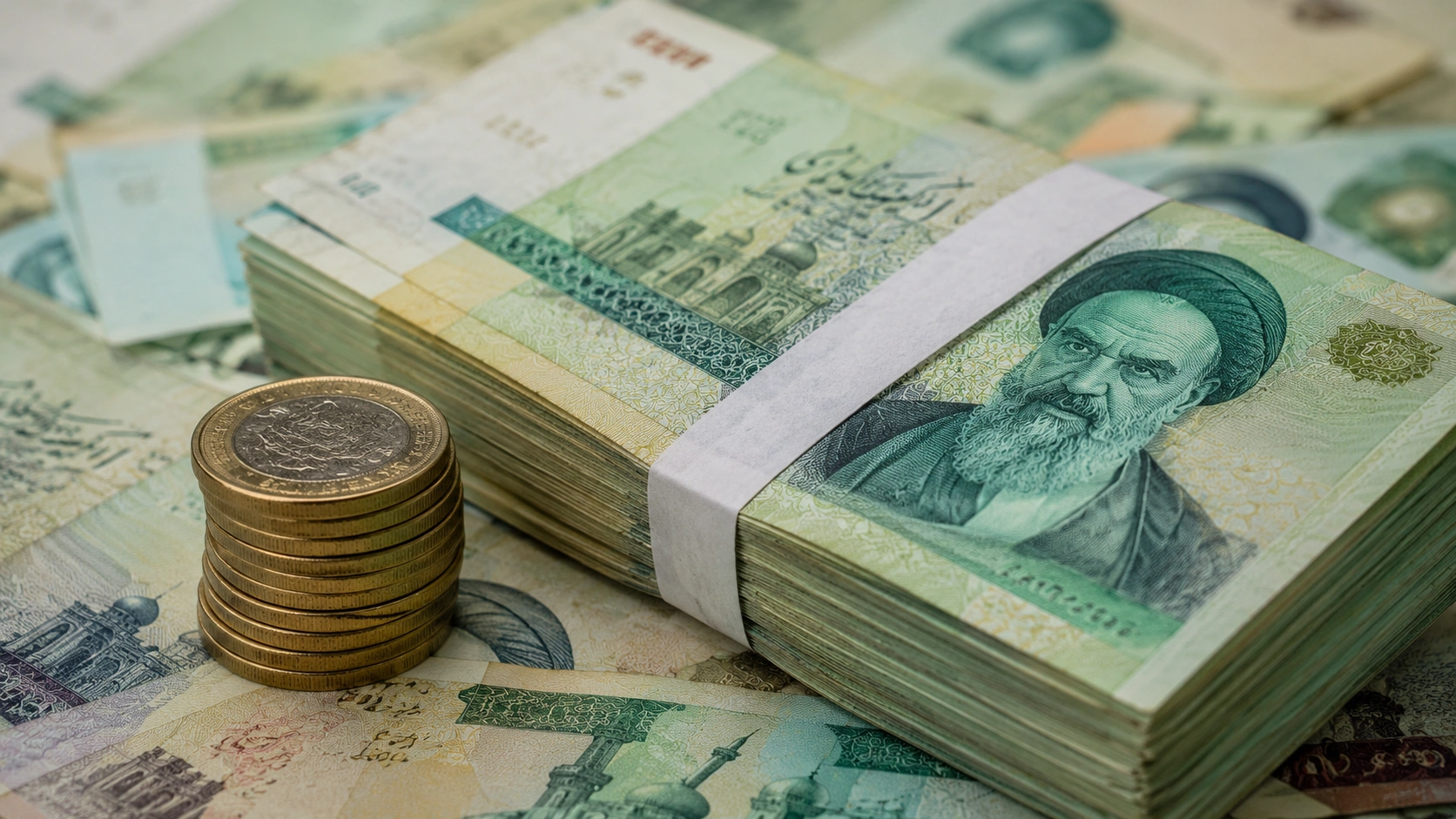
Which is lowest currency in the world is a simple question on the surface, but the most accurate answer depends on how you measure currency value. In many current ranked lists based on how many units of a currency equal 1 U.S. dollar, the Iranian rial (IRR) is listed as the weakest, while some other sources still put the Lebanese pound (LBP) at the bottom. The disagreement usually comes from the difference between official-style exchange-rate tables and open-market or parallel-market reality. As of April 2026, Forbes’ updated ranking places the Iranian rial first among the weakest currencies, while Reuters has reported the rial hitting record lows around 1,500,000 IRR per USD in early 2026.
That is why a good article on the weakest currency in the world should do more than throw out one name. It should explain the method, the exchange-rate context, and the economic story behind the number. Many people search this topic wanting a quick answer, but they also want to know why currencies become weak, whether a low value currency means the country is poor, and whether such currencies are useful for travel, forex trading, or investment. Current finance explainers also note that a weak currency can reflect inflation, sanctions, capital flows, banking stress, political instability, and policy choices, not just one single factor.
The Short Answer
If you are asking which is the weakest currency in the world right now, the best direct answer is this:
By widely cited 2026 exchange-rate rankings against the U.S. dollar, the Iranian rial is currently the world’s weakest currency.
Forbes’ April 7, 2026 ranking says $1 would buy about 1,315,800 Iranian rials, putting the rial at the bottom of its list of the top 10 weakest currencies in the world. The same ranking places the Lebanese pound second, at roughly 89,565.64 LBP per USD. Reuters separately reported that the rial slid to around 1,500,000 IRR per USD on the open market in January 2026, which supports the view that the rial is the least valuable currency in practical market terms as well.
At the same time, some articles and older explainers still call the Lebanese pound the weakest currency, especially when using older data or different source methodologies. XE’s explainer, for example, identifies the Lebanese pound as the weakest against the USD, while Wise’s updated 2026 page still describes it as the weakest in its summary text.
So the real answer is not just a name. It is this: the Iranian rial is the strongest current candidate for “lowest currency in the world” in 2026, but some sources still cite the Lebanese pound depending on the exchange-rate source and method used.
What Does “Lowest Currency” Actually Mean?
When people search lowest currency in the world, they usually mean the currency with the lowest nominal exchange-rate value against the U.S. dollar. In plain language, they want to know which currency gives you the largest number of units for $1. That is why pages on this topic often compare currencies using formulas like USD to IRR, USD to LBP, USD to VND, and USD to LAK.
But this is where confusion begins. A weak currency is not always the same thing as a country with low wealth, low productivity, or low living standards. XE explicitly notes that a weak exchange rate does not automatically mean a country is poor. Exchange-rate value is just one metric. A country can have a small unit value because of history, inflation, redenomination choices, policy, or currency design.
That is also why terms like cheapest currency, lowest currency, least valuable currency, and weakest currency are often used interchangeably in SERPs, even though they can create different expectations. Face value is not the same as real purchasing power, and official exchange rate is not always the same as the rate people actually face in the market.
Why Sources Disagree: Official Rate vs Open-Market Rate
One of the biggest content gaps in competitor articles is that they rarely explain why articles disagree on the lowest currency. This is the key point that makes your article more useful.
There are usually three ways this topic gets measured:
- Official or converter-based rates
- Commercial data-provider rates
- Open-market or parallel-market rates
For a country under severe economic pressure, those numbers can diverge sharply. Reuters’ January 2026 reporting said the Iranian rial fell to around 1,500,000 per U.S. dollar on currency-tracking websites. Reuters also reported in December 2025 that the rial had fallen to nearly 1,250,000 per dollar, after having been around 55,000 per dollar in 2018 before the reimposition of U.S. sanctions. Those are dramatic open-market declines.
Meanwhile, list-style ranking pages sometimes use exchange data from commercial converters and publish neat top-10 tables. Forbes’ 2026 list also puts the Iranian rial first and the Lebanese pound second, while Wise and XE still give stronger prominence to the Lebanese pound in some wording. That difference is exactly why readers get confused.
So if someone asks, “Which is lowest currency in the world?”, the most honest answer is:
- By current 2026 ranking tables against the USD: Iranian rial
- By older or alternate weak-currency explainers: sometimes Lebanese pound
- By practical open-market weakness: Iranian rial has an extremely strong claim
Top 10 Lowest Currencies in the World in 2026
Below is a simple top 10 weakest currencies in the world style table based on Forbes’ April 2026 ranking approach, which compares the number of units you receive for 1 USD. Exchange rates move, so these figures should always be treated as approximate snapshots rather than permanent facts.
| Rank | Currency | Code | Approx. value per 1 USD |
| 1 | Iranian rial | IRR | 1,315,800 |
| 2 | Lebanese pound | LBP | 89,565.64 |
| 3 | Vietnamese dong | VND | 26,336.58 |
| 4 | Laotian kip | LAK | 21,600+ |
| 5 | Indonesian rupiah | IDR | 16,300+ |
| 6 | Uzbekistani som | UZS | 12,600+ |
| 7 | Guinean franc | GNF | lower-valued tier |
| 8 | Paraguayan guarani | PYG | lower-valued tier |
| 9 | Malagasy ariary | MGA | lower-valued tier |
| 10 | Cambodian riel | KHR | lower-valued tier |
The Iranian rial sits at the top of this list because of deep structural weakness, ongoing sanctions pressure, inflation, and loss of confidence. Reuters reported that the rial lost about 5% in January 2026 alone and had already lost nearly half its value in 2025, which shows how quickly a currency can weaken when economic and political pressure combine.
The Lebanese pound remains one of the most important currencies in this discussion because Lebanon’s long-running banking crisis since 2019 and broader economic collapse pushed the currency into extraordinary weakness. That is why it still appears at or near the bottom in many weak-currency explainers.
The Vietnamese dong, Laotian kip, Indonesian rupiah, and Uzbekistani som also recur across almost every lowest currencies in the world list. Their presence does not mean those economies are collapsing in the same way as Lebanon or Iran. It usually means their currencies have relatively small unit values against the dollar. That distinction matters.
Why Do Currencies Become Weak?
A weak currency usually reflects a combination of economic and political stress. Wise says currencies can depreciate because of central bank intervention, rising imports, lower export revenues, inflation changes, and political instability. XS adds that weak currencies often reflect policy choices and capital flows, not just a poor economy.
In the case of Iran, Reuters links the rial’s decline to years of Western sanctions, reduced access to foreign currency, inflation, and changes in how importers could obtain foreign currency on the open market. Reuters also cited 48.6% inflation in October 2025, the highest in more than three years, as part of the backdrop to the currency crisis.
In Lebanon, the story is different but equally severe. The country’s banking crisis, weak public finances, and loss of confidence created a long collapse in the Lebanese pound. That is why many readers still search phrases like “why is the Lebanese pound weak” and “why do currencies become weak” when reading these rankings.
Other common drivers of currency depreciation include:
- high inflation
- current account deficits
- falling export earnings
- foreign-exchange reserve pressure
- capital outflows
- political instability
- sanctions or war risk
A Closer Look: Iranian Rial vs Lebanese Pound
Because this topic revolves around two currencies more than any others, it helps to compare them directly.
The Iranian rial (IRR) has become the clearest answer to which is the weakest currency in the world in many 2026 rankings because the number of rials required to buy 1 USD is so extreme. Forbes’ April 2026 ranking puts it first. Reuters’ January 2026 reporting shows the open-market rate plunging to about 1,500,000 IRR per USD, which is even more severe than many neat ranking tables show.
The Lebanese pound (LBP), however, is still one of the world’s most dramatic examples of currency collapse. Some explainers still treat it as the weakest because of earlier snapshots, different reference sources, or the way they define the ranking. XE still frames the LBP as the weakest against the USD, while Wise’s updated article also describes it in that way in its overview.
So the best editorial conclusion is not to pretend there is zero ambiguity. The best conclusion is to explain the ambiguity clearly and then give the strongest current answer. That is how you build trust.
Does the Lowest Currency Mean the Country Is Poor?
Not necessarily. This is one of the most important myths to correct.
A low nominal exchange-rate value does not automatically mean a country is the poorest, worst managed, or least productive. XE explicitly warns readers not to make that assumption. A currency can have a very low unit value against the dollar because of how it is denominated, because of inflation history, or because of policy design.
For example, some currencies appear on lowest valued currencies lists simply because they are structured in very large units relative to the dollar. Others are genuinely weak because of deep crisis. Those are not the same thing. That is why face value vs real purchasing power matters so much.
This is also why the strongest and weakest currencies in the world are not direct mirrors of economic development. Forbes’ and XS’ currency rankings show that unit value alone tells only part of the story.
Lowest Currencies Against USD vs INR
Most global pages rank currencies against the U.S. dollar, because the USD is the standard reference point in international finance. That is why phrases like lowest value against the US dollar, USD to IRR, and USD to LBP dominate current results.
But there is also strong regional interest in which currency is lowest against INR. India-facing finance pages often present the topic using 1 INR value rather than 1 USD value. That framing matters for South Asian readers who want a practical comparison. Forbes India, for example, discusses weak currencies in INR terms and lists the Iranian rial as the cheapest currency in the world in that framing too.
So if your audience includes readers from Pakistan, India, or the Gulf, it is smart to mention both:
- global benchmark: value against USD
- regional comparison: value against INR
That makes the article more useful and more search-friendly without changing the core conclusion.
Is a Weak Currency Good for Travel or Investment?
This is another place where readers often get the wrong idea.
A weak currency can make a destination look cheaper on paper, but that does not always mean travel there is easy, safe, or good value. Currency weakness often comes with inflation, banking disruption, import shortages, or political instability. So a weak exchange rate is not the same thing as a smooth travel bargain.
The same caution applies to investing. Some pages aimed at forex traders discuss how traders view weak currencies, but a deeply weak currency often comes with convertibility risk, policy risk, sanctions risk, or distorted official rates. Taurex and Dukascopy both lean into the forex trading angle, but that angle is best treated as advanced and risky, not as a casual opportunity.
So the answer to “should you invest in weak currencies?” is usually: only with a clear understanding of the market structure, liquidity, rate source, and risk.
Can the Lowest Currency Become Strong Again?
Yes, but it is difficult.
A weak currency can recover when a country restores confidence through economic reform, lower inflation, higher reserves, political stabilization, or exchange-rate restructuring. Some countries also use redenomination or tighter monetary policy to reset expectations. XS notes that weak currencies often reflect policy and capital flows, which means stronger policy can sometimes improve the currency over time.
But for severely stressed currencies like the Iranian rial or Lebanese pound, recovery is not just about technical policy. It usually depends on broader issues such as sanctions relief, banking reform, political stability, and restored investor confidence. Reuters’ reporting on Iran makes that clear.
Frequently Asked Questions
Which is lowest currency in the world in 2026?
The strongest current answer is Iranian rial (IRR), especially in 2026 rankings against the U.S. dollar and in open-market reporting.
Why do some articles say the Lebanese pound is the weakest?
Because some articles use different exchange-rate sources, older data, or different methods. Some still list the Lebanese pound (LBP) as the weakest against the USD.
What are the top 10 weakest currencies in the world?
Current ranking-style pages repeatedly include IRR, LBP, VND, LAK, IDR, UZS, GNF, PYG, MGA, and KHR.
Does a weak currency mean a country is poor?
No. A low exchange-rate value does not automatically equal poverty or a weak economy in every sense.
Is the weakest currency a good investment?
Usually it is better seen as a high-risk market, not an easy opportunity.
Final Words
So, which is lowest currency in the world? As of April 2026, the best evidence supports the Iranian rial as the weakest currency in the world by current ranking tables and open-market weakness. The Lebanese pound remains one of the closest comparisons and is still cited by some explainers, which is why readers often see conflicting answers.
The smartest way to cover this topic is not to hide that disagreement. It is to explain it. Once you separate official-style exchange-rate lists from open-market reality, the picture becomes much clearer. And that clarity is exactly what readers — and search engines — reward.
This article is for general informational purposes only and does not constitute financial or investment advice. Currency exchange rates change frequently — always verify current rates through a trusted financial source before making any financial decisions. Consult a qualified financial advisor for investment guidance.