

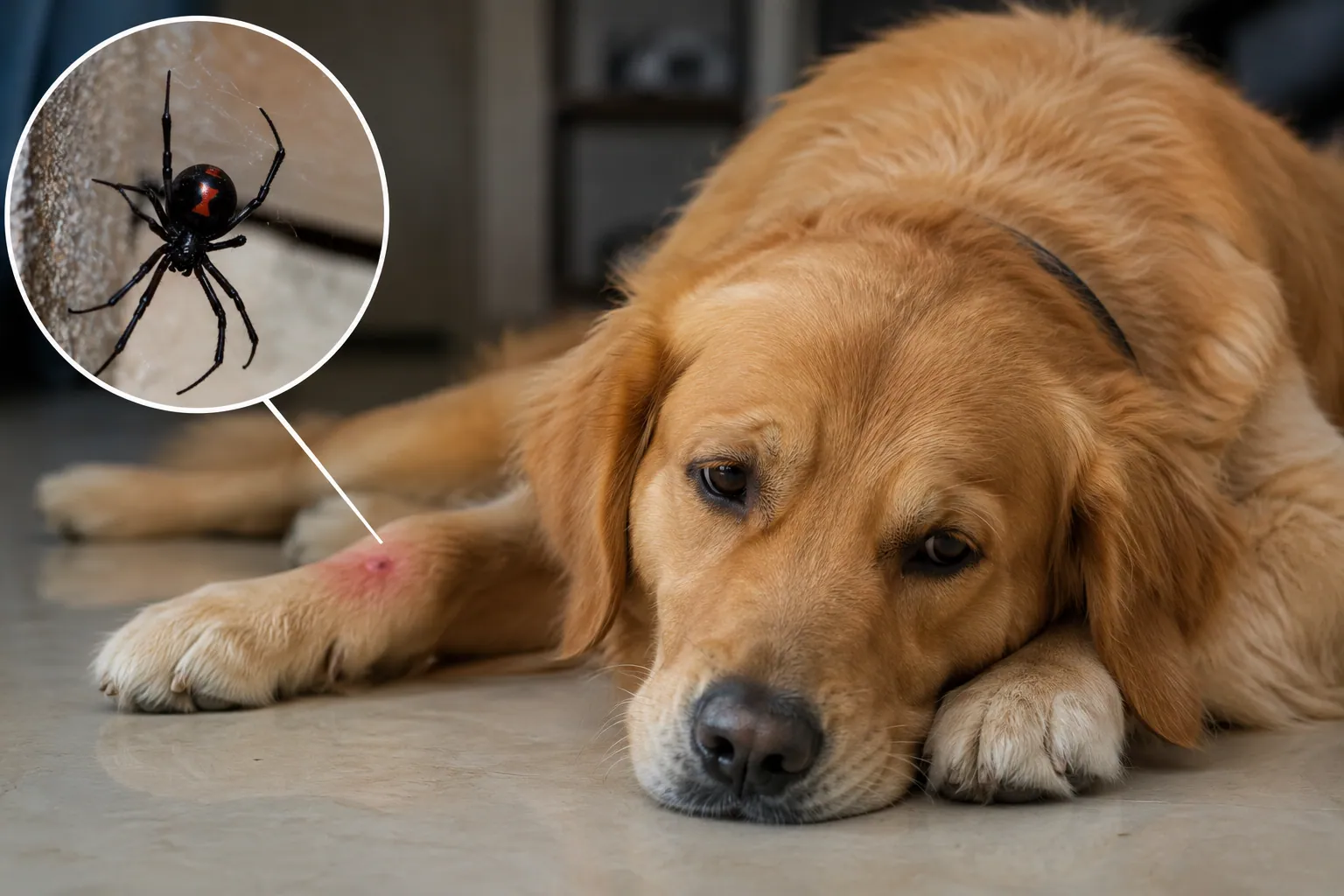
Introduction: Can a Black Widow Kill a Dog?
Yes, a black widow bite in dogs can be dangerous and, in severe cases, potentially fatal—especially if the dog does not receive fast veterinary care. Black widows are one of the more concerning spiders for pets because their venom is not just irritating to the skin. It is a toxic spider venom that can affect the nervous system and trigger serious body-wide symptoms.
That said, not every dog spider bite from a black widow leads to death. The outcome depends on several important factors, including how much venom was injected, the dog’s size, age, overall health, where the bite happened, and how quickly treatment begins. A large, healthy dog may respond differently than a puppy, senior dog, or small breed. Some bites may also involve less venom than others, but pet parents should never assume a bite is mild without professional guidance.
A venomous spider bite from a black widow can cause intense pain, muscle spasms, tremors, weakness, drooling, vomiting, breathing issues, and in rare severe cases, death. These symptoms can be frightening, but the goal of this guide is not to create panic. It is to help pet parents recognize warning signs early, understand why black widow bites are serious, and know when to act.
If you suspect your dog was bitten by a black widow, contact your veterinarian or an emergency vet right away. Even if symptoms seem mild at first, fast professional care can make a major difference. This guide explains how dangerous black widow bites can be, what symptoms to watch for, what to do immediately, and how to reduce your dog’s risk in the future.
How Dangerous Is a Black Widow Bite for Dogs?
A black widow bite can be very dangerous for dogs because black widow venom contains a powerful neurotoxin. This means the venom mainly affects the nervous system instead of only causing a small skin reaction. In dogs, this can lead to severe body-wide symptoms such as intense pain, muscle cramping, tremors, weakness, vomiting, drooling, trouble breathing, and in the worst cases, death.
The black widow spider belongs to the Latrodectus group, and its venom is known to be medically serious for both people and animals. Veterinary references such as Merck/MSD Veterinary Manual note that black widow venom can deliver a potentially deadly dose to companion animals. However, the danger can vary because a spider may inject different amounts of venom during a bite. Some bites may involve a larger venom load, while others may inject little venom.
Dogs may be somewhat more resistant to black widow venom than cats or horses, but that does not mean a bite is safe. A dog can still become very sick from a venomous spider bite, especially if symptoms are ignored or treatment is delayed. This is why a suspected black widow bite should always be treated as a spider bite emergency, not something to watch casually at home.
It is also important to understand the difference between “can kill” and “will always kill.” A black widow bite does not automatically mean a dog will die. Many dogs can recover when they receive fast veterinary care. The outcome depends on the dog’s size, health, age, bite location, venom amount, and how quickly treatment begins.
Some dogs face a higher risk than others. Small dogs and puppies may be more vulnerable because the same amount of venom can affect a smaller body more severely. Senior dogs and dogs with breathing problems, heart disease, or neurological conditions may also have a harder time handling the effects of black widow venom. A bite near the face, mouth, chest, or abdomen may be especially concerning because symptoms can affect breathing, swallowing, muscle control, or internal discomfort.
Delayed treatment increases the danger. Even if the bite mark looks minor or you cannot find one under your dog’s fur, symptoms such as shaking, stiffness, weakness, heavy panting, drooling, vomiting, or sudden pain should be taken seriously. If you suspect a fatal spider bite risk, contact a veterinarian or emergency animal hospital right away. Fast care can reduce pain, manage muscle spasms, support breathing, and give your dog the best chance of recovery.
What Happens After a Black Widow Bites a Dog?
After a black widow bites a dog, the main concern is the venom reaction inside the body. Black widow venom does not usually behave like a simple skin irritant. It affects the nervous system and can cause the muscles to tighten, cramp, or spasm. In simple terms, the venom overstimulates the nerves, which may lead to muscle cramps, pain, stiffness, shaking, and other body-wide symptoms.
The bite itself may look small at first. Some dogs may have mild redness, swelling, or tenderness around the area, but the more serious signs often come from how the venom affects the body. A dog may begin acting painful, restless, anxious, weak, or unusually quiet. Some dogs may tremble, pant, drool, vomit, or seem stiff in the legs, belly, or back.
Black widow bite symptoms in dogs may appear within several hours. VCA Hospitals notes that dogs bitten by a black widow may develop clinical signs within eight hours, so a dog can seem fairly normal at first and then become worse later. VCA also reports that about 15% of black widow bites may be “dry bites,” meaning little or no venom is injected. However, pet parents should never depend on that possibility because most bites may still involve some degree of envenomation.
Another reason these bites are tricky is that the bite mark can be hard to find. Dogs have fur, thick skin in some areas, and may be bitten in hidden places such as the paw, belly, muzzle, or inside the mouth while sniffing or investigating. Even if there is a bite mark, it may look like a tiny red spot, mild swelling, or nothing obvious at all. This is why behavior changes can be more important than the appearance of the skin.
A practical rule for pet parents is this: if your dog suddenly seems painful, stiff, anxious, weak, or “not right” after sniffing around a garage, woodpile, shed, crawlspace, basement, patio corner, or outdoor storage area, treat it as urgent even if you never saw the spider. Dog trembling, sudden stiffness, heavy panting, or unexplained pain after exploring dark, cluttered spaces should be taken seriously.
Not every black widow bite becomes life-threatening, but waiting to see what happens can be risky. If you suspect a black widow bite, call your veterinarian or an emergency animal hospital right away. Fast care gives your dog the best chance of controlling pain, limiting complications, and recovering safely.
Symptoms of a Black Widow Bite in Dogs
The symptoms of a black widow bite in dogs can vary from mild discomfort to a serious medical emergency. Not every dog will show every symptom, and some signs may appear slowly over several hours. That is one reason a suspected dog spider bite should be taken seriously, especially if your dog was near a garage, shed, woodpile, crawlspace, basement, or other dark hiding place where black widows may live.
Black widow venom affects the nervous system, so many of the most concerning black widow bite signs involve pain, stiffness, shaking, muscle cramping, weakness, or breathing changes. The bite mark itself may be small or hidden under fur, so your dog’s behavior may be the first clue that something is wrong.
Early Signs to Watch For
In the early stage, your dog may seem uncomfortable, restless, or unusually sensitive. These signs can be easy to miss because they may look like a minor injury, upset stomach, anxiety, or general pain.
Early signs may include sudden pain or yelping, especially if your dog reacts after sniffing or pawing at something. Some dogs may lick, chew, or paw at one area of the body, such as a leg, paw, belly, or muzzle. You may notice mild swelling, redness, or tenderness around the bite area, although many pet parents never find a clear bite mark.
Other early dog spider bite symptoms may include panting, restlessness, anxiety, a tucked posture, or a tender belly. A dog may also stand stiffly, avoid being touched, or seem unable to get comfortable. These early signs do not always prove a black widow bite happened, but they are important warning signals when they appear suddenly.
Progressing Symptoms
As the venom reaction becomes stronger, symptoms may move beyond the bite area and affect the whole body. This is where black widow bites become more concerning than a typical insect bite or mild skin irritation.
Progressing symptoms may include dog tremors, dog muscle spasms, severe cramping, weakness, drooling, vomiting, or diarrhea. Some dogs may walk oddly, stumble, or appear “drunk” because their muscles and nerves are not working normally. A rigid or painful abdomen can also occur, and the dog may look hunched, stiff, or tense.
Breathing changes are especially important. Fast, shallow, heavy, or irregular breathing can be a sign that the venom is affecting muscle control, pain levels, or the dog’s overall stability. If your dog is panting hard without a clear reason, acting weak, or showing repeated tremors, it is time to contact an emergency vet.
Emergency Symptoms
Some black widow bites can become life-threatening. Emergency symptoms mean your dog needs immediate veterinary care, not home monitoring.
Severe emergency symptoms may include collapse, paralysis, difficulty breathing, seizure-like activity, extreme weakness, pale gums, or unresponsiveness. Some dogs may become unable to stand, seem confused, or suddenly worsen after appearing only mildly uncomfortable at first.
Black widow venom may also affect blood pressure and the body’s ability to regulate pain and muscle activity. In rare severe cases, complications can become fatal, especially in small dogs, puppies, senior dogs, or dogs with heart, breathing, or neurological problems.
If your dog has dog breathing problems, repeated tremors, drooling, vomiting, severe stiffness, collapse, or any sudden neurological signs after a possible spider encounter, treat it as an emergency. Call your veterinarian or an emergency animal hospital right away. Fast treatment can help control pain, relax muscle spasms, support breathing, and reduce the risk of serious complications.
What Should You Do Immediately If You Suspect a Black Widow Bite?
If you suspect a black widow has bitten your dog, treat it as a spider bite emergency. Black widow bites can be life-threatening, and pet parents should not wait to see if symptoms improve on their own. Zoetis Petcare advises taking a dog to a veterinarian or emergency clinic immediately if a black widow bite is known or suspected, and Pet Poison Helpline also recommends calling a veterinarian or poison helpline right away for suspected black widow bites.
The safest first step is to call your veterinarian or an emergency vet immediately. Explain what happened, where your dog was, what symptoms you are seeing, and whether you saw the spider. If your regular clinic is closed, contact the nearest emergency animal hospital. You can also call a pet poison hotline for professional guidance, especially if you are not sure what type of spider was involved.
While you are getting help, keep your dog as calm and still as possible. Too much movement may increase stress, pain, and breathing effort. Place your dog in a quiet area, limit walking or running, and avoid letting them continue sniffing, pawing, licking, or chewing at the suspected bite area.
If it is safe, take a clear photo of the spider or trap it in a sealed container. Do not risk being bitten yourself. A photo can help your veterinarian identify whether it may be a black widow, but treatment should not be delayed just because you cannot capture the spider.
Try to note the time the bite may have happened and when symptoms started. This helps the veterinarian understand how quickly signs are developing. If your dog is showing pain, tremors, drooling, vomiting, weakness, muscle stiffness, or breathing changes, bring your dog in quickly. If you clearly saw the bite happen, do not wait for symptoms before seeking emergency vet care.
For basic dog spider bite first aid, your role is mainly to keep your dog calm, prevent further injury, and get professional help fast. Black widow bite treatment may require pain control, muscle relaxants, IV fluids, monitoring, antivenom in some cases, and supportive care, depending on your dog’s symptoms. Pet Poison Helpline lists treatment options such as antivenom, IV fluids, anti-seizure medications, pain medications, and supportive care for black widow envenomation.
Do not apply a tourniquet. Do not cut the bite area, squeeze it, or try to remove venom. Do not give human pain medicine, as common medications such as ibuprofen, acetaminophen, or naproxen can be dangerous or toxic to dogs. Do not wait overnight “to see if it passes,” especially if symptoms are developing. Most importantly, do not use online advice as a substitute for emergency veterinary care.
A calm but fast response can make a major difference. If you are wondering what to do if a black widow bites a dog, the answer is simple: call a vet, keep your dog quiet, avoid risky home remedies, and get professional treatment as soon as possible.
How Veterinarians Treat Black Widow Bites in Dogs?
Black widow bite treatment for dogs is usually focused on stabilizing the dog, controlling pain, reducing muscle spasms, and preventing serious complications. There is no one-size-fits-all treatment plan because the right approach depends on the dog’s size, symptoms, health history, bite severity, and how quickly the dog arrives at the clinic.
A veterinarian may start with a physical exam and close veterinary monitoring. They may check your dog’s heart rate, breathing, temperature, blood pressure, hydration, muscle stiffness, pain level, and neurological signs. If the dog is having tremors, weakness, trouble breathing, or severe pain, treatment may begin right away rather than waiting for a confirmed spider identification.
Treatment is often supportive care, which means the veterinary team supports the dog’s body while the venom reaction passes. MSD/Merck describes treatment for widow spider bites as symptomatic care that may include pain relievers and muscle relaxants. A newer MSD/Merck veterinary toxicology entry also notes that opioids and benzodiazepines are commonly used to manage pain and muscle cramping from black widow envenomation.
Depending on the case, a dog may receive pain control, muscle relaxants, IV fluids, anti-seizure medication, oxygen support, breathing support, and careful monitoring. Pet Poison Helpline lists possible care for black widow toxicity as including antivenom, IV fluids, anti-seizure medications, pain medications, and supportive care.
Some dogs may need hospitalization, especially if they have severe tremors, rigid muscles, vomiting, weakness, blood pressure changes, or breathing problems. IV fluids can help support hydration and circulation, while medication may help calm painful spasms and reduce the risk of further complications. If breathing becomes difficult, the dog may need oxygen or more advanced respiratory support.
In some cases, veterinarians may consider antivenom for dogs, but availability and use can vary. Not every clinic has black widow antivenom on hand, and not every case requires it. VCA Hospitals notes that black widow antivenin is available and given intravenously, but also explains that when antivenin is not used or available, pain medications, muscle relaxers, and IV fluids may be used to manage symptoms and provide supportive care.
The main goal of treatment is not just to “treat the bite mark.” The real goal is to protect the whole dog: control severe pain, relax muscle spasms, support breathing and circulation, manage tremors or seizure-like activity, and watch for changes that could become dangerous. Dogs treated quickly often have a better chance of recovery, so suspected black widow bites should always be handled as urgent veterinary cases.
Which Dogs Are Most at Risk from a Black Widow Bite?
Any dog can become seriously ill from a black widow bite, so every suspected bite deserves veterinary guidance. However, some dogs may be more vulnerable because of their size, age, health, exposure level, or how quickly they can receive care. The risk is not the same for every dog, and a bite that causes moderate symptoms in one dog could be much more serious in another.
Puppies may be at higher risk because their bodies are still developing, and they may not handle venom-related stress as well as a healthy adult dog. A puppy spider bite should always be taken seriously, especially if the puppy starts trembling, crying, panting, drooling, vomiting, or acting weak.
Toy breeds and small dogs may also face greater danger. With a small dog black widow bite, the same amount of venom can have a stronger effect on a smaller body. Breeds such as Chihuahuas, Yorkies, Pomeranians, Maltese, Toy Poodles, and other small dogs should be watched very closely after any suspected venomous spider encounter.
Senior dogs may be more fragile because they are more likely to have underlying health issues or reduced physical reserves. A black widow bite in an older dog can become a senior dog emergency, particularly if the dog already has heart disease, breathing problems, weakness, arthritis, or a history of seizures.
Dogs with heart, lung, or neurological conditions may also be more vulnerable. Black widow venom affects the nervous system and can cause pain, tremors, muscle cramping, blood pressure changes, and breathing problems. If a dog already has a condition that affects breathing, circulation, or nerve function, the venom reaction may be harder for the body to manage.
Dogs bitten more than once, or dogs that cannot get veterinary care quickly, may also be considered high-risk dogs. Delayed treatment gives symptoms more time to progress. This is why pet parents should not wait until signs become severe before calling a veterinarian.
Exposure matters too. Dogs that spend time in garages, sheds, barns, basements, crawlspaces, woodpiles, outdoor storage areas, patios, or cluttered corners may have more chances to disturb a black widow. These spiders often hide in dark, quiet spaces, so curious dogs can accidentally get too close while sniffing, digging, or exploring.
A helpful real-life risk check is to think about your dog’s habits. Does your dog chase bugs? Sniff under outdoor furniture? Dig near woodpiles? Sleep in a shed or outdoor shelter? Push their nose into dark corners? If yes, your dog may have more exposure and may need extra outdoor dog safety precautions.
Even with these risk factors, it is important not to assume that a healthy large dog is completely safe. Venom sensitivity can vary, and symptoms do not always match the size of the bite mark. If your dog may have been bitten by a black widow, the safest step is to call your veterinarian or an emergency animal hospital and describe exactly what happened.
Can a Dog Die from Eating a Black Widow Spider?
If your dog ate a black widow spider, it is understandable to feel worried. In most cases, the greatest danger comes from a bite and venom injection, not from simply swallowing the spider. Black widow venom is most dangerous when it enters the body through a bite, where it can affect the nervous system and cause pain, tremors, muscle spasms, weakness, and other serious symptoms.
However, eating or chewing a black widow can still be risky because the spider may bite your dog during the encounter. This can happen if the dog mouths, chews, paws at, or tries to play with the spider before swallowing it. A bite inside or near the mouth may involve the lips, tongue, gums, throat, or muzzle, which can be especially concerning because swelling, pain, drooling, or breathing trouble may develop.
If your dog chewed a spider and then started acting unusual, do not assume everything is fine just because the spider was swallowed. Watch closely for signs such as dog drooling after eating a spider, mouth irritation, pawing at the face, swelling around the lips or muzzle, vomiting, tremors, stiffness, weakness, heavy panting, or trouble breathing. These signs may suggest a spider bite in the mouth or a venom reaction that needs urgent veterinary care.
A dog that swallowed a spider but shows no symptoms may not always become seriously ill, but it is still smart to contact your veterinarian, an emergency animal hospital, or a pet poison hotline for advice. This is especially important if the spider looked like a black widow, your dog is small, young, elderly, medically fragile, or you noticed any sudden changes after the encounter.
The key point is simple: black widow poisoning in dogs is mainly a concern when venom is injected through a bite. But because a dog can easily get bitten while trying to eat or chew the spider, pet parents should treat the situation carefully. If symptoms appear, or if you are unsure whether a bite happened, call a vet right away rather than waiting for the problem to get worse.
Black Widow Bite vs. Other Spider Bites in Dogs
Not every spider bite on a dog is equally dangerous. Many spider bites cause only mild local irritation, such as redness, itching, tenderness, or dog bite swelling around the affected area. These mild bites may look similar to a small insect bite and may not cause serious illness. However, bites from certain venomous spiders, especially black widows and brown recluses, can be much more concerning.
South Wilton Veterinary Group notes that in North America, the black widow and brown recluse are the two spider species most likely to pose a danger to people and pets, and bites from either should receive veterinary attention. MSD Veterinary Manual also identifies widow spiders, or Latrodectus, and recluse spiders, or Loxosceles, as medically important spiders capable of harmful envenomation.
The practical challenge is that pet parents often do not know what bit their dog. The spider may be gone, the bite mark may be hidden under fur, and the early signs may look vague. That is why symptoms and location matter. A dog that develops shaking, stiffness, pain, drooling, weakness, or breathing changes after exploring a dark garage, shed, basement, woodpile, or outdoor storage area needs urgent attention even if the spider was never seen.
With a black widow vs brown recluse dog bite, the symptom pattern is often different. A black widow bite is more likely to cause nerve-related and muscle-related signs. These may include muscle pain, cramping, tremors, agitation, drooling, vomiting, diarrhea, muscle rigidity, rapid breathing, and a painful or tense abdomen. VCA Hospitals lists signs such as muscle pain, cramping, vomiting, diarrhea, tremors, agitation, muscle rigidity, and rapid heart or breathing rates after black widow bites.
A brown recluse bite usually causes more concern around skin and tissue damage. The bite may not be painful at first, and signs can develop slowly. Over time, the area may become red, swollen, blistered, dark, or ulcerated. PetMD explains that brown recluse venom can make skin and surrounding tissues become necrotic, meaning the tissue can die. This type of necrotic spider bite needs veterinary care because the wound can worsen over time and may become infected.
A common spider bite is usually less severe. It may cause mild swelling, redness, itchiness, or local irritation. Your dog might lick the area or seem mildly uncomfortable. Still, it is wise to watch the bite closely. If swelling spreads, pain increases, the skin changes color, or your dog develops whole-body signs such as vomiting, tremors, weakness, neurological symptoms, or breathing problems, the bite should no longer be treated as minor.
A simple way to think about it is this: ordinary spider bites usually stay local, brown recluse bites often damage the skin, and black widow bites often affect the nerves and muscles. But because real cases are not always clear, the safest approach is to call your veterinarian whenever symptoms are unusual, worsening, or connected to a possible black widow or brown recluse encounter.
Where Dogs Usually Encounter Black Widows
Understanding black widow habitat can help pet parents reduce the chance of a bite before it happens. Black widows usually prefer dark, quiet, protected spaces where they are less likely to be disturbed. Because dogs explore the world with their nose, paws, and mouth, they may accidentally get too close while sniffing, digging, or investigating hidden corners.
Dogs may encounter black widows in places such as garages, sheds, basements, crawlspaces, woodpiles, outdoor furniture, storage boxes, planters, fences, cluttered corners, and dark quiet spaces around the home. These areas often provide shelter, insects to eat, and undisturbed web-building spots. Spiders in garage corners or behind stored items can be especially easy for a curious dog to disturb.
Black widows do not usually chase dogs or seek them out. Most bites happen when the spider is accidentally pressed, trapped, stepped on, sniffed, or disturbed. For example, a dog may push its nose under a storage bin, paw at a web, lie near an outdoor cushion, or dig around a woodpile where a spider is hiding. In these moments, the spider may bite defensively.
Good dog safety outdoors starts with simple awareness. Before letting your dog explore a cluttered garage, storage room, shed, patio, or yard area, take a moment to look around. Use a flashlight to check corners, under bins, near webs, behind planters, around fences, and under outdoor furniture. This is especially helpful after a long season when items have been sitting undisturbed.
A practical pet-parent tip is to do a quick “nose-level check.” Look where your dog is likely to sniff: low corners, gaps behind boxes, the underside of furniture, firewood stacks, and shaded areas near walls. These are common venomous spider areas because they are dark, sheltered, and rarely moved.
For better yard safety, keep outdoor areas tidy and reduce spider hiding spots where possible. Move firewood away from the house, shake out outdoor cushions before use, keep storage items off the floor when you can, and avoid letting dogs sleep or play in cluttered sheds, barns, or storage spaces. These small habits support spider prevention for dogs without creating fear or overreacting.
The goal is not to panic every time your dog sniffs a corner. It is to recognize where black widows are more likely to live and take simple steps before your dog explores those spaces. A quick flashlight check, less clutter, and careful supervision can lower the risk of an unexpected black widow encounter.
How to Prevent Black Widow Bites in Dogs
The best way to prevent black widow bites is to reduce the places where these spiders can hide and to supervise dogs in areas where black widows are more likely to live. Black widows usually prefer dark, quiet, undisturbed spaces, so prevention is mostly about keeping your home, garage, patio, and yard clean, open, and easier to inspect.
Start by keeping garages, sheds, patios, basements, and storage spaces uncluttered. Boxes, old furniture, tools, wood, garden supplies, tarps, and unused outdoor items can create perfect hiding spots for spiders. If your dog likes sniffing corners or walking behind stored items, try to block access to cluttered areas until they have been cleaned and checked.
When moving firewood, storage boxes, outdoor cushions, planters, or patio furniture, wear gloves and look before lifting. This protects you and helps you notice webs or spiders before your dog gets curious. Store firewood away from the house when possible, and avoid letting dogs dig, sniff, or sleep near woodpiles.
Another simple step is to shake out dog bedding, blankets, towels, outdoor cushions, and patio covers, especially if they have been sitting unused. Dogs may lie down on these items without noticing a hidden spider. A quick shake and inspection can reduce the chance of a surprise encounter.
To create a more pet-safe yard, remove old webs from corners, fences, outdoor storage areas, sheds, and under furniture. Use a flashlight to check low spaces where your dog’s nose naturally goes. Black widows often build webs close to the ground or in protected corners, so a “dog-level” inspection is more useful than only checking eye-level areas.
Sealing cracks around doors, windows, foundations, crawlspaces, and garage openings can also help protect dogs from spiders. Weather stripping, door sweeps, and simple repairs may reduce spider entry points. Keeping dog food and water bowls away from dark, cluttered areas is also smart because bowls placed in garages, sheds, or corners may attract insects, which can attract spiders.
Supervision matters, especially for dogs that love chasing bugs, digging, or pushing their nose under objects. If your dog is curious around planters, sheds, outdoor furniture, or storage bins, redirect them before they disturb a hidden spider. This is one of the most practical forms of black widow prevention because many bites happen when a spider is accidentally trapped or disturbed.
For pest control, choose carefully. Some insecticides and spider sprays can also be risky for pets if used incorrectly. If you need treatment around your home, ask a veterinarian or licensed pest-control professional about dog-safe pest control options. Keep pets away from treated areas until the product label or professional guidance says it is safe.
A spider-proof garage or yard does not have to be perfect. The goal is to make black widow hiding places less inviting and to keep your dog away from risky spots. With regular cleaning, careful storage, safe pest-control choices, and a quick inspection before your dog explores dark areas, you can greatly lower the chance of a black widow bite.
When to Call the Emergency Vet
Knowing when to call the vet can make a big difference after a suspected black widow bite. Because black widow venom can affect the nervous system, muscles, breathing, and overall body function, it is safest to treat any serious symptoms as a black widow bite emergency.
Call an emergency vet for a spider bite immediately if you saw a black widow bite your dog or if your dog was playing near a black widow and starts acting unusual. Do not wait for the bite mark to become obvious. In many dogs, the bite may be hidden under fur or may look like only a tiny red spot.
You should also call right away if your dog has tremors, muscle stiffness, weakness, drooling, vomiting, or diarrhea. These may be signs that venom is affecting more than just the skin. Heavy panting, fast breathing, shallow breathing, or any strange breathing pattern should also be treated as urgent because black widow venom can sometimes affect muscle control and comfort.
Pain-related behavior is another warning sign. If your dog seems restless, anxious, stiff, unable to settle, crying, hiding, or acting “not right,” it is better to call a vet early. Dogs often hide pain, so sudden discomfort after being in a garage, shed, woodpile, basement, crawlspace, or outdoor storage area should not be ignored.
Some signs are more serious and need immediate emergency care. These include collapse, pale gums, inability to stand, extreme weakness, paralysis, seizure-like activity, or unresponsiveness. These may be life-threatening dog symptoms, and your dog should be taken to an emergency animal hospital as quickly as possible.
You should be extra cautious if your dog is a puppy, small breed, senior, or medically fragile. Dogs with heart disease, breathing problems, neurological conditions, or other health concerns may have a harder time handling dog poisoning symptoms or venom-related stress.
If you are unsure what spider your dog encountered but symptoms are getting worse, call the vet anyway. You do not need to identify the spider perfectly before asking for help. In a possible black widow bite, fast professional guidance is much safer than waiting and hoping the symptoms pass.
Conclusion: Can a Black Widow Kill a Dog?
So, can a black widow kill a dog? Yes, it can happen, especially if a dog receives a serious bite and does not get fast medical care. A black widow bite in dogs can affect the nervous system, cause severe pain, muscle spasms, tremors, weakness, breathing problems, and in rare severe cases, death. However, a bite does not always mean the worst outcome. Many dogs have a better chance of recovery when pet parents act quickly and seek emergency vet care.
The most important thing is to stay calm but not delay. If your dog suddenly seems painful, stiff, shaky, weak, restless, drooly, or has trouble breathing after being near a garage, shed, woodpile, crawlspace, basement, or dark outdoor area, contact a veterinarian right away. Do not wait for a clear bite mark, because it may be hidden under fur or hard to see.
Avoid home remedies such as cutting the bite area, applying a tourniquet, or giving human pain medicine. These can make the situation more dangerous. Instead, keep your dog quiet, limit movement, note when symptoms started, and get professional guidance as soon as possible.
Good dog safety also means lowering the risk before a bite happens. Keep garages, patios, sheds, and yard areas uncluttered, remove old webs, shake out outdoor bedding or cushions, store firewood away from the home, and supervise dogs that love sniffing corners or chasing insects. Simple spider bite prevention habits can help protect curious dogs from hidden black widows.
When in doubt, treat a suspected black widow bite as an emergency. A fast call to your vet or emergency animal hospital can protect your dog from serious complications and give them the best chance of a safe recovery.
Frequently Asked Questions About Black Widow Bites and Dogs
Can a black widow kill a small dog?
Yes, a black widow bite can be especially dangerous for a small dog. Smaller dogs have less body weight, so venom exposure may affect them more severely than it might affect a larger, healthy adult dog. A black widow bite small dog situation should always be treated seriously, even if symptoms look mild at first. Call your veterinarian or an emergency animal hospital for guidance right away.
How fast can a black widow bite affect a dog?
The black widow bite timeline can vary, but symptoms may appear within a few hours. In some dogs, signs can develop gradually, which means a dog may seem okay at first and then become painful, shaky, weak, or restless later. Some veterinary sources note that clinical signs may develop within about eight hours, so it is important to watch closely and contact a vet early.
Can a dog survive a black widow bite?
Yes, many dogs can survive a black widow bite, especially when they receive prompt veterinary care. The outcome depends on the dog’s size, age, health, venom amount, bite location, and how quickly treatment begins. Even though dogs can survive black widow bites, the bite should never be treated as harmless.
What does a black widow bite look like on a dog?
A black widow bite may cause mild redness, tenderness, or swelling, but the mark can be very hard to see under fur. Sometimes pet parents never find a clear bite spot at all. With a black widow bite, body-wide symptoms are often more important than the appearance of the skin. Pain, tremors, stiffness, drooling, weakness, vomiting, or breathing changes are more concerning warning signs.
Should I treat a black widow bite at home?
No. Dog spider bite home care should not replace veterinary treatment when a black widow bite is suspected. You can keep your dog calm, limit movement, prevent licking or chewing, and note when symptoms started, but you should contact a veterinarian immediately. Do not apply a tourniquet, cut the bite area, or give human pain medicine.
Are black widow bites always fatal to dogs?
No, black widow bites are not always fatal to dogs. Some bites may involve little or no venom, and many dogs recover with proper treatment. However, severe cases can become life-threatening, especially in puppies, small dogs, senior dogs, or dogs with health problems. The safest approach is to treat any suspected black widow bite as urgent and get professional veterinary advice quickly.
Disclaimer:
This article is for general informational purposes only and is not a substitute for professional veterinary advice, diagnosis, or treatment. Every dog’s health, symptoms, and situation can vary. If you suspect a black widow bite or notice concerning symptoms, contact your veterinarian or an emergency animal hospital right away.