

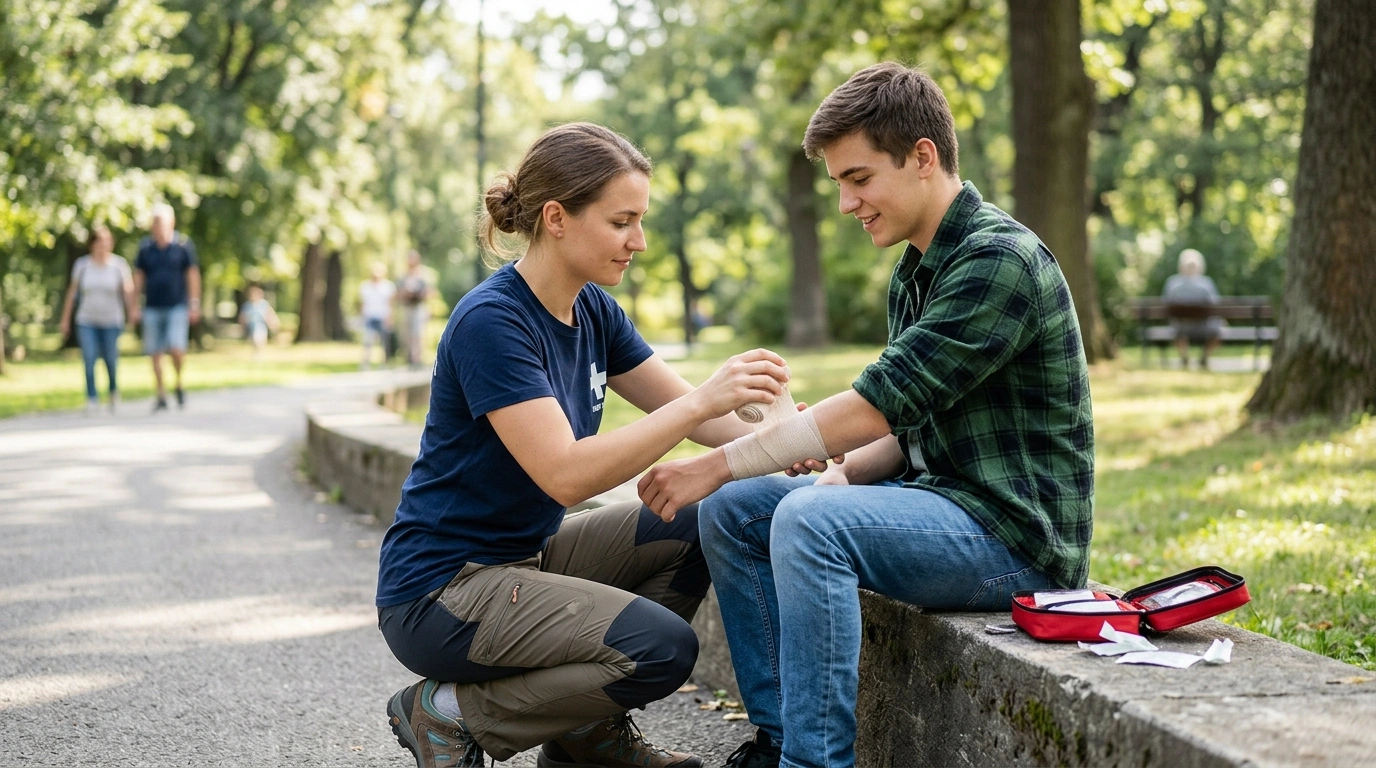
The answer is Care, the step where you provide safe and appropriate first aid to an injured or ill person after you check the scene and call for help.
In the common Check, Call, Care sequence, the three emergency action steps are simple: Check the scene and the person, Call 911 or your local emergency number, and Care for the person until emergency medical services arrive. This framework is often called the 3 Cs of first aid or the Three Cs of First Aid.
The keyword usually appears in a quiz-style format, such as: “What is the third and final emergency action step? A. Call, B. Check, C. Care, D. Consent.” The correct answer is C. Care. But while the one-word answer is easy, understanding what Care means is more important in real life.
This guide explains the full Check, Call, Care sequence, why Care comes last, how it differs from Consent, and what basic actions may help someone safely until help arrives.
Quick Answer: The Third and Final Emergency Action Step Is Care
The third and final emergency action step is Care. In first-aid training, Care means giving appropriate help based on the person’s condition and your level of training. It may include calming the person, monitoring breathing, controlling bleeding, helping someone who is choking, starting CPR, using an AED, or following dispatcher instructions while waiting for professional help.
The full order is:
| Step | Emergency Action Step | What It Means |
| Step 1 | Check | Check the scene for danger and check the person’s condition |
| Step 2 | Call | Call 911, EMS, or your local emergency number |
| Step 3 | Care | Provide safe first aid until help arrives |
So, if the question asks “which emergency action step comes last?”, the answer is Care. If the question asks “what is the final step in Check Call Care?”, the answer is also Care.
It is important to remember that Care does not mean doing anything risky or beyond your ability. It means helping safely, staying calm, and using only the first-aid skills you know.
What Are the Three Emergency Action Steps?
The three emergency action steps are Check, Call, Care. These steps give a simple order to follow during a medical emergency, especially when people are stressed, confused, or unsure what to do first.
The first step, Check, focuses on scene safety and the person’s condition. You should quickly look for dangers such as traffic, fire, electrical hazards, violence, chemicals, or unstable structures. You should also check whether the person is responsive, breathing normally, bleeding heavily, or showing signs of serious illness.
The second step, Call, means contacting emergency services. In many places, this means calling 911, but the correct number depends on the country or region. You may also ask a bystander to call while you stay with the injured person.
The third step, Care, means giving appropriate emergency care until professional help arrives. This is where you use basic first aid skills, follow instructions from a dispatcher, and avoid actions that could make the situation worse.
A simple way to remember the 3 basic emergency action steps is:
Check first for safety. Call next for help. Care last until help arrives.
This order matters because it protects both the responder and the victim. If you rush into a dangerous scene without checking first, you may become another person who needs help.
Step 1 — Check the Scene and the Person
The first emergency action step is Check. Before you help anyone, you must check the scene. This means looking around to make sure it is safe for you, the injured person, and anyone nearby.
For example, if someone collapses in a parking lot, you should quickly look for moving cars. If someone is hurt near water, fire, electricity, broken glass, or chemicals, you should not put yourself in danger. Personal safety before helping is one of the most important ideas in basic first aid.
After checking the scene, check the person. Look for signs that tell you how serious the emergency may be. Are they awake? Are they breathing normally? Are they bleeding heavily? Do they seem confused? Are they choking, having chest pain, or showing signs of a stroke?
This quick emergency assessment helps you form an initial impression of the nature of illness or injury. You are not expected to diagnose the person like a doctor. Instead, your goal is to recognize danger, notice life-threatening signs, and decide whether emergency help is needed.
During this step, stay calm and speak clearly. You might say, “Are you okay?” If the person responds, ask what happened and whether you can help. If the person does not respond, that is a serious warning sign, and you should move quickly to the next step: Call.
Step 2 — Call 911 or Your Local Emergency Number
The second emergency action step is Call. Once you recognize that someone may need urgent help, call 911, emergency medical services, or the correct local emergency number for your region.
In the United States and Canada, 911 is commonly used. In the United Kingdom, 999 is widely used. In many countries, 112 connects callers to emergency services. Because emergency numbers vary, it is smart to know the correct number before traveling.
When you call, try to stay calm. The dispatcher may ask where you are, what happened, how many people are injured, whether the person is breathing, and what care has already been given. Put your phone on speaker phone if possible so you can listen while staying near the person.
If other people are nearby, point to a specific person and say something clear, such as: “You in the blue shirt, call 911 and come back to tell me what they say.” This is better than shouting, “Someone call for help!” because people may freeze or assume another bystander will act.
Calling quickly is especially important in a life-threatening emergency, such as an unresponsive person, not breathing, only gasping, trouble breathing, life-threatening bleeding, chest pain, seizure, stroke symptoms, serious burns, or choking.
Once help is on the way, the next step is Care.
Step 3 — Care for the Person Until Help Arrives
The third and final emergency action step is Care. This means you care for the person according to their condition and your level of training until medical help or professional help arrives.
Care can look different in different situations. If someone is awake but frightened, care may mean keeping them calm, helping them sit or lie comfortably, and watching for changes. If someone is bleeding severely, care may mean applying direct pressure with a clean cloth or bandage. If someone is not breathing normally, care may involve CPR and using an AED if one is available and you are trained or guided to use it.
The goal of the Care step is not to “fix” everything. The goal is to support the person, prevent the situation from getting worse, and help keep them alive until EMS arrives.
A helpful first-aid reminder is:
Give the care you are trained to give, follow emergency dispatcher instructions, and do not do anything that puts you or the injured person in more danger.
Care may include simple but important actions. You may stay with the person, reassure them, monitor breathing, keep them warm, control severe bleeding, help them avoid sudden movement, or guide others nearby. In many emergencies, calm support can make a real difference.
The Care step is also where first aid training, CPR/AED skills, and emergency preparedness become valuable. Even basic knowledge can help someone respond with more confidence during a crisis.
Why Is Care the Final Emergency Action Step?
Care is the final emergency action step because it should happen after you have checked for danger and called for help. The order is important: Check, Call, Care.
You Check first because an unsafe scene can harm you, the injured person, or others nearby. For example, if there is traffic, fire, electrical danger, or violence, rushing in without checking could create more victims.
You Call next because many emergencies require trained responders, advanced equipment, and fast medical support. Calling early brings emergency medical services closer while you begin helping.
You Care last because effective care should happen once you know the scene is reasonably safe and help is on the way. This does not mean you delay life-saving care unnecessarily. It means the safest emergency response order is to quickly check, quickly call or direct someone to call, and then provide care as appropriate.
This is why the answer to “why is Care the final emergency action step?” is simple: Care comes last because it is the action you take after making sure the scene is safe and activating emergency help.
Care vs. Consent: Why Consent Is Not the Final Step
Many students get confused because quiz answers often include Consent as an option. Consent is important in first aid, but it is not the third and final emergency action step in the Check, Call, Care framework.
The final step is Care, not Consent.
That said, obtain consent before helping a responsive person whenever possible. You can ask, “Can I help you?” or “I know first aid. Is it okay if I help?” If the person says yes, you can provide care within your training.
If the person is unconscious, confused, unable to speak, or unable to respond, first-aid training often refers to implied consent. This means it is generally assumed that a person would want help in a serious emergency if they could ask for it.
This section is not legal advice, and Good Samaritan laws or Good Samaritan protection can vary by region. But for SEO and user clarity, the key point is this:
Consent is part of giving ethical first aid, but Care is the final emergency action step.
So, in the multiple-choice question A. Call, B. Check, C. Care, D. Consent, the correct answer remains C. Care.
Examples of Care in Real Emergency Situations
The word Care can feel broad, so it helps to see real examples. The care you provide depends on the person’s condition, your training, and the instructions you receive from emergency services.
| Emergency Situation | Possible Care Actions | Important Reminder |
| Severe bleeding | Apply direct pressure with clean material and keep pressure steady | Call emergency services quickly for life-threatening bleeding |
| Not breathing or only gasping | Start CPR if trained or guided by a dispatcher | Use an AED if available |
| Choking | Encourage coughing if they can breathe; use trained choking first aid if needed | Call for help if the person cannot breathe, speak, or cough |
| Unresponsive person | Check breathing, call emergency services, follow dispatcher instructions | Do not leave them alone unless you must call for help |
| Burns | Cool the burn with clean running water if appropriate | Do not apply butter, oils, or random home remedies |
| Shock symptoms | Keep the person still, calm, and warm | Watch for changes in breathing or responsiveness |
| Possible broken bone | Help them stay still and comfortable | Do not force the limb back into place |
A simple case study can make this clearer.
Imagine a person collapses at a community event. A bystander checks the scene and sees no immediate danger. The person is unresponsive and not breathing normally. Another bystander calls 911 and finds an AED. The first responder starts CPR and follows the AED voice prompts until EMS arrives. In this example, the responder followed Check, Call, Care in order.
That is the purpose of the Care step: provide the safest useful help until trained responders take over.
What Not to Do During the Care Step
Knowing what not to do is just as important as knowing what to do. During the Care step, avoid actions that may create more harm.
Do not move an injured person unless there is immediate danger, such as fire, traffic, or another serious hazard. Moving someone with a possible head, neck, back, or major bone injury could make the injury worse.
Do not give food or drink to someone who is seriously injured, very confused, unconscious, or may need medical treatment. They could choke, vomit, or need care that is complicated by eating or drinking.
Do not perform skills beyond your level of training. For example, if you do not know how to splint an injury, perform rescue breathing, or use certain equipment, follow dispatcher instructions instead of guessing.
Do not panic and leave the person alone unless you must leave briefly to call emergency services or get an AED. Calm presence matters. Speaking in a steady voice, keeping the area clear, and watching for changes are all part of emergency care.
Finally, do not assume someone else has called for help. Make sure Call has happened before focusing fully on Care.
What to Tell Emergency Responders When They Arrive
When emergency medical responders arrive, your job is not over immediately. A clear handoff can help EMS understand what happened and what care has already been given.
Tell responders what you saw first. Explain when the emergency started, how the person looked, and whether their condition changed. Mention whether the person was responsive, breathing normally, bleeding, choking, or showing signs of pain.
Also share what care was provided. For example, say whether CPR was started, whether an AED was used, how long pressure was applied to bleeding, or whether the person had a seizure. If the person told you about allergies, medications, medical conditions, or what happened before the emergency, share that information too.
A simple handoff might sound like this:
“I found him unresponsive about five minutes ago. He was only gasping, so we called 911 and started CPR. The AED gave one shock, and CPR continued until you arrived.”
This kind of information helps professional responders continue care quickly and safely.
Emergency Numbers and Regional Differences
The phrase call 911 appears often in first-aid content, but not every country uses 911. That is why it is better to understand the broader phrase call the local emergency number.
In the United States and Canada, the common emergency number is 911. In the United Kingdom, many people use 999. In many countries, 112 can connect callers to emergency services. Some regions may have separate numbers for ambulance, fire, or police services.
If you are traveling, working abroad, studying overseas, or writing safety content for an international audience, include local emergency guidance. A user reading about emergency action steps should not be left thinking that 911 is universal.
The best wording is: Call 911 or your local emergency number.
That phrase keeps the article accurate, region-aware, and useful for more readers.
Quick Review: Check, Call, Care in Order
Here is the simple review for students, first-aid learners, and anyone searching for a quick first aid test answer.
The three emergency action steps in order are Check, Call, Care.
Step 1: Check means check the scene for safety and check the person’s condition.
Step 2: Call means call 911, EMS, or the correct local emergency number.
Step 3: Care means provide safe and appropriate first aid until help arrives.
So, if your quiz asks “what is the third and final emergency action step?”, the correct answer is Care. If the answer choices are A. Call, B. Check, C. Care, D. Consent, choose C. Care.
A helpful memory line is:
Check for safety. Call for help. Care until help arrives.
Frequently Asked Questions
What is the third and final emergency action step?
The third and final emergency action step is Care. It is the last step in the Check, Call, Care sequence. After you check the scene and call emergency services, you provide appropriate first aid until help arrives.
What are the three emergency action steps?
The three emergency action steps are Check, Call, Care. Check means check the scene and the person. Call means call 911 or the local emergency number. Care means provide safe help based on the person’s condition and your training.
What does Care mean in first aid?
In first aid, Care means helping the injured or ill person safely until professional help arrives. This may include monitoring breathing, controlling bleeding, giving CPR, using an AED, helping with choking, keeping the person calm, or following dispatcher instructions.
Is Consent the final emergency action step?
No. Consent is important, but it is not the final emergency action step in the Check, Call, Care framework. The final step is Care. Consent is something you should consider before giving care to a responsive person.
When should you call 911 or emergency services?
You should call 911 or your local emergency number when there is a possible life-threatening emergency, such as trouble breathing, unresponsiveness, severe bleeding, chest pain, stroke symptoms, serious injury, choking, or a person who is not breathing normally.
Should you provide care if you are not trained?
You can still help in safe ways. Call emergency services, follow dispatcher instructions, stay with the person, keep them calm, and avoid dangerous actions. Do not perform first-aid skills that are beyond your level of training unless a dispatcher guides you.
What should you do after checking and calling?
After checking the scene and calling for help, you should Care for the person until help arrives. This means giving safe, appropriate support based on the emergency and your training.
Why is Care the final emergency action step?
Care is final because you should first make sure the scene is safe and then activate emergency help. Once those steps are done, you can focus on helping the person until responders arrive.
Conclusion: Care Is the Final Step, but Safety Comes First
The answer to what is the third and final emergency action step is Care. In the Check, Call, Care sequence, you first Check the scene and the person, then Call 911 or your local emergency number, and finally Care for the person until emergency medical services arrive.
The most important thing to remember is that Care should be safe, calm, and appropriate to your level of training. It may include simple support, bleeding control, monitoring breathing, CPR, AED use, or following dispatcher instructions.
For real confidence, consider taking a certified first aid training or CPR/AED course. In an emergency, knowing how to Check, Call, Care can help protect safety, reduce panic, and potentially save lives.
This article is for general educational purposes only and does not replace certified first aid or CPR training. Emergency procedures may vary by region and situation — always follow guidance from qualified medical professionals and official emergency services. Consider enrolling in a certified first aid course for hands-on training.