

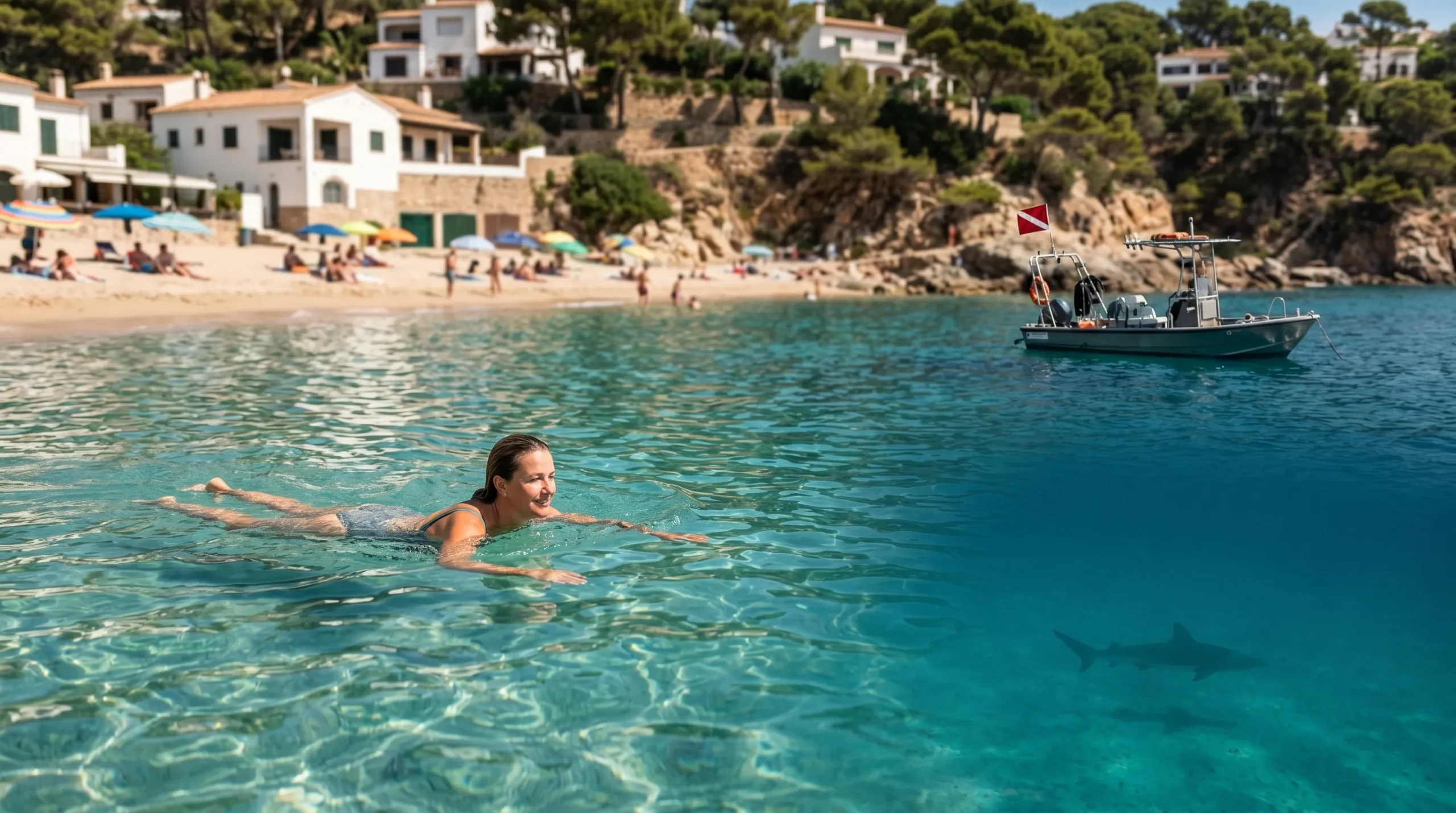
Are there sharks in the Mediterranean Sea? Yes, there are — and that answer surprises many travelers, swimmers, and even locals. But the more important truth is this: the presence of sharks does not mean the Mediterranean is unsafe for ordinary beachgoers. In fact, while the Mediterranean Sea is home to at least 47 different species of shark, sightings near busy beaches are still rare, and the risk to casual swimmers remains very low.
That gap between shark presence and actual swimmer risk is where most people get confused. A sea can contain marine predators, including great white sharks, blue sharks, and shortfin mako sharks, without making a normal holiday swim dangerous. Many of these animals are pelagic sharks, meaning they spend much of their time in the open sea, while others are deep-water dwellers found well away from crowded shorelines. So when people ask, “are sharks dangerous in the Mediterranean?”, the best answer is: some species can be dangerous in theory, but encounters with humans are uncommon.
There is also a bigger story that most articles miss. Many Mediterranean sharks are actually under severe pressure from overfishing, illegal fishing, bycatch, and wider marine ecosystem decline. In other words, humans are often a much bigger threat to sharks than sharks are to humans. That makes this topic not just about fear, but also about marine wildlife, conservation, and how the Mediterranean marine ecosystem works.
Yes, There Are Sharks in the Mediterranean Sea
If your main question is simply “are there sharks in the Mediterranean Sea?”, the answer is absolutely yes. The Mediterranean is not shark-free, and it has never been shark-free. It connects to the Atlantic Ocean through the Strait of Gibraltar, which helps explain why a range of species can enter and live within this semi-enclosed sea. The region also includes deep basins, migration routes, and varied habitats, which support everything from small catsharks to well-known predators like the great white shark.
Still, the phrase “sharks in the Mediterranean Sea” often creates a misleading image in people’s minds. Many imagine sharks constantly circling resort beaches in Spain, Italy, or Greece, but that is not how the sea works in real life. A large number of species live offshore, in deeper water, or in areas where ordinary swimmers almost never go. So while Mediterranean sharks are real and scientifically well documented, that does not mean they are commonly seen by tourists splashing near the sand.
This is why the keyword “are there sharks in the Mediterranean” has such strong search intent. People are not only asking a biology question. They are really asking a hidden follow-up: “Should I worry when I go swimming?” That is why the best answer combines facts with context. Yes, sharks live there. No, that does not mean every swimmer faces meaningful danger.
What Types of Sharks Live in the Mediterranean?
When people search “what sharks live in the Mediterranean Sea” or “types of sharks in the Mediterranean”, they are usually thinking of famous species. The most recognized include the great white shark, blue shark, shortfin mako shark, basking shark, sandbar shark, and several types of hammerhead sharks. There are also many lesser-known species, including blackmouth catsharks, nursehounds, and other smaller sharks that rarely enter public conversation.
To make this easier to understand, here is a quick overview of some of the best-known Mediterranean shark species:
| Shark species | How people think about it | Typical risk to beach swimmers |
| Great white shark | Famous, feared, heavily discussed | Very low near ordinary beaches |
| Blue shark | More common in offshore waters | Low for normal swimmers |
| Shortfin mako | Fast, powerful, open-water predator | Low near shore |
| Basking shark | Huge but mostly harmless filter feeder | Very low |
| Hammerhead sharks | Recognizable and dramatic-looking | Usually low for beachgoers |
| Catsharks / small sharks | Little known, often small | Very low |
The blue shark is especially important because it often appears in discussions of blue sharks in the Mediterranean. It is one of the better-known sharks in the region, but it is more associated with offshore waters than crowded swimming areas. The shortfin mako shark also attracts attention because of its speed and power, yet that does not translate into frequent encounters with beach tourists.
Some articles like to focus only on the dramatic names, but that creates an incomplete picture. A lot of Mediterranean shark species are small, elusive, or live in areas deeper than 200+ meters, far from places where families swim. That matters because the phrase “shark species in the Mediterranean Sea” should not automatically be read as “species you are likely to meet on vacation.”
Are Any Mediterranean Sharks Dangerous to Humans?
This is one of the most searched and emotionally loaded parts of the topic. Yes, some sharks found in the Mediterranean Sea are species that could be dangerous to humans under certain conditions. That includes the great white shark, the shortfin mako, and in broader discussion, species like the tiger shark or bull shark. But there is an important difference between can be dangerous and commonly dangerous to swimmers in real life.
That distinction matters because fear often comes from headlines, not from how people actually use the sea. A great white shark in the Mediterranean sounds alarming, but seeing the species listed in a marine guide is not the same as seeing one near a packed holiday beach. The same goes for the broader question “which dangerous sharks live in the Mediterranean?” Some species deserve respect. Very few justify panic.
A useful way to think about this is that dangerous sharks in the Mediterranean Sea are part of the region’s wildlife, but ordinary beach activity still involves low odds of attack. Many sharks are shy, many are offshore, and many human-shark interactions never happen at all. Even where sightings occur, a sighting is not the same as aggression.
This is also where good writing should avoid exaggeration. Saying there are three most dangerous sharks may sound dramatic, but it does not help readers understand actual conditions. For swimmers, the better question is not “What species could hurt a person?” It is “How likely am I to encounter one while swimming near shore?” And for most people in the Mediterranean, the honest answer is still: not very likely.
Is It Safe to Swim in the Mediterranean Sea?
For most travelers, this is the real question. Is it safe to swim in the Mediterranean Sea? In practical terms, yes. Millions of people bathe every year across the Mediterranean coastline, from Barcelona and Valencia to Corfu, Malta, and southern Italy, and most will never see a shark at all.
That does not mean sharks are imaginary. It means Mediterranean beach safety is shaped by actual conditions, not by fear-driven assumptions. Most swimmers stay close to shore, enter the water during daylight, and remain in areas crowded with people, boats, and coastal activity. Many of the sharks that worry people most are simply not spending their time in those exact zones.
When people ask “can you swim safely in the Mediterranean with sharks?”, it helps to remember the difference between the entire sea and the tiny slice of it most beachgoers use. The Mediterranean is vast, with around 965,000 square miles of water and roughly 28,600 miles of coastline. A swimmer standing waist-deep off a public beach is interacting with only a tiny, controlled part of that environment.
So should tourists worry about sharks in the Mediterranean? In most cases, no. Caution is always wise in any marine setting, but panic is not. If you swim in lifeguarded areas, avoid obviously risky conditions, and respect local warnings, your experience is overwhelmingly likely to be ordinary, enjoyable, and shark-free.
Why Shark Sightings Near Mediterranean Beaches Are Rare
One of the biggest content gaps in competitor articles is this: they say sightings are rare, but they do not clearly explain why. The main reason is habitat. Many sharks in the region are either pelagic sharks that prefer the open sea or deep-water dwellers that spend much of their lives well below the surface. A lot of species are simply not built around hanging around crowded, shallow resort beaches.
Another factor is behavior. Busy beaches are noisy. They contain splashing humans, small boats, engines, music, floating toys, and constant movement. That environment is very different from the feeding and migratory spaces many sharks prefer. So when readers ask “do sharks come close to shore in the Mediterranean?”, the answer is: sometimes, but not commonly in the places and situations most tourists imagine.
This is why the phrase “difference between shark presence and shark risk” is so important. Sharks may absolutely be present somewhere in the wider sea. But that does not mean they are frequent near Mediterranean beaches, or that they are likely to interact with bathers. Presence in a sea is a broad ecological fact. Risk near shore is a much narrower practical question.
That is also why rare shark sightings can become news so quickly. They feel unusual because they are unusual. A single sighting near Alicante, Valencia, or another coastal destination may attract attention precisely because it stands out from everyday experience.
Where in the Mediterranean Are Sharks Found?
A lot of people want location-specific reassurance. They are not just searching “are there sharks in the Mediterranean Sea” in general. They really mean: “Are there sharks in Spain?”, “Are there sharks in Italy?”, or “Are there sharks near Greek islands?”
The truth is that sharks can be found across different parts of the Mediterranean, including waters near Spain, Italy, Greece, Malta, and parts of North Africa. The region is ecologically diverse, and species distribution is not identical everywhere. Some areas may be discussed more often because of fishing activity, migration routes, or occasional media coverage. Places like Valencia, Alicante, and Barcelona show up in discussions because travelers want highly specific answers tied to their holidays.
Still, there is a big difference between saying “sharks in Spain” and saying “sharks next to my beach towel.” Even in countries where sharks exist in surrounding waters, beach-level experience can remain calm and uneventful. That is why region-based SEO is useful, but it must be handled responsibly.
If you are searching “are there sharks near Italy beaches” or “sharks in Greece”, the best takeaway is this: sharks are part of the wider sea around those countries, but that does not mean they are common in the shallow, busy areas where ordinary people swim. This is especially true for heavily used tourist coasts.
Mediterranean Shark Attacks: How Rare Are They Really?
Searchers often want statistics, but what they usually need is perspective. Yes, there have been historical incidents and Mediterranean shark attacks. But in the context of a sea used by millions of bathers, those incidents remain rare. That is the only honest way to explain the issue.
Some competitor material references 10 sightings between 1985 and 2015 in relation to great white shark sightings in the Mediterranean, and articles also mention the idea of the unprovoked shark encounter or even a fatal shark bite. But readers should not confuse a historical record of events with a pattern that makes normal swimming dangerous. The Mediterranean is a major tourism zone, and ordinary human water use massively outweighs actual shark incidents.
This is why “Mediterranean shark attack risk” should always be framed in proportion. Fear tends to focus on possibility. Good SEO content should focus on probability. And the probability for average swimmers remains low.
A smart article should also avoid lazy reassurance like “there is nothing to worry about.” That sounds careless. The better message is: respect the sea, understand the wildlife, but do not assume that shark presence means high risk. That is accurate, trustworthy, and much more useful.
What To Do If You See a Shark While Swimming
This is one of the most useful sections for readers because it turns fear into action. If you ever do see a shark while swimming, the first rule is simple: stay calm. Panic, wild splashing, and desperate movements are the last things you want.
Instead, try to keep the shark in view, move steadily and smoothly, and back away toward shore, a boat, or a safer group setting if possible. Do not chase the animal, do not try to touch it, and do not create unnecessary disturbance. If lifeguards or local beach authorities are present, follow their instructions immediately.
These shark safety tips for swimmers are relevant whether you are swimming, snorkeling, or scuba diving. They are not meant to create fear. They are meant to give readers a practical response so the unknown feels manageable. That alone can make an article far more useful than competitors who stop at species lists.
It is also smart to avoid swimming in obviously poor conditions, such as very low visibility or situations where fish activity is unusually high. The safest way to enjoy watersports in any marine environment is to stay aware, use common sense, and respect local guidance.
Why Mediterranean Sharks Matter to the Ecosystem
Sharks are not just a travel-safety topic. They are also part of the Mediterranean’s ecological balance. As marine predators, many sharks help regulate food webs and maintain healthier marine systems. Losing them can ripple through the ecosystem in ways that affect other species, fisheries, and the broader health of the sea.
That is why the question “why are Mediterranean sharks disappearing?” matters so much. If the public only thinks of sharks as threats, then the conservation story gets lost. In reality, many shark species are indicators of the declining health of the Mediterranean Sea. Their struggles reflect pressures on the wider environment.
This also strengthens the article from an SEO perspective. Readers increasingly respond to content that does more than answer a narrow fear-based question. A stronger article explains not only whether sharks are there, but also why sharks are important to the Mediterranean ecosystem and why their decline matters beyond headlines.
Why So Many Mediterranean Sharks Are Endangered
This is where the story becomes much more serious. Several competitors, especially conservation-led ones, point to the same core pressures: overfishing, illegal fishing, bycatch, and weak protection. Some material states that more than half of the species of sharks and rays in the region are under threat. Other number-based entities mention 20 species are critically endangered, 11 species are endangered, 8 species are vulnerable, and 13 species are data deficient.
Those figures matter because they shift the tone of the article. Instead of asking only “are Mediterranean sharks dangerous?”, readers also start asking “are Mediterranean sharks endangered?” The answer to that is, for many species, yes.
Fishing pressure is a major reason. Competitor research mentions that more than 60 species have been recorded in trawls, and in some cases sharks form more than a third of the total longline catch. Add issues like fish markets, shark trade, and poor monitoring, and recovery becomes even harder. Sharks reproduce slowly compared with many fish, which means population decline can be hard to reverse.
This section is also a strong place to reference named voices and organizations such as WWF or Giuseppe Di Carlo, because it adds authority without making the article feel academic. Done well, it helps readers understand that the Mediterranean’s shark story is not one of increasing terror, but of increasing pressure on vulnerable species.
Are Great White Sharks in the Mediterranean?
Yes, great white sharks in the Mediterranean are real, which is one reason this topic gets so much attention. The species Carcharodon carcharias carries enormous emotional weight. For many readers, asking “are there sharks in the Mediterranean Sea?” is really shorthand for asking “are there great white sharks there?”
The honest answer is yes, but that still needs context. Great whites are not everyday beach companions. Reports and competitor content suggest sightings are limited, and historical references such as 10 sightings between 1985 and 2015 show how attention-grabbing every report can become. That does not make the animal fictional. It also does not make it a routine threat to swimmers.
This is also where conservation becomes important again. Some reporting connected to the competitor set suggests that great whites in the Mediterranean may face serious decline, with claims that at least 40 great whites were killed in 2025 in certain reporting contexts. Whether readers focus on fear or fascination, the more important truth is that this species is part of a fragile regional story, not just a movie-driven panic point.
Quick Facts About Sharks in the Mediterranean
Here is a short fact table that helps summarize the topic clearly:
| Question | Short answer |
| Are there sharks in the Mediterranean Sea? | Yes |
| How many shark species are there? | At least 47 different species of shark are commonly cited |
| Are sharks common near beaches? | No, sightings near busy beaches are rare |
| Is it safe to swim in the Mediterranean? | Yes, for most ordinary swimmers the risk is very low |
| Are great white sharks in the Mediterranean? | Yes, but they are not a routine beach presence |
| Why are sharks in the Mediterranean important? | They support the marine ecosystem and many are under threat |
FAQ
Are there sharks near Mediterranean beaches?
Sometimes, yes — but they are not common near the crowded, shallow beach areas most tourists use.
What is the most common shark in the Mediterranean?
Search discussions often mention the blue shark, though not necessarily as a common near-shore beach species.
Are blue sharks dangerous to humans?
They deserve respect like any wild animal, but they are generally more associated with offshore waters than everyday beach swimming.
Can you snorkel safely in the Mediterranean?
In most normal tourist settings, yes. Use standard marine safety habits and follow local advice.
Do sharks avoid busy beaches?
Many species are more likely to stay away from the exact conditions created by very busy, noisy, shallow public beaches.
What time of day are sharks most active?
This varies by species and environment, but many general marine safety guidelines advise extra caution in low-light conditions.
Are shark sightings in the Mediterranean increasing?
Public awareness may make sightings feel more common, but a single report can also spread widely online. Presence and visibility are not always the same thing as a real increase in risk.
Conclusion
So, are there sharks in the Mediterranean Sea? Yes — but that fact needs context. The Mediterranean Sea contains a surprising range of shark species, including famous ones like the great white shark, blue shark, and shortfin mako. Yet for ordinary swimmers, the actual danger remains very low, especially near busy beaches and normal holiday destinations.
The smartest way to think about this topic is not through panic, but through perspective. Shark presence is real. Swimmer risk is usually low. Conservation concerns are serious. That is the balance most competitor articles miss. If you understand that difference, you can enjoy the Mediterranean more confidently — and appreciate that many of the sharks people fear are themselves part of an increasingly threatened world of marine wildlife.