

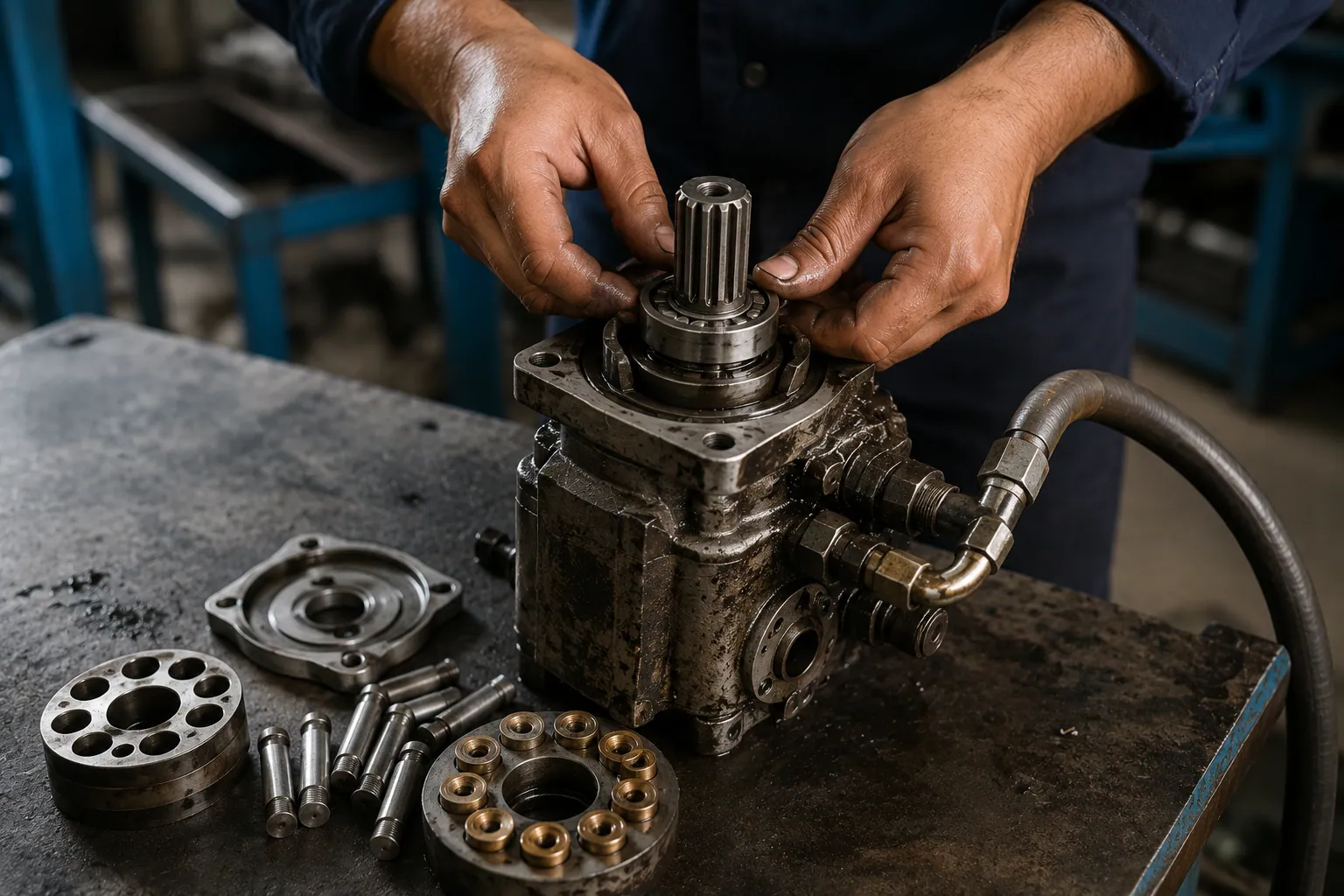
State the remedial action for hydraulic pump not delivering oil means identifying the exact reason why the pump is not sending hydraulic oil into the system and then correcting that fault step by step. This is a common hydraulic system fault in machines, hydraulic presses, power packs, industrial equipment, construction machinery, agricultural machines, and mobile hydraulic systems.
A hydraulic pump not delivering oil does not always mean the pump is completely damaged. Sometimes the cause is simple, such as low oil level, a closed suction valve, air in the suction line, or a clogged suction filter. In other cases, the problem may be more serious, such as internal pump wear, a damaged coupling, wrong pump rotation, or a stuck pressure control valve.
Before replacing the pump, always check the suction side, fluid condition, pump rotation direction, oil level, and pressure control parts. Many cases of no oil flow are caused by external faults, not by complete pump failure. A careful inspection can save time, reduce repair cost, and prevent repeated hydraulic oil supply problems.
Direct Answer: Remedial Action for Hydraulic Pump Not Delivering Oil
The direct remedial action for a hydraulic pump not delivering oil is to check and correct the basic oil supply, suction, rotation, air leakage, valve, and internal pump conditions.
In simple words, the main remedies are:
- Fill the hydraulic tank to the correct oil level if the oil level is low.
- Clean or replace the suction filter or strainer if it is blocked.
- Open the suction line valve if it is closed or partially closed.
- Use hydraulic oil of the correct viscosity as recommended by the machine manufacturer.
- Check and correct the pump rotation direction if the motor is running in reverse.
- Remove air from the pump and suction line by bleeding or priming the system.
- Tighten suction pipe joints and replace damaged seals, O-rings, or cracked hoses.
- Inspect the drive coupling, shaft, and motor connection to make sure the pump is actually rotating.
- Check the relief valve and directional valve for a stuck-open or bypassing condition.
- Repair or replace worn internal pump components if gears, vanes, pistons, bearings, or seals are damaged.
For students, technicians, and maintenance workers, the best answer is this: when a hydraulic pump is not delivering oil, first check the oil level, suction filter, suction line, oil viscosity, pump rotation, air leakage, drive coupling, valves, and internal pump wear. Start with simple external checks before opening or replacing the pump.
This approach makes hydraulic pump troubleshooting easier because the fault may not be inside the pump. In many systems, a pump appears faulty when the real cause is a blocked suction strainer, wrong oil grade, air leak, closed valve, or pressure relief valve fault.
What It Means When a Hydraulic Pump Is Not Delivering Oil
When a hydraulic pump is not delivering oil, it usually means the pump is running, but hydraulic oil is not reaching the hydraulic circuit properly. The motor may be on, the pump may make noise, and the machine may appear ready to work, but the required oil flow is missing or too weak.
This condition can cause several noticeable symptoms, such as:
- No actuator movement
- Weak or slow cylinder movement
- No pressure build-up
- Pump noise or whining
- Oil foaming or aeration
- Overheating
- Jerky or uneven machine movement
- Low hydraulic flow
- Hydraulic actuator not moving even when the control valve is operated
It is important to understand that no oil delivery, low oil delivery, low pressure, and pump not priming are related problems, but they are not exactly the same.
No oil delivery means the pump is not sending oil into the system at all. This may happen due to a closed suction valve, empty tank, broken coupling, reverse rotation, or severe suction blockage.
Low oil delivery means the pump is delivering some oil, but not enough for normal machine operation. This can happen because of a clogged filter, thick oil, worn pump parts, suction leakage, or internal leakage.
Low pressure means oil may be flowing, but the system is not building enough pressure. This may be due to a relief valve stuck open, internal leakage, worn pump parts, or a damaged valve.
Pump not priming means the pump cannot draw oil properly after installation, repair, oil change, or long shutdown. Air trapped in the pump or suction line often causes this condition.
A key point to remember is that flow and pressure are related, but they are not the same. The hydraulic pump mainly creates oil flow. Pressure develops when that flow meets resistance in the hydraulic circuit. So, if there is no oil flow, the system cannot build proper pressure. But if there is flow and still no pressure, the fault may be in the relief valve, directional valve, actuator, or internal leakage path.
Understanding this difference helps avoid wrong repair decisions. Instead of replacing the pump immediately, a technician should check whether the issue is a pump suction failure, a pressure control problem, an oil supply issue, or actual internal pump damage.
First Safety Checks Before Troubleshooting the Hydraulic Pump
Before starting any hydraulic system inspection, safety should come first. A hydraulic pump may look simple from the outside, but it can work under very high pressure. If the system is opened carelessly, trapped oil pressure can cause serious injury, machine damage, or sudden movement of hydraulic parts.
First, switch off the machine before inspection. Do not check the pump, hose, valve, or reservoir while the machine is running unless the manufacturer’s procedure specifically allows a controlled test. After switching off the machine, release trapped hydraulic pressure from the system. Pressure may remain inside hoses, cylinders, valves, and accumulators even after the motor is stopped.
Wear proper gloves and eye protection during hydraulic troubleshooting. Hydraulic oil can be hot, slippery, and harmful if it enters the skin or eyes. One important rule is to never check hydraulic leaks with bare hands. A small pinhole leak can inject high-pressure oil under the skin, which may become a medical emergency. Use cardboard, paper, or proper leak-detection tools instead.
Keep the work area clean before opening any hydraulic line. Dirt, dust, metal particles, or cloth fibers can enter the system and create contamination problems. Even small contamination can damage precision parts inside the pump, valve, or actuator.
A trained person should also check the machine manual before repairing the system. The manual usually gives the correct hydraulic oil grade, pressure limits, filter type, tightening procedure, and safety instructions. If the system works at high pressure or uses complex controls, it is better that trained hydraulic maintenance personnel handle the repair.
These hydraulic troubleshooting precautions protect both the technician and the machine. A safe inspection also makes diagnosis more accurate because it avoids adding new faults during the repair process.
Low Hydraulic Oil Level: The Most Basic Cause
A low hydraulic oil level is one of the most common reasons a hydraulic pump does not deliver oil properly. If the oil level in the reservoir is too low, the pump may suck air instead of oil. When this happens, the pump cannot create a steady oil flow, and the hydraulic system may become noisy, weak, or completely inactive.
Low oil level can cause cavitation, aeration, overheating, pump whining, and poor delivery. In simple words, the pump becomes starved of oil. Instead of receiving a solid supply of hydraulic fluid, it receives air mixed with oil. This can damage the pump’s internal parts if the machine continues running.
The remedial action is simple but important. Fill the hydraulic reservoir to the recommended level using the correct oil grade. Check the hydraulic reservoir oil level according to the manufacturer’s instruction because some machines must be checked when cylinders are fully retracted, while others have a marked level gauge or dipstick position.
Also inspect the machine for external leakage. Look around hoses, fittings, cylinders, valves, pump seals, and the tank area. If the hydraulic tank level drops again after refilling, do not keep adding oil without finding the cause. Repeated oil loss usually means there is a leak or another system fault.
Do not overfill the tank. Overfilling may cause oil overflow, foaming, heating, and poor air separation inside the reservoir. The correct level gives the pump a steady oil supply and allows space for oil expansion and returning fluid.
An expert maintenance tip is simple: if the oil level drops repeatedly, find the leak instead of only refilling the reservoir. Refilling may temporarily solve the no oil in hydraulic pump problem, but it does not correct the root cause. A stable oil level is necessary for proper pump suction, smooth machine movement, and long pump life.
Blocked Suction Filter or Strainer
A blocked suction filter or clogged hydraulic strainer can stop the pump from receiving enough oil. The suction filter is designed to protect the pump from large dirt particles, sludge, and foreign material in the reservoir. But if it becomes clogged, it creates a suction line restriction. As a result, the pump cannot draw oil freely.
When the suction strainer is blocked, the machine may show clear symptoms. The pump may make a whining or rattling sound. Hydraulic cylinders may move slowly. The system may fail to build pressure. In some cases, the pump may produce a sharp cavitation noise because it is struggling to pull oil through the restricted inlet.
The remedial action is to remove and clean the suction strainer if it is reusable. If the filter is damaged, heavily blocked, or not suitable for cleaning, replace it with the correct filter type. Always use a filter with the proper size, micron rating, and flow capacity recommended for the hydraulic system.
It is also important to check the reservoir for dirt, sludge, broken seal material, metal particles, or any foreign objects. If the tank is dirty, simply replacing the filter may not solve the problem for long. The new filter can become blocked again, and the same hydraulic pump cavitation or no-flow problem may return.
Never run the pump for a long time with a blocked suction line. A clogged hydraulic strainer can starve the pump of oil and damage internal parts such as gears, vanes, pistons, bearings, or seals. Good hydraulic filter cleaning and regular maintenance help keep oil moving smoothly into the pump.
A practical rule is to check the suction filter whenever the pump becomes noisy, the system becomes slow, or the pump stops delivering oil after normal operation. Many hydraulic pump failures begin with poor suction, and a blocked strainer is one of the easiest causes to inspect and correct.
Closed or Restricted Suction Line Valve
A closed or restricted hydraulic suction line valve can stop the pump from receiving oil. The suction line is the path that carries oil from the reservoir to the pump inlet. If the valve in this line is closed, partly closed, blocked, or wrongly positioned, the pump cannot draw enough oil. This can quickly lead to no oil flow, pump noise, cavitation, and possible pump damage.
This fault often happens after maintenance. A technician may close the suction valve before removing a pump, filter, or hose, but forget to open it again before starting the machine. In that situation, the motor may run normally, but the pump will not receive oil from the tank.
The first remedial action is to check that the suction valve is fully open. Do not assume it is open only by looking from a distance. Confirm the handle position, valve marking, and flow direction. If the valve is stiff, damaged, or not opening fully, it should be repaired or replaced.
Next, inspect the inlet pipe for any pump inlet restriction. A suction pipe problem may include:
- Kinked hose
- Collapsed suction hose
- Sharp bends
- Blocked pipe
- Loose liner inside the hose
- Undersized suction pipe
- Dirt or foreign material inside the line
The suction pipe should have the correct diameter for the pump flow requirement. If the pipe is too small, the pump may struggle to pull oil, especially when the oil is cold or thick. Too many bends in the suction line can also restrict oil flow and increase the chance of cavitation.
A practical maintenance tip is to always recheck valve positions before starting the hydraulic system after repair. Many cases of hydraulic inlet line blockage or no pump delivery happen because a suction valve was left closed after inspection. A simple valve check can prevent dry running, noise, overheating, and internal pump wear.
Wrong Hydraulic Oil Viscosity or Temperature
Wrong hydraulic oil viscosity can also cause a hydraulic pump not to deliver oil properly. Viscosity means the thickness or flow resistance of the oil. If the oil is too thick, it cannot flow easily into the pump. If the oil is too thin, it may leak internally through pump clearances and cause weak pressure, poor lubrication, and overheating.
Cold weather is a common reason for thick hydraulic oil. When the oil temperature is low, the oil becomes heavier and harder to move. In this condition, the pump may struggle to draw oil from the tank, especially if the suction line is long, narrow, or partly restricted. This can cause pump whining, cavitation, slow machine movement, and poor delivery.
The remedial action is to use the manufacturer-recommended hydraulic oil grade. Do not choose oil only by guesswork or price. The correct oil grade depends on the pump type, system pressure, operating temperature, climate, and machine design.
If the machine is working in cold conditions, allow the oil to warm up before applying full load. Starting the machine and immediately forcing it to work under heavy pressure can damage the pump because cold, high-viscosity oil may not reach the pump inlet quickly enough. In cold environments, operators should follow the warm-up procedure recommended in the machine manual.
Oil that is too thin can create a different problem. It may pass through internal clearances inside the pump, valves, and actuators. This can result in low pressure, weak cylinder movement, extra heat, and poor system efficiency. Thin oil may be caused by using the wrong oil grade, overheating, contamination, or fluid breakdown.
To correct this issue:
- Use the correct hydraulic fluid selection from the machine manual.
- Replace degraded or incorrect oil.
- Control overheating with clean coolers, correct relief valve settings, and proper filtration.
- Keep the oil clean and within the recommended operating temperature range.
- Avoid mixing different hydraulic oils unless the manufacturer allows it.
A useful expert-backed point is that cold, high-viscosity oil can make it harder for the pump to receive oil. So, if a machine works normally after warming up but struggles at startup, the problem may be related to hydraulic oil temperature, oil grade, or suction restriction.
Hydraulic Pump Running in the Wrong Direction
A hydraulic pump running in the wrong direction is a common reason for oil delivery failure. Most hydraulic pumps are designed to rotate in one specific direction. If the pump rotates backward, it may not draw oil correctly from the reservoir. In some cases, it may produce little or no flow at all.
This problem often appears after motor wiring work, pump replacement, motor replacement, electrical repair, or maintenance. For example, if the phases of an electric motor are connected incorrectly, the motor can rotate in reverse. The motor may sound normal, but the pump may fail to deliver oil.
The remedial action is to check the pump rotation direction before running the system for a long time. Most pumps have an arrow mark on the pump body that shows the correct direction of rotation. Compare this arrow with the actual motor rotation. Also check the pump nameplate, motor connection details, and machine manual.
If the rotation is wrong, correct the electrical wiring or motor connection so the pump rotates in the proper direction. This should be done by a qualified person, especially on three-phase motors and industrial power units.
Do not run the pump for a long time in reverse direction. Reverse rotation can damage internal parts, seals, and lubrication surfaces. It can also cause air entry, noise, heat, and poor oil delivery.
This check is especially important for gear pumps and vane pumps. A gear pump not delivering oil after installation may simply be rotating the wrong way. Similarly, vane pumps may suffer damage if they are operated against their designed rotation direction.
A good practice is to “bump start” the motor briefly after installation and confirm the direction before allowing full operation. This small step can prevent serious pump damage and avoid unnecessary replacement.
Air Leakage in the Suction Line
An air leak in the suction line can prevent a hydraulic pump from delivering oil properly. This fault is sometimes difficult to find because suction-side air leaks may not always show visible oil leakage. On the pressure side, oil usually leaks outward because pressure is high. On the suction side, however, the pump may pull air inward through a small gap, loose joint, cracked hose, or damaged seal.
Even a small loose fitting can allow air to enter the pump inlet. When air mixes with hydraulic oil, the pump does not receive a solid flow of fluid. This condition is called hydraulic pump aeration. Aerated oil becomes foamy, compressible, and unstable, which reduces pump efficiency and affects the whole hydraulic system.
Common symptoms of a suction-side air leak include foamy hydraulic oil, jerky actuator movement, pump noise, unstable pressure, and weak hydraulic performance. Cylinders may move unevenly because air compresses under pressure, unlike hydraulic oil. The pump may also make a whining, rattling, or grinding sound because it is not receiving a smooth oil supply.
The remedial action is to inspect the full suction line carefully. Tighten loose suction fittings, but avoid over-tightening because this can damage threads or seals. Replace damaged O-rings, gaskets, and shaft seals. Check suction hoses for cracks, hardening, loose clamps, soft spots, or collapsed sections. Also inspect the pump shaft seal because a damaged shaft seal can allow air to enter during operation.
After repairing the suction side leak, bleed air from the system according to the machine manual. Some systems release trapped air through bleed screws, while others require slow cycling of cylinders without heavy load. The goal is to remove air pockets and restore a steady oil supply.
An expert tip is that suction leaks are often harder to detect than pressure-side leaks. A machine may have hydraulic pump sucking air without leaving a puddle of oil under the machine. That is why technicians should not only look for visible leakage. They should also check pump noise, oil foam, loose suction joints, and unstable pressure readings.
Pump Not Priming After Installation or Repair
A hydraulic pump not priming is another common reason for no oil delivery. Priming means preparing the pump so it can draw oil properly from the reservoir. If the pump contains too much air or starts dry, it may fail to create suction. As a result, the pump runs, but oil does not move into the hydraulic circuit.
This problem often happens after an oil change, pump replacement, filter replacement, long storage, hose repair, or dry start. A new or repaired pump may have air inside the casing. If the suction line is also empty or the oil level is too low, the pump may become air bound and fail to deliver oil.
The remedial action is to prime the hydraulic pump before full operation. Where the design allows it, fill the pump casing with clean hydraulic oil before starting. Make sure the suction filter or strainer is fully submerged in oil. Check that the suction line valve is open and that the suction pipe is not blocked.
In some systems, the outlet connection may be loosened carefully to allow trapped air to escape during initial startup. This should be done only by trained personnel and only if the machine manual allows it. The system should be kept at low pressure during this process to avoid injury or oil spray.
Always follow the manufacturer’s priming instructions. Different pumps, such as gear pumps, vane pumps, and piston pumps, may have different startup procedures. Running a pump dry can quickly damage internal parts because hydraulic oil also works as a lubricant.
A practical technician tip is simple: if the pump runs noisily after startup, stop immediately. A loud whining or rattling sound after installation may mean no suction after pump replacement, air in the pump, or a pump dry start condition. Continuing to run the pump can turn a simple priming issue into serious internal damage.
Drive Coupling, Shaft, or Motor Connection Failure
Sometimes the motor runs normally, but the hydraulic pump does not actually rotate. This can happen when there is a hydraulic pump coupling failure, a broken pump shaft, a loose key, damaged splines, or incorrect motor-to-pump alignment. In this case, the machine may sound like it is running, but no oil comes out of the pump.
This fault can be confusing because the electric motor or engine appears to work. The operator may hear the motor running and assume the pump is also turning. However, if the coupling is broken or disconnected, the pump cannot create oil flow. This is why a motor runs pump not working condition should always be checked during troubleshooting.
The remedial action is to inspect the coupling between the motor and pump. Look for breakage, looseness, worn rubber inserts, damaged bolts, misalignment, or missing keys. If the coupling has failed, replace it with the correct type and size. Do not use a temporary or incorrect coupling because it can fail again and damage the pump shaft or motor bearings.
Next, check the shaft, keyway, and splines. A broken pump shaft or stripped spline can stop power transfer from the motor to the pump. If the internal shaft is damaged, the pump may need repair, rebuilding, or replacement depending on the level of damage.
Proper alignment is also important. If the motor and pump are not aligned correctly, the coupling may wear quickly, create vibration, and overload the shaft bearings. After replacing or reinstalling the pump, align the motor and pump according to the manufacturer’s instructions.
The main symptom of this fault is simple: the motor runs normally, but no oil comes out of the pump. If oil level, suction line, filter, rotation direction, and priming are correct, then the pump drive failure should be inspected before assuming the hydraulic pump has failed internally.
Relief Valve or Directional Valve Stuck Open
Sometimes the hydraulic pump is actually delivering oil, but the oil is not going where it should. Instead of moving toward the actuator, cylinder, or hydraulic motor, the flow may return directly to the tank through a relief valve stuck open or a faulty directional control valve. This can look like a hydraulic pump not delivering oil, even when the pump itself is working.
A pressure relief valve is designed to protect the hydraulic system from excessive pressure. When system pressure becomes too high, the relief valve opens and sends oil back to the tank. But if the valve is stuck open, incorrectly adjusted, or damaged, oil may keep bypassing to the tank all the time. In this condition, the system cannot build pressure, and the actuator may not move.
The first remedial action is to check the pressure relief valve setting. If the setting is too low, oil will return to the tank before enough pressure is created for useful work. A pressure gauge should be used during testing. Random adjustment without a gauge can create more problems and may damage the system.
Next, inspect the valve spool, spring, seat, and seals. Dirt, metal particles, or damaged O-rings can stop the valve from closing properly. Clean the stuck valve spool carefully and replace damaged springs, seals, or O-rings if needed. If the valve seat is worn or scored, the valve may continue to leak internally even after cleaning.
The directional valve fault should also be checked. A directional control valve sends oil to different parts of the hydraulic circuit. If the spool is stuck, wrongly positioned, internally worn, or blocked by contamination, it may send oil back to the tank instead of sending it to the actuator. In some systems, the valve may be in neutral position, allowing open-center flow back to the tank.
The remedial action includes checking the control valve position, cleaning the spool, inspecting linkage or solenoid operation, and making sure the valve is not creating hydraulic bypass flow. If the valve has internal leakage, it may need repair or replacement.
This section is important because it helps avoid misdiagnosing the pump. A technician may think the pump has failed when the real issue is a pressure relief valve problem or directional valve bypass. Before replacing the pump, always confirm whether oil is being delivered but returning directly to the tank.
Internal Pump Wear or Damage
If all external checks are correct and the pump still does not deliver oil properly, the problem may be hydraulic pump internal wear or damage. A pump has close-fitting internal parts that create suction and move oil. When these parts wear out, the pump may lose its ability to draw and deliver oil effectively.
Different pump types have different wearing parts. In a gear pump, gears, bushings, side plates, and seals may wear. In a vane pump, vanes, cam rings, rotors, and seals may be damaged. In a piston pump, pistons, shoes, barrel, valve plate, bearings, and seals may wear. If these parts become scored, loose, cracked, or excessively worn, the pump may suffer from pump internal leakage and poor delivery.
Common causes of worn pump parts include contamination, dry running, overheating, cavitation, wrong oil viscosity, poor filtration, and old age. A pump that has been starved of oil or run with a blocked suction line can become damaged quickly. Similarly, dirty hydraulic fluid can act like an abrasive and wear precision parts inside the pump.
The remedial action is to inspect the internal pump components. Check for worn vanes, damaged gears, scored plates, cracked pistons, damaged bearings, broken seals, and excessive clearance. If the pump is rebuildable, replace worn parts according to manufacturer specifications. In some cases, the pump can be repaired or rebuilt with a service kit. In other cases, complete hydraulic pump replacement may be the better option.
However, the pump should be replaced only after confirming internal damage. Replacing a pump without checking the root cause can lead to repeat failure. For example, if the original pump failed because of contaminated oil, a blocked suction filter, cavitation, or overheating, a new pump may fail again unless the main cause is corrected.
An expert maintenance point is that pump failure is often a symptom of a bigger hydraulic system problem, not just a bad pump. Before installing a repaired or new pump, check oil cleanliness, suction line condition, filter condition, relief valve setting, oil viscosity, alignment, and operating temperature. This helps protect the new pump and improves system reliability.
Contaminated Hydraulic Oil and Poor Fluid Cleanliness
Contaminated hydraulic oil is one of the most harmful causes of hydraulic pump trouble. Hydraulic pumps, valves, and actuators depend on clean oil for lubrication, sealing, cooling, and smooth movement. When the oil contains dirt, metal particles, water, sludge, or degraded fluid, it can damage internal pump parts and reduce oil delivery.
Dirty hydraulic fluid can enter the system through poor filling practices, damaged breathers, worn seals, open tank covers, dirty containers, failed filters, or internal component wear. Once contamination circulates through the hydraulic system, it can block small passages, scratch pump parts, damage seals, and cause valves to stick.
Symptoms of poor hydraulic oil cleanliness may include sluggish operation, excessive heat, noisy pump operation, sticking valves, unstable pressure, repeated filter blockage, and premature pump wear. The machine may work for a short time after repair, then develop the same problem again because the contamination was never removed from the system.
The remedial action is to clean and restore the oil system properly. If the oil is slightly dirty but still usable, it may be filtered through proper hydraulic filtration equipment. If the oil is badly degraded, milky, burnt, or full of particles, it should be replaced with the correct grade of clean hydraulic oil.
The reservoir should also be cleaned. Sludge, metal particles, and dirt at the bottom of the tank can quickly contaminate new oil. Filters should be replaced, and the suction strainer should be checked. Proper breathers should be used so that airborne dirt and moisture do not enter the tank during operation.
Use sealed filling methods whenever possible. Do not pour oil from dirty buckets or open containers into the reservoir. In critical systems, oil analysis hydraulic system testing can help detect particle contamination, water content, oil degradation, and abnormal wear metals before a major failure occurs.
A useful expert tip is that contamination control is one of the best ways to prevent repeat pump failure. Clean oil protects the pump, improves valve performance, reduces heat, and increases the service life of the whole hydraulic system. Good hydraulic filtration is not just a maintenance task; it is a major part of keeping the pump delivering oil correctly.
Cavitation: A Hidden Cause Behind No Oil Delivery
Hydraulic pump cavitation is one of the hidden reasons a pump may fail to deliver oil properly. In simple words, cavitation happens when the pump is starved of oil. Instead of receiving a full and steady supply of hydraulic fluid, the pump receives an incomplete flow. This creates vapor bubbles inside the oil, and when these bubbles collapse under pressure, they can damage the pump’s internal surfaces.
A cavitating pump often gives warning signs before complete failure. Common symptoms include a high-pitched whining sound, rattling noise, vibration, poor oil delivery, unstable pressure, overheating, and gradual pump damage. Many technicians describe cavitation noise as a sharp, rough sound that is different from normal pump operation.
The main causes of cavitation include low oil level, a blocked suction strainer, thick oil, suction restriction, undersized suction hose, collapsed inlet hose, excessive pump speed, and too many bends in the suction line. When the pump cannot get enough oil at its inlet, it becomes a pump starved of oil, and performance drops quickly.
The remedial action is to remove the cause of oil starvation. First, increase the oil level if the reservoir is low. Then clean or replace the suction strainer. Check the suction hose for blockage, collapse, kinks, or incorrect size. Make sure the suction line is short, clean, and properly designed. If the oil is too thick, use the correct hydraulic oil viscosity recommended by the manufacturer.
Pump speed should also be checked. If the pump is running above its rated speed, it may not receive oil fast enough from the reservoir. Reducing excessive pump speed can help prevent cavitation and improve oil delivery.
The expert point is simple but important: cavitation can destroy the pump if ignored. The collapsing bubbles can pit metal surfaces, damage vanes, gears, pistons, bearings, and seals. So, when a hydraulic pump whining sound appears with poor flow, do not keep running the system. Stop the machine, inspect the suction side, and correct the cause before the pump suffers permanent damage.
Step-by-Step Troubleshooting Checklist
A clear hydraulic pump troubleshooting checklist helps find the real cause without wasting time or replacing good parts. When a hydraulic pump is not delivering oil, start with simple external checks before opening the pump. Many no-flow problems are caused by oil supply, suction, valve, or setup issues.
Use this diagnostic order:
- Check the oil level
Make sure the hydraulic reservoir has enough oil. Low oil level can cause air suction, cavitation, and no delivery. - Check pump rotation
Confirm that the motor and pump are rotating in the correct direction. Wrong rotation can stop the pump from drawing oil. - Check suction valve position
Make sure the suction line valve is fully open. A closed or partly closed valve can block oil supply to the pump. - Inspect the suction filter
Clean or replace a clogged suction strainer. A blocked filter can starve the pump and create cavitation. - Check suction hose and fittings
Look for loose fittings, cracked hoses, collapsed suction lines, and air leaks. A suction-side leak can allow air into the pump. - Confirm correct oil viscosity
Use the proper oil grade. Oil that is too thick may not flow into the pump easily, especially in cold conditions. - Bleed air and prime the pump
If the pump was recently installed, repaired, or drained, prime it and remove trapped air before full operation. - Check the pressure gauge
A pressure reading helps show whether the pump is building pressure or whether oil is bypassing somewhere in the system. - Inspect the relief valve
A relief valve stuck open or set too low can send oil back to the tank and make it seem like the pump is not delivering oil. - Inspect coupling and shaft
The motor may run, but the pump may not rotate if the coupling, shaft, key, or spline is damaged. - Check internal pump wear
If all external checks are correct, inspect the pump internally for worn gears, vanes, pistons, bearings, seals, or internal leakage.
This order matters because it moves from the easiest checks to the more complex ones. A good hydraulic system diagnosis should not begin with pump replacement. It should begin with oil level, suction condition, pump direction, air leakage, and valve checks.
A practical human tip is that many “bad pump” cases are not actually bad pumps. They are suction problems, wrong oil problems, stuck valves, closed lines, or setup mistakes. A proper no oil flow checklist helps avoid unnecessary repair cost and protects the hydraulic system from further damage.
Common Mistakes to Avoid When Fixing a Hydraulic Pump Not Delivering Oil
When fixing a hydraulic pump not delivering oil, some mistakes can make the problem worse. A careful repair process is just as important as finding the fault. Many hydraulic pump repair mistakes happen because the technician rushes into replacement without checking the full system.
One common mistake is replacing the pump without checking suction-side faults. If the real problem is a blocked suction filter, closed suction valve, air leak, or wrong oil viscosity, the new pump may also fail. Always inspect the suction side before deciding that the pump is damaged.
Another serious mistake is running the pump dry for too long. Hydraulic oil does more than transfer power. It also lubricates and cools internal pump parts. If the pump runs without oil, gears, vanes, pistons, seals, and bearings can wear quickly.
Using the wrong hydraulic oil is another common problem. Oil that is too thick can restrict suction, while oil that is too thin can cause internal leakage and weak pressure. Always use the hydraulic fluid grade recommended in the machine manual.
Ignoring pump rotation direction is also risky. After electrical work or motor replacement, the pump may rotate in reverse. This can cause no oil delivery and may damage the pump if the system keeps running.
Some technicians clean only the outlet side and ignore suction filters. This is a mistake because most oil delivery problems begin before the pump, not after it. A clogged suction strainer can cause cavitation, noise, and pump failure.
Over-tightening fittings is another issue. Tight fittings are important, but too much force can damage threads, crack fittings, crush seals, or create new leaks. The correct tightening method should be followed.
Forgetting to bleed air after maintenance can also cause poor pump performance. Air trapped in the pump or hydraulic lines can lead to foamy oil, unstable pressure, jerky actuator movement, and noise.
Repeated contamination should never be ignored. If filters keep blocking or oil becomes dirty again quickly, the system may need reservoir cleaning, better filtration, improved breathers, or oil analysis.
Another unsafe mistake is setting the relief valve randomly without a pressure gauge. Incorrect relief valve adjustment can cause low pressure, overheating, or dangerous overpressure. Always use proper testing equipment.
Using undersized suction hoses is also a major hydraulic suction problem. A small or restricted suction hose can starve the pump, especially when oil is cold or pump flow demand is high.
Avoiding these pump troubleshooting errors helps protect the pump, reduce downtime, and improve the reliability of the whole hydraulic system.
Prevention Tips to Avoid Hydraulic Pump Oil Delivery Failure
Good hydraulic pump maintenance is the best way to prevent oil delivery failure. A hydraulic pump usually gives warning signs before it fails completely. If operators and maintenance workers pay attention to oil level, filter condition, noise, temperature, and pressure, many pump problems can be prevented early.
The first prevention step is to keep the reservoir oil at the correct level. A low oil level can make the pump suck air, while an overfilled tank may cause foaming or overflow. Check the oil level regularly and follow the machine manufacturer’s recommended checking position.
Filters should also be replaced on schedule. A blocked filter or suction strainer can restrict oil flow and cause cavitation. Do not wait until the pump becomes noisy before changing filters. Regular filter replacement is an important part of hydraulic system preventive maintenance.
Always use clean hydraulic oil. Dirty oil can damage pump parts, block valves, and reduce hydraulic system performance. During refilling, use clean containers, sealed transfer methods, and the correct oil grade. Good hydraulic oil care helps protect gears, vanes, pistons, seals, and bearings.
Breather caps and filler points should be kept clean. If dust or moisture enters through the reservoir breather, it can contaminate the oil and reduce pump life. A damaged or missing breather should be replaced quickly.
Inspect suction hoses and fittings regularly. A cracked hose, loose clamp, or damaged seal can allow air to enter the suction line. This may lead to foamy oil, pump noise, unstable pressure, and poor delivery.
Operators should monitor pump noise, oil temperature, and pressure readings. A sudden whining sound, excessive heat, slow actuator movement, or pressure drop should not be ignored. These signs may show early suction trouble, wrong oil viscosity, contamination, or internal wear.
Use the correct oil grade for the climate and machine type. In cold conditions, oil that is too thick may not flow easily into the pump. In hot conditions, oil that becomes too thin may cause leakage and weak pressure. The machine manual should always guide hydraulic fluid selection.
Avoid overloading the hydraulic system. Excessive load, incorrect pressure settings, or continuous operation above design limits can increase heat and wear. Overloading can shorten pump life and reduce hydraulic pump reliability.
Maintenance records are also helpful. Record oil changes, filter replacements, pressure readings, repairs, and repeated faults. These records help identify patterns before a complete failure happens.
Finally, train operators to report noise, heat, slow movement, oil foaming, and leaks early. A small warning sign can become a major pump failure if it is ignored. Preventing hydraulic pump failure is easier and cheaper than repairing serious internal damage.
Quick Troubleshooting Table: Cause and Remedial Action
The table below gives a simple hydraulic pump cause and remedy guide for quick diagnosis. It can help students, technicians, and maintenance workers understand the most common causes of a hydraulic pump not delivering oil.
| Possible Cause | Main Symptom | Remedial Action |
| Low oil level | Pump sucking air, no movement | Fill tank to correct level and check leaks |
| Blocked suction filter | Whining noise, low flow | Clean or replace suction strainer |
| Wrong oil viscosity | Poor suction or weak pressure | Use recommended hydraulic oil grade |
| Reverse rotation | No oil discharge | Correct motor wiring and pump direction |
| Air leak in suction line | Foamy oil, unstable pressure | Tighten fittings and replace seals |
| Pump not primed | No flow after startup | Prime pump and bleed trapped air |
| Broken coupling or shaft | Motor runs but pump does not work | Inspect and replace damaged drive parts |
| Relief valve stuck open | Oil returns to tank, no pressure | Clean, reset, or replace relief valve |
| Internal pump wear | Weak or no delivery after checks | Repair, rebuild, or replace pump |
| Contaminated oil | Sticking valves, heat, noise | Filter or replace oil and clean reservoir |
This hydraulic troubleshooting table should be used as a starting point, not as the final diagnosis. A pump problem may have more than one cause. For example, low oil level may cause cavitation, cavitation may damage internal parts, and damaged internal parts may later cause weak oil delivery. That is why a step-by-step inspection is always better than guessing.
When Should You Repair or Replace the Hydraulic Pump?
The decision to repair or replace the hydraulic pump depends on the type of damage, pump design, machine value, repair cost, and availability of parts. A pump should not be replaced only because oil delivery is weak. First, confirm that the fault is not caused by oil level, suction restriction, wrong rotation, air leakage, relief valve bypass, or poor priming.
Repair may be suitable if seals, bearings, vanes, coupling parts, or small service components are damaged but the pump housing is still in good condition. A pump may also be repaired if it is valuable, rebuildable, or part of an expensive industrial machine. In many cases, replacing seals, vanes, bearings, or worn service parts can restore normal pump performance.
A pump may need replacement if internal scoring is severe. Deep scratches, cracked housing, badly worn gears, damaged pistons, broken shafts, or excessive internal leakage may make repair less reliable. Replacement may also be better if the pump repeatedly fails after correct troubleshooting and proper repair.
Cost is another important factor. If the repair cost is close to the price of a new pump, replacement may be the better option. The manufacturer’s recommendation should also be considered, especially for high-pressure systems, mobile equipment, or machines where failure can create safety risks.
If the pump is replaced, do not install the new pump without correcting the root cause. This is one of the most important expert tips in hydraulic pump service. A new pump can fail quickly if the system still has contaminated oil, a blocked suction line, wrong oil viscosity, air leaks, overheating, misalignment, or incorrect relief valve settings.
Before installing a repaired or new pump, clean the reservoir, replace filters, check suction hoses, confirm pump rotation, use the correct oil grade, and inspect the pressure control system. This protects the new pump and improves the long-term reliability of the hydraulic system.
Conclusion: State the Remedial Action for Hydraulic Pump Not Delivering Oil
To state the remedial action for hydraulic pump not delivering oil, the correct approach is to check the oil supply, suction line, pump rotation, air leakage, valves, and internal pump condition in a proper order. A hydraulic pump may stop delivering oil because of a simple issue such as low oil level, a blocked suction filter, or a closed suction valve. It may also happen because of wrong oil viscosity, reverse rotation, air in the system, a broken coupling, or worn internal parts.
The main hydraulic pump not delivering oil remedy is to correct the oil level, clean or replace the suction filter, use proper hydraulic oil viscosity, correct the pump rotation direction, remove suction-side air leaks, and prime the pump if it is air bound. If these checks do not solve the pump oil delivery problem, inspect the coupling, shaft, relief valve, directional valve, and internal pump wear.
Good hydraulic pump troubleshooting always starts with simple checks first. Many no oil flow solution cases are not caused by complete pump failure. They are often caused by suction problems, air leakage, wrong setup, dirty oil, or valve faults. A careful inspection saves time, protects the pump, and supports better long-term hydraulic pump maintenance.
FAQs
What is the first remedial action if a hydraulic pump is not delivering oil?
The first remedial action is to check the hydraulic oil level in the reservoir. If the oil level is low, fill it to the recommended level with the correct hydraulic oil. After that, inspect the suction filter, suction valve, pump rotation direction, and possible air leaks in the suction line.
Can a hydraulic pump run but still not deliver oil?
Yes, a hydraulic pump can run but still fail to deliver oil. This can happen if the pump is rotating in the wrong direction, the coupling or shaft is broken, the suction filter is blocked, the suction valve is closed, the pump is air locked, or the internal pump parts are badly worn.
Why does a hydraulic pump fail to suck oil?
A hydraulic pump may fail to suck oil because of low oil level, thick hydraulic oil, a clogged suction strainer, closed suction valve, air leakage in the suction line, collapsed suction hose, or a pump that has not been properly primed after repair or installation.
Should I replace the pump immediately if it is not delivering oil?
No, you should not replace the pump immediately. First check external causes such as oil level, suction filter, suction line, oil viscosity, pump rotation, air leaks, relief valve condition, and priming. Replace the pump only after confirming internal damage or severe wear.
What causes cavitation in a hydraulic pump?
Cavitation happens when the hydraulic pump is starved of oil. Common causes include low fluid level, blocked suction filter, inlet restriction, wrong oil viscosity, undersized suction hose, collapsed suction line, or excessive pump speed. If ignored, cavitation can damage the pump internally.
How do you prevent a hydraulic pump from failing again?
To prevent repeat pump failure, use clean hydraulic oil, maintain the correct reservoir oil level, replace filters on schedule, inspect suction hoses and fittings, monitor pump noise and temperature, use the correct oil grade, and fix the root cause before replacing or repairing the pump.
Disclaimer
This article is for general informational purposes only and is intended to help readers understand common hydraulic pump oil delivery problems and possible remedial actions. Actual causes, results, and repair needs may vary depending on the machine type, hydraulic system design, oil condition, and maintenance history. Always follow the equipment manual and consult a qualified hydraulic technician for inspection, repair, or high-pressure system troubleshooting.