

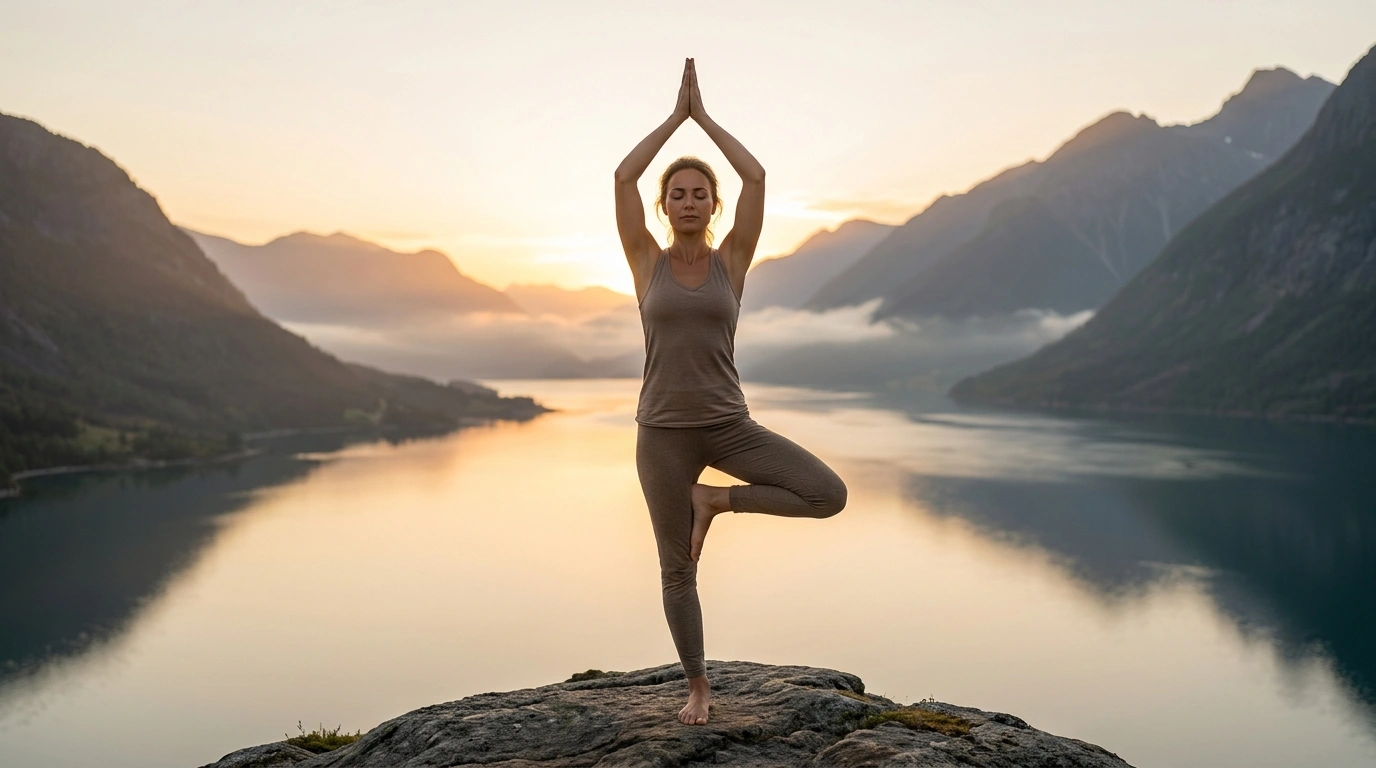
What is the aim of yoga? The aim of yoga is to create union between the body, mind, and spirit, and in its deepest traditional sense, it is meant to lead a person toward self-realization, inner peace, and ultimately liberation. In modern life, many people also turn to yoga for physical health, mental clarity, emotional balance, and a more healthy lifestyle. That is why this question matters so much. The purpose of yoga is not limited to stretching on a mat. It is a much broader mind-body practice that can influence the way a person breathes, thinks, reacts, and lives.
Many people hear about the benefits of yoga first. They may know yoga helps with flexibility, strength, balance, stress relief, and even sleep. But the goal of yoga goes much deeper than its visible results. Its outer practices, such as asanas, pranayama, and meditation, are meant to support inner growth. In simple words, the real aim of yoga is to bring a person into a state of awareness, balance and harmony, and a clearer connection with the true self.
In this article, we will look at the meaning of yoga, the traditional aim of yoga, the main objectives of yoga, the difference between yoga’s purpose and its benefits, and why yoga still matters so much in modern life.
What Is Yoga? Meaning, Origin, and True Scope
To understand the aim of yoga, it helps to begin with the meaning of yoga itself. The word yoga comes from the Sanskrit root yuj, which means to join, to unite, or to yoke. This meaning is important because it tells us that yoga was never only about physical exercise. From the beginning, yoga was about union. That union can be understood in different ways: the union of body and mind, the union of breath and awareness, or the union of the individual self with a higher truth.
Yoga has its roots in Ancient India, where it developed as both a philosophy and a practical system for personal transformation. Over time, different schools and approaches emerged, including Hatha Yoga, Ashtanga Yoga, Iyengar, Yin Yoga, Restorative Yoga, and others. Today, many people first meet yoga through modern postural yoga, which often focuses on movement, posture, alignment, and wellness. That is valuable, but it is only one part of the larger picture.
The true scope of yoga is much wider. It includes asana for the body, pranayama for breath awareness, dhyana or meditation for the mind, and ethical and spiritual disciplines for character and consciousness. In other words, yoga is a mind-body practice, a mind-body exercise, and a path of self-awareness at the same time. This is why asking “what is the aim of yoga” leads to a richer answer than many people expect.
The Traditional Aim of Yoga in Classical Philosophy
In classical yoga philosophy, the ultimate aim of yoga is not simply better posture, stronger muscles, or reduced anxiety. Those may be helpful outcomes, but the traditional aim is far deeper. It is the quieting of mental disturbance so a person can experience clarity, inner awareness, and the truth of their own being. This is where the teachings associated with Patanjali and the Yoga Sutras become especially important.
A famous idea from the Yoga Sutras is chitta vritti nirodha, often understood as the calming or stilling of the fluctuations of the mind. In simple language, that means yoga helps a person move beyond constant mental noise, distraction, confusion, and emotional agitation. When the mind becomes steady, one can see more clearly. This is why the aim of yoga is often described as self-realization, pure consciousness, or realization of the Supreme.
Traditional teachings also connect yoga with moksha or kaivalya, terms related to liberation and freedom from limitation. In some interpretations, yoga is a path that helps a person move beyond attachment, confusion, and suffering. That is why some spiritual texts describe the goal of yoga as freedom from the cycle of birth and rebirth, or as unity with the divine.
This does not mean yoga is separate from daily life. It means yoga trains a person to live with more discernment awareness, self-discipline, and peace. A person who practices yoga seriously is not only training the body but also developing concentration, resilience, and a more balanced inner life. So when we ask, “what is the real purpose of yoga?”, the classical answer is clear: the purpose of yoga is to transform the whole person from the inside out.
Quote:
“The aim of yoga is not escape from life, but clear seeing within life.”
That idea explains why yoga remains relevant even today. The outer world may change, but the human need for mental equanimity, balance and control, and inner peace remains constant.
What Are the Main Objectives of Yoga?
If the aim of yoga is the ultimate purpose, then the objectives of yoga are the practical steps and targets that help a person move toward that purpose. This is where many people find yoga especially useful. The main objectives of yoga often include improvements in the body, the breath, the mind, and behavior.
At a physical level, yoga helps improve flexibility, strength, balance, posture, and alignment. A person practicing regularly may notice reduced muscle tension, better movement, more comfortable breathing, and more body awareness. At the mental level, yoga develops mental clarity, mindfulness, and concentration. It can help a person slow down, become less reactive, and respond to life with greater calm.
Emotionally, yoga supports emotional stability, self-awareness, and stress management. Many people feel that yoga gives them a sense of inner calm and helps them step back from worry, pressure, and overstimulation. Spiritually, yoga can encourage self-reflection, introspection, and a deeper sense of purpose.
So, the aim and objectives of yoga are connected, but they are not identical. The aim is the highest purpose. The objectives are the working parts of the journey. A useful way to understand this is through a simple table:
| Aspect | Meaning in Yoga | Examples |
| Aim | The highest purpose or ultimate direction | self-realization, liberation, inner peace |
| Objectives | Practical goals that support the aim | flexibility, breath control, concentration, discipline |
| Benefits | Results that come from practice | better sleep, reduced stress, improved balance, more energy |
This difference matters because many articles focus only on the visible benefits. But if you truly want to understand what are the primary objectives of yoga, you have to look at how yoga shapes both daily living and inner growth.
The Difference Between Yoga’s Aim, Objectives, and Benefits
One of the biggest reasons people get confused about yoga is that they mix up yoga’s purpose, objectives, and benefits. These three are related, but they are not the same thing.
The aim of yoga is the deepest reason yoga exists. Traditionally, that means union, self-realization, higher consciousness, and a life of balance and harmony. The objectives of yoga are the practical tools or immediate goals that support that aim, such as pranayama, meditation, improved posture, better focus, and greater self-control. The benefits of yoga are the outcomes people notice along the way, like stronger muscles, better heart health, improved sleep quality, less anxiety, or relief from chronic pain.
This distinction is powerful because it helps answer a common modern question: is yoga only exercise? The answer is no. Yoga may improve physical health, but those benefits do not fully define it. The same is true for science-based benefits of yoga. Research-backed improvements in quality of life, back pain relief, or stress relief are real and important, but they are still outcomes, not the whole meaning of yoga.
That is why the phrase “yoga beyond poses” matters. A person may start yoga for back pain or flexibility and still discover something deeper: more patience, more breath awareness, a calmer nervous system, and a more grounded way of living. In that sense, yoga begins with the body but does not end there.
How Yoga Supports Physical Health, Mental Clarity, and Emotional Balance
Although the true purpose of yoga is deeper than fitness, the physical and mental benefits are still a very important part of why yoga matters in modern life. Many people first come to yoga for practical reasons. They want relief from stress, better posture, improved balance, or a healthier routine. These are valid entry points.
Physically, yoga supports strength, balance, flexibility, and better movement quality. Common postures such as Tree Pose, Cat-Cow Pose, Downward Dog, Chair Pose, Warrior II, Legs-Up-the-Wall Pose, and Corpse Pose are often used in different ways to improve mobility, stability, relaxation, or body awareness. For some people, even 10 minutes of simple practice can create a noticeable shift in energy and calm. Over time, yoga may support posture, circulation, and more ease in daily movement.
Mentally, yoga is well known for helping with stress relief, mental clarity, and mindfulness. Breath-focused practices such as Anulom Vilom, Kapalabhati, or simple slow breathing can bring attention back to the present moment. This is especially valuable in a fast-paced world where many people feel mentally overloaded. Yoga creates a pause. That pause helps reduce internal noise and can improve focus and emotional balance.
Emotionally, yoga helps a person develop self-regulation, resilience, and inner calm. Instead of reacting immediately to stress, a regular practitioner often becomes more aware of thoughts, emotions, and patterns. This is where yoga begins to work as both a wellness practice and a form of inner training. It is not unusual for people to report more patience, better sleep, and a stronger sense of mental peace.
Here is a simple way to see it:
- Body: better strength, flexibility, balance, and posture
- Mind: greater concentration, clarity of mind, and awareness
- Emotions: more calm, resilience, and emotional stability
This is why so many modern readers search for how yoga supports physical mental and emotional health. Even when people begin with the body, they often stay because yoga improves the quality of life as a whole.
The Eight Limbs of Yoga: How the Aim of Yoga Is Achieved
To understand how yoga helps achieve self-realization and inner peace, it is helpful to look at the eight limbs of yoga. These are often linked with the classical Ashtanga path and offer a complete structure for understanding how yoga works beyond poses.
The eight limbs are Yama, Niyama, Asana, Pranayama, Pratyahara, Dharana, Dhyana, and Samadhi.
Yama and Niyama deal with ethics, values, discipline, and personal conduct. They help shape the way a person lives and relates to the world. Asana refers to posture, but in the deeper system it is not just exercise. It is about steadiness and comfort in the body. Pranayama develops breath awareness and control. Pratyahara means drawing attention inward. Dharana is concentration. Dhyana is meditation. Samadhi is deep absorption or profound inner unity.
This framework is important because it shows that the aim of yoga in simple words cannot be reduced to stretching. Yoga is a complete path. The body is one door, but not the whole house. A person may begin with posture and slowly develop breath awareness, mindfulness, self-discipline, and deeper peace.
That is why the eight limbs of yoga are one of the most valuable concepts for this topic. They explain why yoga is more than stretching and how the real aim of yoga is achieved step by step through practice, awareness, and inner transformation.
What Is the Aim of Yoga in Modern Life?
In modern life, many people are not searching for enlightenment in formal philosophical language. They are looking for balance. They want relief from pressure, a calmer mind, healthier habits, and a way to reconnect with themselves. This is where yoga continues to speak powerfully to everyday life.
The aim of yoga in daily life can be understood as learning how to live with greater awareness, steadiness, and intention. A student may use yoga to improve concentration and reduce exam stress. An office worker may use it to counter tension, poor posture, and mental overload. A parent may use it to find a few minutes of calm in a busy day. A beginner may discover that yoga is not about perfect poses but about being present.
This is why yoga works so well in today’s world. It helps people slow down without becoming passive. It helps them become aware without becoming overwhelmed. It creates mind-body balance, and that balance supports a healthier lifestyle. In that sense, the importance of yoga in our life is not only physical. It is about learning how to return to yourself.
Is the Aim of Yoga Physical, Spiritual, or Both?
A common question is whether yoga is mainly physical or mainly spiritual. The most honest answer is both, but not always in the same way for every person.
In traditional teachings, yoga has a clearly spiritual direction. It is concerned with inner awareness, liberation, and the deeper truth of human existence. In modern settings, however, many people first meet yoga through physical practice. They come for flexibility, posture, strength, or back pain relief. There is nothing wrong with that. In fact, the physical doorway is often how deeper awareness begins.
For some people, yoga remains mainly a health practice. For others, it becomes a path of self-study, discipline, and spiritual growth. The important thing is to understand that the physical side and the inner side do not need to compete. A calm breath can support a calm mind. A stable posture can support deeper meditation. A healthier body can make it easier to sit quietly, reflect, and live with awareness.
So when people ask, “is yoga spiritual or physical?”, the best answer is that yoga can start anywhere, but its deepest tradition always points toward integration of the whole person.
Aim of Yoga for Students, Beginners, and Everyday Practitioners
The aim of yoga for students is often linked with focus, discipline, and emotional steadiness. Students live with pressure, distraction, and comparison. Yoga can help them build concentration, self-awareness, and calm under stress.
For beginners, the aim of yoga is not perfection. It is not about touching the toes, mastering advanced poses, or performing for others. The aim is awareness. A beginner can start with simple breathing, a few postures, and a willingness to observe the body and mind without judgment.
For everyday practitioners, yoga becomes a way of living. It supports consistency, clarity, and a more thoughtful response to life. In that sense, the aim and objectives of yoga in education, work, and daily life all connect back to the same center: becoming more balanced, aware, and grounded.
Common Misunderstandings About the Aim of Yoga
Many people misunderstand yoga because they see only one piece of it. Some think yoga is only about flexibility. Others think it is only physical exercise. Some think it belongs only to highly spiritual people or to those who already know philosophy. None of these ideas tells the full truth.
Yoga is not only stretching. It is not only posture. It is not only religion. It is not only for experts. Yoga is a practical and reflective discipline that brings together body, breath, mind, and awareness. A person can approach it for wellness and still grow into its deeper meaning over time.
That is why the main aim of yoga should be explained clearly. Yoga is a pathway toward balance and harmony, self-understanding, and a more integrated life. The outer practice matters, but it serves an inner purpose.
Conclusion: The True Purpose of Yoga
The answer to what is the aim of yoga is both simple and profound. At its core, the aim of yoga is to create union, cultivate self-awareness, and guide a person toward inner peace, self-realization, and, in classical terms, liberation. At the same time, yoga also supports the practical needs of modern life through better physical health, mental clarity, emotional balance, and a healthier daily rhythm.
That is why yoga continues to matter across cultures, ages, and lifestyles. It can help a beginner breathe more calmly, a student focus more clearly, or a long-term practitioner live with deeper purpose. The true purpose of yoga is not only to improve how the body moves, but also to transform how the person lives, feels, and understands the self.
This article is for general informational purposes only and does not replace advice from a qualified yoga instructor, medical professional, or mental health practitioner. Individual experiences with yoga vary — if you have any physical or health conditions, please consult a healthcare provider before beginning a yoga practice.