

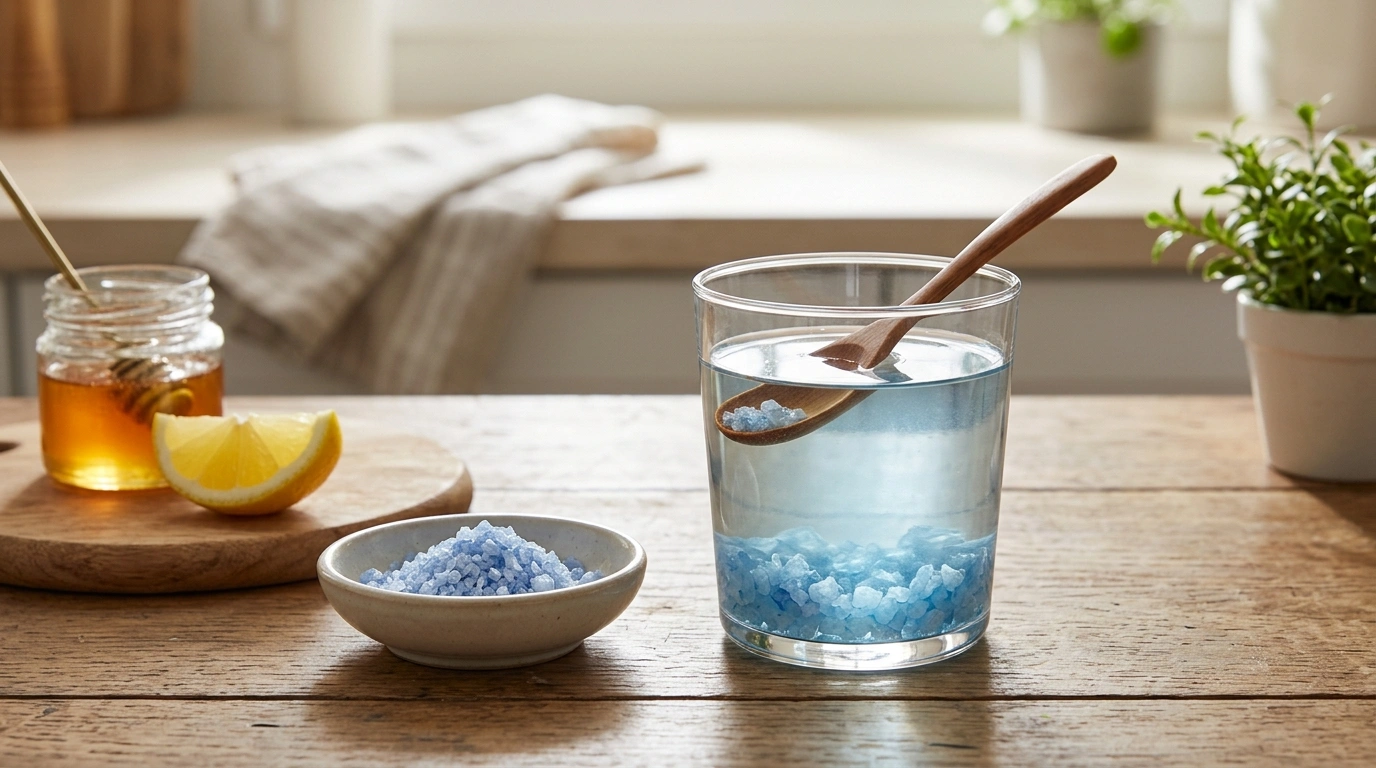
In simple terms, it is a viral wellness idea usually described as mixing blue Persian salt with water—sometimes with lemon juice or raw honey—and using it as a quick daily ritual that people claim may support hydration, energy, circulation, or even men’s health. The phrase has spread largely through TikTok-style wellness content, blog posts, and “does it work?” articles, but there is an important catch: the real ingredient exists, while many of the bigger health claims around it are not well supported by evidence.
That is why this topic creates so much confusion. Some people are searching for what is blue salt, meaning the actual gourmet ingredient known as Persian blue salt. Others are really asking about the blue salt trick for men, including whether it helps with blood flow, nitric oxide, or erectile dysfunction. Those are not exactly the same question, and good content needs to separate them clearly.
In this guide, you will get a direct explanation of what the blue salt trick is, where blue Persian salt comes from, how the common blue salt trick recipe is usually described online, whether it actually works, and what safety issues people should understand before treating it like a miracle fix. That approach matters because the current search results are full of trend-driven claims, while more medically grounded sources say there is no scientific evidence that a salt-based hack treats ED.
Why the Blue Salt Trick Went Viral
The blue salt trick did not become popular because it was part of mainstream medical advice. It took off because it checks all the boxes of a modern viral wellness trend: it sounds simple, looks unusual, uses a rare ingredient, and promises results that many people want fast. Search and media coverage indicate that interest around the broader salt trick for men trend began picking up in late 2024 and carried into 2025, helped by repeated social-media style claims and copied wellness content.
There is also a strong emotional reason behind the trend. People dealing with low energy, poor hydration, or private concerns about male performance often look for something easy and natural. A phrase like blue salt trick for men sounds more exciting than “drink water and see a doctor if symptoms persist,” so it gets clicks. That does not automatically make it fake, but it does explain why it spread so quickly.
Another reason the trend exploded is that Persian blue salt is visually striking. Unlike regular table salt or many common sea salts, it is marketed as rare, exotic, and mineral-rich. That makes it perfect for social posts, product pages, and wellness articles trying to turn a specialty ingredient into a lifestyle habit.
What Is Blue Persian Salt, Exactly?
To understand the trend, you first need to understand the ingredient. Blue Persian salt, also called Persian blue salt, is a real gourmet salt sourced from Iran, especially the Semnan region. It is prized mostly for its appearance, rarity, and culinary appeal as a finishing salt. Sources describing the ingredient explain that it is still primarily sodium chloride, not some magical new substance, though it may contain small amounts of trace minerals.
People often ask what makes it blue. The answer is not that someone dyed it for effect. Descriptions of the salt explain that its unusual blue tones are linked to the way the crystal structure formed, along with mineral associations in the deposit. That is part of why it is often sold as a premium or novelty culinary product rather than an everyday pantry staple.
So, what is blue salt good for in the most realistic sense? Primarily, it is used for flavor, presentation, and the appeal of using a rare ingredient. It may fit nicely on foods like grilled steak, roasted vegetables, or a leafy green salad, and some people enjoy adding it to water-based wellness routines. But from a nutrition perspective, it is still salt first. That point gets lost when the keyword shifts from Persian blue salt to the much more sensational blue salt trick.
What People Mean by the Blue Salt Trick Recipe
When users search how to do the blue salt trick or blue salt trick ingredients, they are usually looking for a simple drink ritual. One commonly described version uses 8–12 oz of warm or room-temperature water with about ¼ tsp Blue Persian Salt, sometimes with lemon juice or raw honey added for taste. That is essentially the “trick” many pages refer to.
Here is the basic version people keep describing online:
| Ingredient | Common amount |
| Warm or room-temperature water | 8–12 oz |
| Blue Persian salt | ¼ tsp |
| Lemon juice | optional |
| Raw honey | optional |
That recipe is simple enough, which is part of the reason it spread. It sounds like a morning mineral boost rather than a full supplement plan. Still, it is important to be careful with the language around it. A simple salt-water drink may be a ritual, but a ritual is not the same as proven therapy.
This is also where many articles become misleading. They blur together three separate ideas: a real gourmet salt, a hydration routine, and a claim that the routine can improve intimate performance. Those are very different things, and readers deserve to know where one ends and the next begins.
Claimed Benefits: Why People Say It Works
Supporters of the blue salt trick for men often say it helps with hydration, electrolyte balance, circulation, energy, and sometimes even mental clarity. At a basic level, that claim has some intuitive appeal. If someone is mildly dehydrated and starts drinking more water regularly, they may feel better. If a person likes the routine and becomes more consistent with morning hydration, that alone can make the ritual feel beneficial.
You will also see repeated mentions of potassium, magnesium, and calcium in content about blue Persian salt benefits. Trace minerals do exist in specialty salts, but the bigger health claims are often exaggerated. One medical-style review pointed out that even ¼ tsp of blue salt contains far less potassium than a banana, which has around 362 mg of potassium. That comparison is helpful because it puts the “mineral supercharge” story back into perspective.
There is a useful lesson here for SEO and for readers. Not every wellness claim needs to be treated as either “all fake” or “totally proven.” Sometimes the more honest answer is this: a person may enjoy the routine, appreciate the flavor, and benefit from better hydration, while the dramatic claims about blood flow support, male enhancement, or rapid performance changes remain unsupported.
Does the Blue Salt Trick Actually Work for Men’s Health or ED?
This is the part many users are really asking about, even when they type what is the blue salt trick. They want to know whether the blue salt trick for men helps with blood flow, libido, or erectile dysfunction. The short answer is that there is no good scientific evidence that blue salt itself treats ED. More medically grounded sources explicitly say there is no scientific evidence supporting a “salt trick” as an erectile dysfunction treatment.
That matters because the popular framing often leans on terms like nitric oxide, circulation support, and male performance. In theory, blood flow matters in erectile function. But turning that fact into “therefore this salt trick works” is a big leap. A true evidence-based article should not make that jump. If a person feels temporarily better after using the drink, the more likely explanation may be hydration, expectation, routine, or other lifestyle factors—not a proven effect of Persian blue salt on erectile performance.
Here is the clearest way to think about it:
A viral remedy can be popular without being clinically proven.
That sentence captures the whole issue. The blue salt trick may function as a wellness ritual for some users, but it should not be marketed as a reliable answer for ED or other serious men’s-health concerns. Persistent erectile problems can be linked to cardiovascular, hormonal, neurological, or psychological issues, which is why evidence-based evaluation matters.
Is the Blue Salt Trick Safe?
Safety is one of the biggest gaps in competitor content. A lot of pages talk about blue salt benefits but do not spend enough time on the fact that salt is still salt. Even when a salt is rare, natural, or mineral-rich, it still contributes sodium. And too much sodium is a real health concern, especially for people with high blood pressure, kidney disease, or heart-related conditions.
The World Health Organization recommends that adults consume less than 2,000 mg of sodium per day, which is equal to less than 5 g of salt per day. That guideline matters because trend content can make extra salt sound harmless simply because it is “natural.” It is still important to look at total daily intake, not just the branding of the ingredient.
Potential downsides of overusing the blue salt trick include:
- extra sodium intake
- bloating
- thirst
- possible problems for people already told to limit salt
That does not mean everyone needs to avoid blue Persian salt completely. It means moderation and context matter. Someone using a small amount occasionally as a finishing salt is in a very different position from someone adding salt water to an already high-sodium diet every day.
Blue Salt vs Regular Salt, Himalayan Salt, and Electrolyte Drinks
A smart comparison section can make the article far more helpful than trend-based competitors. Persian blue salt vs table salt is mostly a difference in origin, visual appeal, and culinary experience. Nutritionally, both are still heavily about sodium. Himalayan salt and other gourmet salts are often marketed with similar “trace minerals” stories, but that does not automatically turn them into major health tools.
Compared with electrolyte drinks, blue salt water is also not a direct replacement in every context. A formulated electrolyte drink may be designed with a more balanced mix of sodium, potassium, and sometimes carbohydrates, especially for exercise or recovery. A homemade blue salt drink is much simpler and may be more about ritual than precision.
Here is a practical comparison:
| Option | Best for | Reality check |
| Blue Persian salt | flavor, novelty, finishing use | still mainly salt / sodium |
| Table salt | everyday cooking | simpler, cheaper, less exotic |
| Himalayan salt | similar gourmet appeal | trace mineral marketing often overstated |
| Electrolyte drinks | targeted hydration / sports use | can be more balanced, but varies by formula |
This is where the article can really beat weaker competitors: by telling readers not only what the trend says, but also where the ingredient actually fits in real life.
How to Use Blue Persian Salt Without Falling for the Hype
If you like the idea of trying blue Persian salt, the best approach is to use it realistically. Think of it as a gourmet finishing salt or an occasional part of a mild hydration routine, not as a miracle product. That framing is both more honest and more useful.
Some reasonable uses include sprinkling a small amount over grilled meat, roasted vegetables, or salads, or trying a light water mix once in a while if it fits your diet. What matters is not getting pulled into exaggerated promises. The biggest value of the ingredient may be culinary enjoyment and the appeal of a simple routine, not a dramatic transformation in male performance.
A good rule is this: use blue salt for flavor and curiosity, not for miracle expectations. That line keeps the article balanced and helps align with real search intent. People want the trend explained, but they also want a trustworthy verdict.
How to Spot Real Persian Blue Salt
Because blue Persian salt is sold as a premium product, authenticity matters. Product-focused sources note that real Persian blue salt is linked to Iran, especially Semnan, and that buyers should be careful with products that overstate benefits or look artificially enhanced.
When evaluating a product, it helps to check:
- whether the source clearly identifies Iran as the origin
- whether the seller describes it as a culinary salt, not a miracle cure
- whether the marketing sounds balanced rather than wildly promotional
This section also supports a commercial-intent layer of the keyword without turning the whole article into a product pitch. That is valuable because some users do want to know where to buy real blue Persian salt, but they also need context so they do not confuse a food ingredient with a guaranteed health solution.
When to See a Doctor Instead of Trying Viral Remedies
This part should not be skipped, especially because so many searches around the blue salt trick for men seem to be driven by concern about intimacy or performance. If someone has ongoing symptoms of erectile dysfunction, recurring fatigue, dizziness, unusual thirst, or cardiovascular warning signs, a viral wellness hack is not the right endpoint. It is smarter to speak with a qualified professional.
That is not meant to be alarmist. It is simply more useful than pretending every trending remedy deserves the same trust as established care. ED causes and treatment can involve underlying issues that deserve real attention, and delaying that evaluation because a trend promised a shortcut is not a good trade.
Final Words: What the Blue Salt Trick Is — and What It Is Not
So, what is the blue salt trick in the clearest possible terms? It is mostly a viral name for using blue Persian salt in a water-based wellness ritual, often promoted as a quick way to support hydration, minerals, circulation, or men’s health. The ingredient itself is real, rare, and visually distinctive, with roots in Iran. But the stronger medical-style claims attached to the trend go far beyond what current evidence supports.
If you are interested in Persian blue salt, the smartest view is simple. It can be an interesting gourmet salt, a conversation-starting ingredient, and an occasional part of a personal wellness routine. What it is not is a proven treatment for ED, a guaranteed fix for blood flow, or a magic shortcut to better health.
That balanced answer is exactly what many SERP results are missing. And that is why a stronger article should not just repeat the hype. It should explain the trend, clarify the ingredient, address the safety questions, and give readers the honest verdict they were looking for in the first place.
This article is for general informational purposes only and does not constitute medical advice. The claims surrounding the “blue salt trick” are not supported by clinical evidence. If you have concerns about erectile dysfunction, cardiovascular health, or dietary sodium intake, please consult a qualified healthcare professional before trying any wellness remedy.